
Gymea Lily — Sydney's Most Striking Native Plant
A Native Sydney Species Found in the Royal National Park
Most plants in the Royal National Park's coastal heathland require a second look — low scrub, needle-like leaves, small flowers that reward close attention. The Gymea Lily requires no second look. When it's in flower, it announces itself.
Sword-like leaves sprout from the ground in a dense rosette. From the centre of these leaves rises a long, narrow green stalk — up to six metres tall — topped with a large, vivid crimson flower. When the plant isn't flowering it disappears into the bush. When it is, it stops people mid-walk.
Where to See Gymea Lilies
Gymea Lilies are native to the Sydney region and relatively common once you know what you're looking for. They can be spotted from the road as you drive through the Royal National Park, and appear along the coastal tracks — particularly around the Curra Moors area and on the approach to Eagle Rock.
They're also found throughout the broader Sydney basin — in bushland reserves, along road cuttings through sandstone country, and occasionally in suburban gardens where they make a dramatic statement.
The Name
The word Gymea comes from the local Aboriginal people and is attributed to either the Dharug or Dharawal language group. It means 'a small bird'.
The name makes more sense when you see the plant in flower. The crimson flower sits at the top of a stalk many metres above the leaves — roughly the size of a small bird, appearing almost to float above the surrounding scrub if you don't take in the long narrow stalk supporting it. Two Sydney suburbs carry the name: Gymea and Gymea Bay, both in the Sutherland Shire near the Royal National Park.
Flowering and Growth
The Gymea Lily is not in a hurry. It takes at least five years to produce its first flower, sometimes longer. The wait is worth it — the flowering stalk emerges relatively quickly once the plant is ready, and the flower is large enough to be visible from a considerable distance.
After flowering, oval-shaped seed capsules form along the stalk. In late summer the capsules split and release seeds. The plant is remarkably resilient — a bushfire sets it back only briefly, and it recovers quickly from what would kill many other species.
Seeing Gymea Lilies on a Royal National Park Tour
Gymea Lilies are hard to miss when flowering, but knowing the growth stages and the aboriginal history of the name adds to the experience. The coastal tracks to Eagle Rock and Wedding Cake Rock pass through some of the best Gymea Lily country in the park.
For more on the native wildflowers of the Royal National Park — including the Waratah, Drumstick and Fuchsia Heath — see our guide to wildflowers on the coastal tracks.
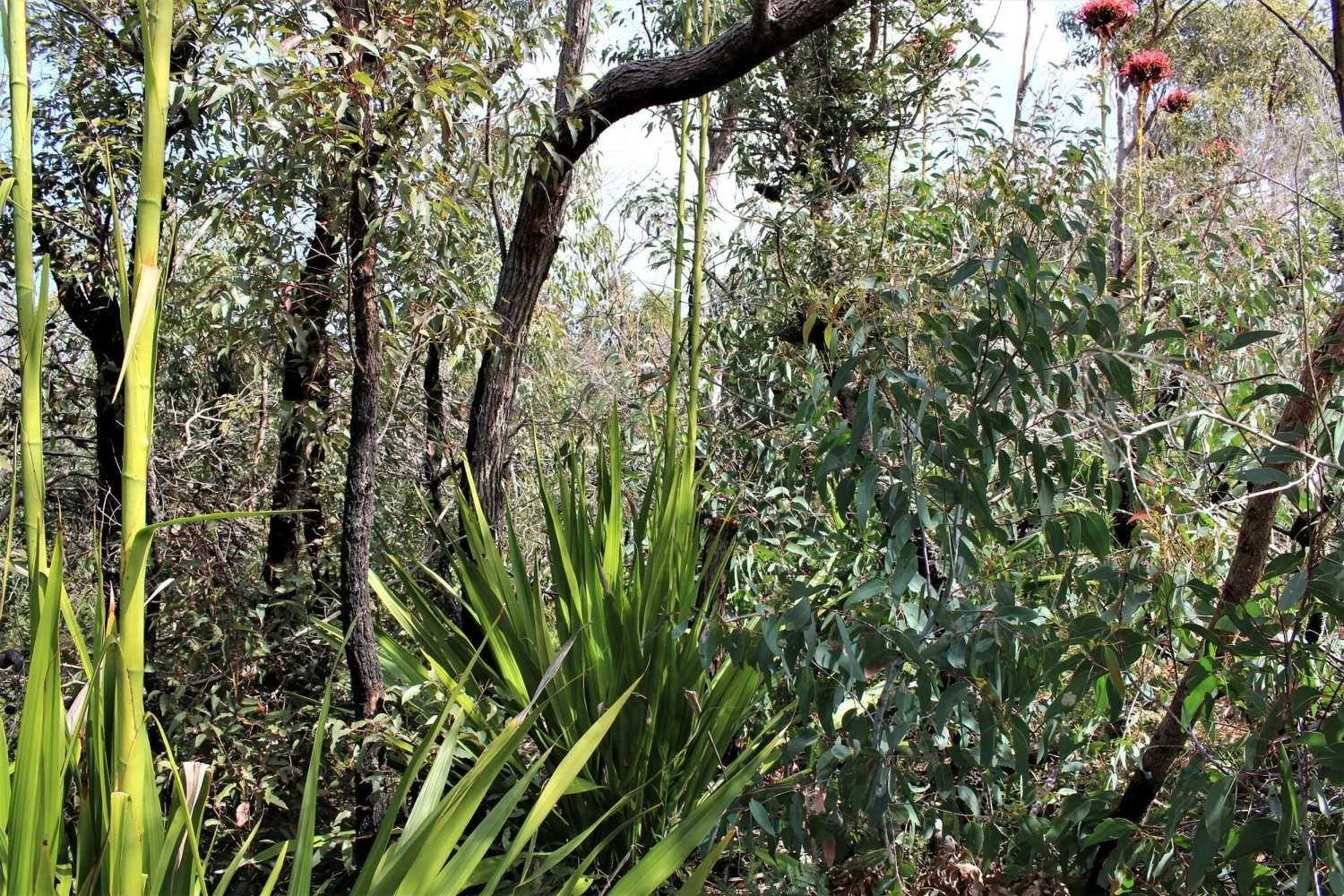
sword shaped green leaves and long green shoot

wild red

a striking Australian wildflower