Posts in royal-national-park
Spring Tours in the Royal National Park

Spring Tours in the Royal National Park

We are now half way through Spring in the Royal National Park and visitors have been rewarded with some wonderful native flowers.

It is at this time of year that ordinarily non descript plants come alive with exceptional flowers. Until this point of time you may not be that interested in identifying a plant. A striking flower changes everything.

The Gymea Lily, a native to Sydney and surrounds can be counted on to perform. Its bright red flowers are on display all over the park. If you miss seeing this plant you are not looking very hard!

Whilst on the colour red some wonderful waratahs may be spotted by carefully scrutinising the bush whilst driving through the park. We noticed some fine examples on the road to the parking area for figure 8 pools.

The Sydney Boronia (Showy Boronia) was blooming in patches whilst the thin and thick leaved drumsticks could be seen on the side of the road.

Many plants in the Royal National Park belong to the Fabaceae family and some of these are stunning.

The handsome bush-pea was seen extensively on the road between Flat Rock Creek to Wattamolla. A bright and colourful yellow flower with a dash of red.

The parrot-pea has an intense yellow flower and was frequently spotted.

These two plants are legumes and take nitrogen from the air and convert it with the help of bacteria into ammonia. This occurs in nodules in the plants root system. When the plant dies and decomposes the soil is enriched by nitrogen that is returned to the soil.

The Golden Wattle, Australia’s floral emblem, is also a legume.

Grass trees (Xanthorrhoea) are flowering in the park and you may observe flower spikes that have a yellow colouring. The yellow or golden colour is created by pollen attaching to the small flowers on the spike.

Further into the rainforest area of the park the yellow flower of the cabbage tree was on display.

Gymea Lily flower

A Waratah, the NSW floral emblem

A sea of showy Boronia

Pultenaea stipularis, known as Fine-leaf Bush-pea or Handsome Bush-pea

Dillwynia Floribunda, otherwise known as a parrot-pea

swamp honey myrtle

thin leafed drumstick

so many fantastic colours

grass tree flower spike coated in yellow pollen

yellow flower of the cabbage tree palm

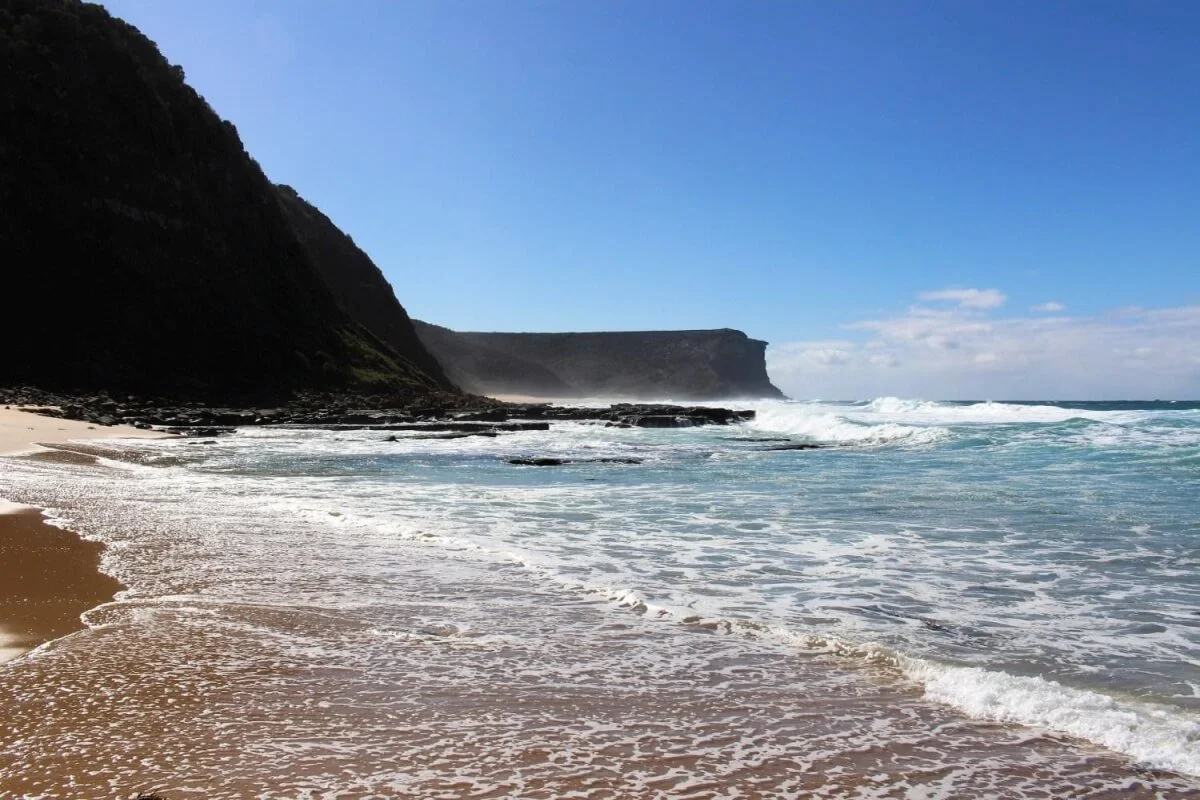
Beautiful Garie Beach at the Royal National Park

Garie Beach re-opens today

Whilst undertaking a Royal National Park tour today Sydney Nimble dropped by the road barrier preventing access to Garie Beach.

We were delighted to be informed that the barrier would be removed in the next few hours and to come back after lunch.

Upon returning the barrier was gone and we headed down to Garie Beach. It has been a long time between visits.

The road to Garie Beach was closed in 2022 due to floodwaters causing a section of the road to collapse.

Whilst driving to the beach we noticed the major area of repair which involved moving a section of the road into the hill and driving over 100 15-metre long concrete piles into the side of road for a distance exceeding 150 metres.

That’s a lot of support!

Upon arriving at the beach and walking south from the car park it was noticed that some new sandstone stairs had been built and the former track above the rocks on the beach is no longer in use.

In fact it doesn’t exist!

If you are hiking south along the Royal Coastal Track, which runs from Bundeena to Otford, just take the stairs near the Garie Surf Life Saving Club and ascend.

A photo of the new stairs is shown below.

I was advised by Royal National Park staff that a lookout has also been constructed on the new walkway.

Things are happening in the Royal National Park!

And being the opening day there were no fisher people or surfers. That won’t last long!

new road

love those supports

Where are the surfers, beach walkers and fisher people?

new stairs

just in case you forget

path and track gone - go back to the stairs

nice to see that headland again

Amazing Sea Cliff Bridge - Sydney South Coast Tours

Background

Sea Cliff Bridge is located on the coast of New South Wales, south of Sydney, between the small coastal towns of Coalcliff and Clifton.

It forms part of Lawrence Hargrave Drive, a road that extends from Helensburgh to Thirroul, which was named in 1926 after inventor, aeronautical pioneer and explorer, Lawrence Hargrave.

Longstanding rock fall problems had been experienced on Lawrence Hargrave Rd between Coalcliff and Clifton due to the road at that time being positioned right next to the cliff and in 2002 the problem became acute resulting in the road being permanently closed.

The rock debris was dropping from the steep cliff hovering above the cliff hugging road, particularly after rain.

A bridge that would be located some distance from the cliff was seen to be the answer to the problem of rockfalls.

Although the NSW Government initially had some reservations about building a bridge to replace the existing road in view of the cost, environmental concerns and geotechnical issues, it was decided to go ahead.

Construction began at the start of 2004 and the bridge was completed in December 2005.

Some parts of the former road can still be seen if you visit Sea Cliff Bridge particularly at the south end.

A rusted cream guard rail shows where the road was located. Part of the underpinning sandstone wall supporting the old road has collapsed and bushes have overgrown other parts of the former road.

New bridge(s)

Two bridges were in fact necessary to remedy the situation. Sea Cliff Bridge is up to 70 metres from the cliff in places and provides for plenty of room should a rockslide from the cliff eventuate.

It is easy to miss the first bridge, Lawrence Hargrave Bridge, as you drive south past Coalcliff. In fact you may not even think you are driving on a bridge, but rather a new piece of road.

Lawrence Hargrave Bridge measures 210 metres and was incrementally launched.

Incrementally launched bridges are built in segments in a casting bed. The segment is pushed out of the casting bed across the obstacle to be crossed. The casting bed may then be used to make another segment.

The bridge is made from one side only. They are commonly used where there are access problems or to minimize disruption at ground level and the spans generally do not exceed 60 metres.

The second bridge, Sea Cliff Bridge, is a balanced cantilevered bridge and 450 metres long.

This type of bridge is more suitable for longer spans and will typically consists of two cantilever arms that extend in opposite directions from a single support.

Why visit

The design, engineering and aesthetics of Sea Cliff Bridge are what make it so attractive.

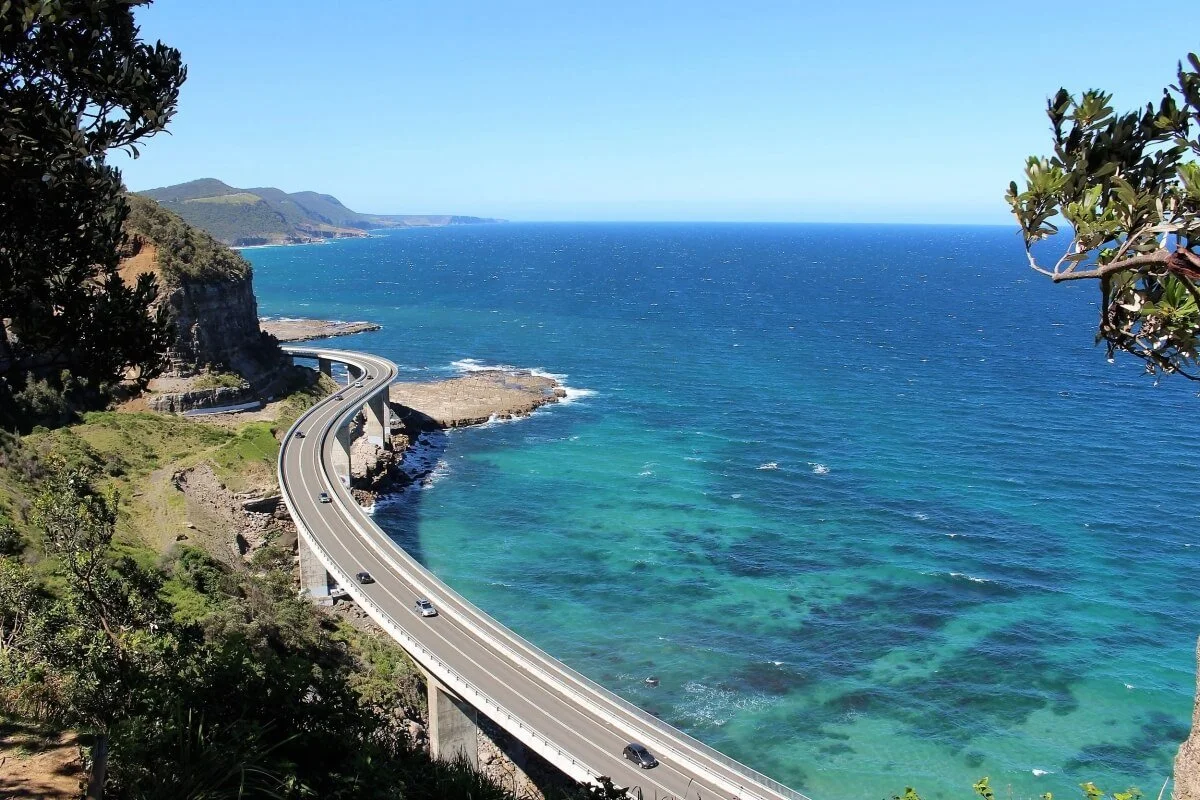
When you first see it in the distance you are drawn to have a second look at a roadway suspended above the ocean that curves with the contours of the surrounding cliffs.

The curves and flow of the bridge gracefully fit in with the rugged surrounding environment. Both bridges, Lawrence Hargrave and Sea Cliff Bridge were built in difficult environments.

The challenging environment consisted of sea on one side, steep cliffs on the other, underlying coal seams and very little available land.

The construction of both bridges in such a situation is a fine engineering achievement.

If you visit don’t just drive over the bridge, park just beyond where the bridge finishes in the south, and take a walk.

It is a pleasure to walk along the bridge and enjoy the views of the ocean, the nearby dramatic cliff and the several large rock platforms that can be seen below.

Put this one on your list!

Be Imperial

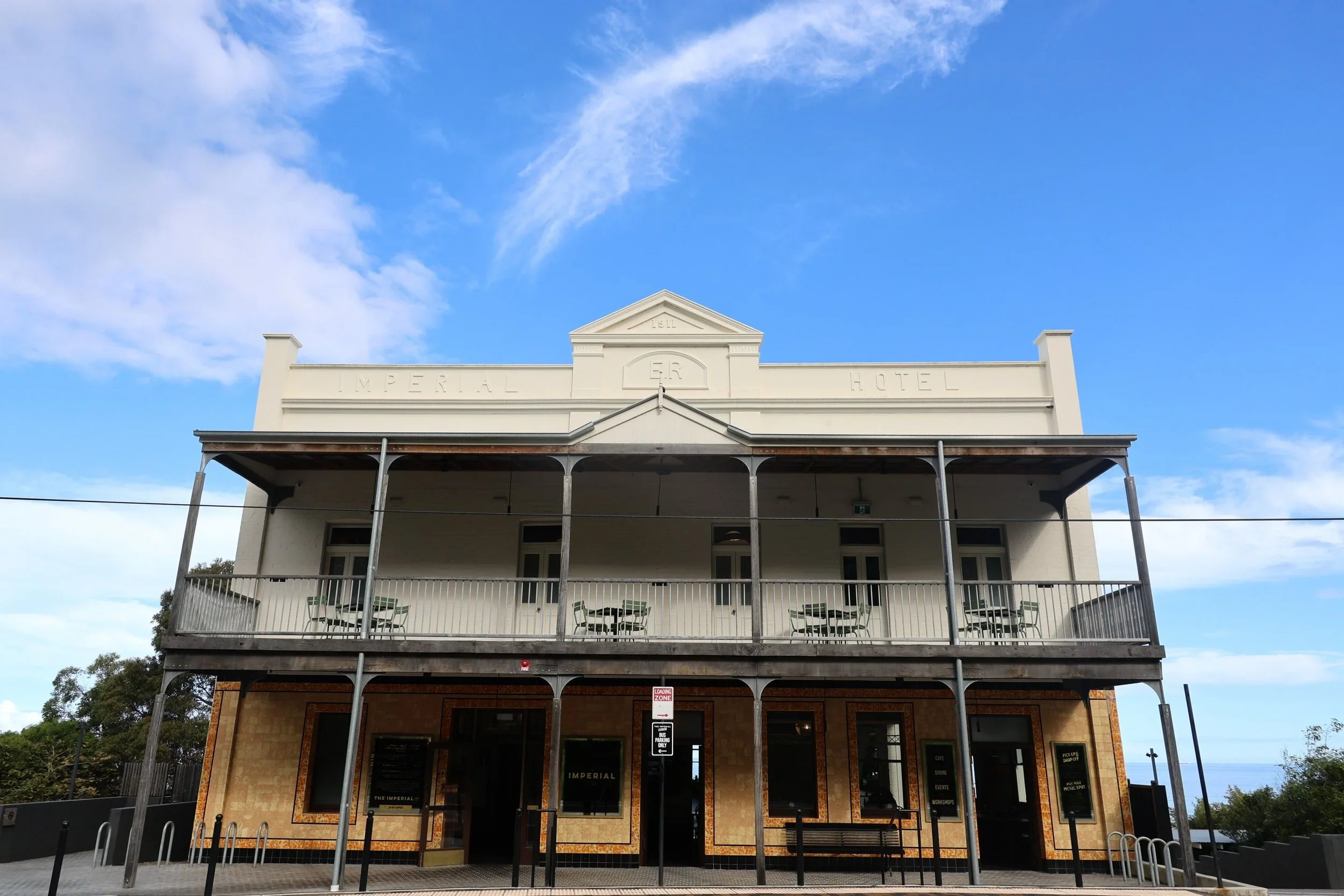
And if your in the mood for a little more try The Imperial at Clifton for a coffee, cold drink or something to eat. This hotel has been sympathetically renovated maintaining its historical features, has lots of natural light and broad ocean views.

It is only a few hundred metres down the road heading south. 


a wonderful bridge for a car commercial

view of the hovering bridge and Illawarra Escarpment from Bald Hill

a different perspective from the rock platform

green headed monster and mate

nobody understands me

the evil cliff and broken guard rail of former road

looking north

like insects to light motor cyclists are drawn to the bridge

The Imperial at Clifton

A unique wallaby at Symbio

Sydney Nimble had its first encounter yesterday with a wallaby joey, Olaf, at Symbio Wildlife Park.

Olaf is an albino and is indeed a rarity, with the chances of being born an albino estimated at 1 in a 100 00. He is the offspring of two proud red-necked wallaby parents!

Olaf was born seven months back but it took a while for zoo staff to recognise his albinism.

No they weren’t sleeping on the job, it just takes a while to pick out albino features as wallabies are on the tiny side at birth, around the size of half of your thumb.

This small joey is named after a character in the Disney film series franchise, Frozen.

We look forward to seeing Olaf becoming a full grown albino wallaby in the months and years ahead.

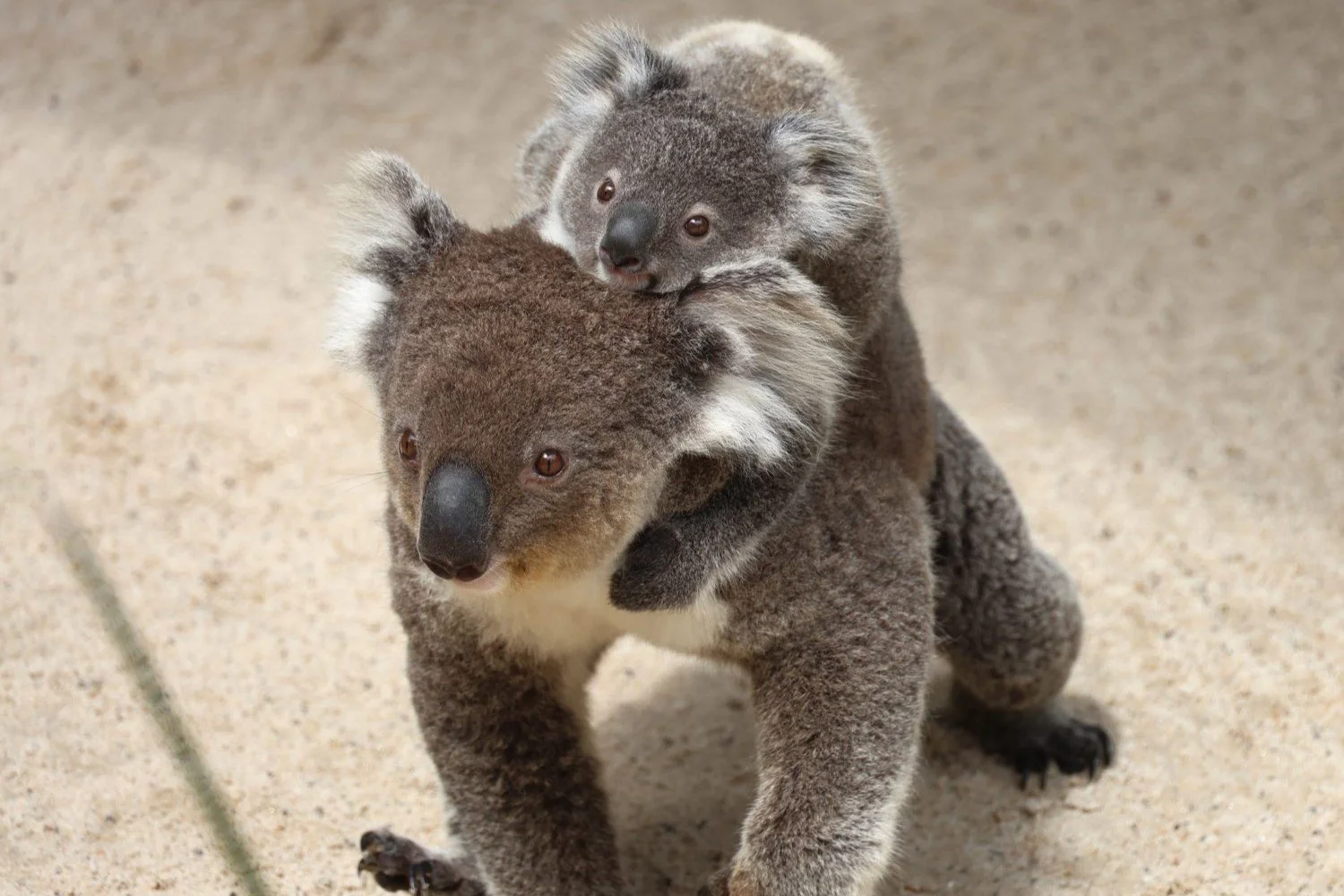
Whilst on the topic of joeys we couldn’t help but take a photo of a koala joey who was happily sleeping just before the 3pm koala exhibition. The arrival of fresh eucalyptus branches did however get the joey alert and moving.

Whilst at Symbio we came across a member of the Honeyeater family, an Eastern Spinebill. Note the long curved beak and warm colours.

These small pretty birds are not easy to photograph and move quickly so it was nice to see one first hand!

A staff member of Symbio made the task of taking a photograph easy as she was holding the Eastern Spinebill in the palm of her hand after the bird collided with a glass window at Symbio.

The bird was stunned and it was anticipated that the small bird would recover after a short period of rest, and fly off.

Fly birdie fly!

We wish the Eastern Spinebill a speedy recovery!

The final photograph from yesterday is of two dingoes who came unusually close to the fence. Its the closest I have been to a dingo!

a media star - announcement by Symbio was picked up local newstations and by several international media outlets

mum and son enjoying a grassy munch

so cute!

audience or no audience, happily dozing

a rare chance to see an Eastern Spinebill up close

another rare event - the dingoes do not generally come this close to the fencing at Symbio

Spotting humpbacks Royal National Park Winter Waves

A low in the Tasman Sea sent some large swells to Sydney yesterday.

It was a brilliant day to be on the coast and the energy and power on display was irresistible to watch.

As fate would have it Sydney Nimble was doing a tour in the Royal National Park and further south to Bald Hill, Sea Cliff Bridge and Clifton.

The first photo below is a breaking wave on the reef in the waters off Curracurrang Cove, just south of Wattamolla.

As we headed further south on the Royal Coastal Track some hump back whales were spotted from the cliff (second photo).

Next stop was Curracurrong, home of Eagle Rock.

Normally the sea where Currcurrong waterfall drops into the ocean is reasonably calm and with the sun on it the water can take on a delightful translucent green colour.

See third photo below, solely for comparison purposes (taken a few months back).

Not yesterday however! It was a washing machine of white water (fourth photo).

Further down the coast at Sea Cliff Bridge the ocean was again showing its magic (photos 5-7).

The last two photos are of waves breaking in front of a salt water swimming pool south of Clifton.

Unfortunately we ran out of time to make Sandon Beach. Next big swell!

curling spray pattern coming off a wave crashing onto the rocks off Curracurrang Cove

Hump backs migrating north

gorgeous, but not yesterday (photo from a few months back)

same location, different look

Sea Cliff Bridge - right place to see the waves roll in

rock platform just north of Sea Cliff Bridge

not a day for rock fishing

another smashing wave

left the swimmers at home!

Royal National Park - Eagle Rock coastal walk

The coastal walk to Eagle Rock is a spectacular highlight of The Royal National Park

Eagle Rock is a large sandstone overhang in the Royal National Park, south of Sydney. It has the shape of an eagle’s head, with a beak, eyes and mouth on display.

Visitors are greeted with a sign depicting the shape of Eagle Rock when they drive into the Royal National Park from the south (Otford in the south) or from Sydney in the north via Sir Bertram Stevens Drive.

The only way to reach the eagle is by foot and it takes at least an hour and up to an hour and a half to walk to it depending on how often you stop and your walking speed.

And there are no shortcuts back!

Eagle rock can be accessed from the coastal track starting at either Garie Beach (south of the rock) or Wattamolla Beach (north of the rock).

Alternatively walkers can take the Curra Moors firetrail and head overland from Sir Bertram Stevens Drive.

As you approach Eagle Rock from the North you will see a large rectangular protruding block of sandstone.

The top of the rock is relatively flat and the rock looks rectangular in shape.

To see the rock from the south side it is necessary to cross Curracurrong Creek and if you look at it directly from the other side of the bay it is indeed very different.

You will now enjoy the view of an eagle’s head. There is no rectangle.

Weathering and erosion processes have carved out a shape that resembles the head of an eagle although some visitors see a less glamorous turtle’s head. We are going stick with an eagle’s head!

It is quite perplexing that from one angle you see a rectangle whilst from another angle you have the head of an eagle.

The first two photos below show the rock from the north and the third and fourth photos are taken from a southern vantage point.

If you proceed further south (80 metres or so) to the next waterfall which flows from Curra Brook, the rock changes again and it begins to lose its eagle shape.

Whilst on the topic of protruding rocks with facial features another overhanging rock has been identified in the Royal National Park.

The relative (fifth photo) is not as pretty as Eagle Rock but there are some distinct features: a forehead, eye, flattened nose or beak and a mouth.

Grumpy rock?

The final two photos are of a wedge tailed eagle, taken at nearby Symbio Wildlife Park.

Eagle Rock from the north looks to be just a protruding rectangular rock

close up

what a turnaround

celebrating the eagle

Grumpy rock

Wedge tailed eagle at Symbio Wildlife Park

a noble and beautiful bird

The Royal National Park freshwater pools

Sydney Nimble Tours recently visited a freshwater pool in the Royal National Park that we have not previously visited.

Sydney has recently had a few days of rain ensuring that the creeks in the Royal National Park have a good flow of water plus today’s weather was warm and sunny.

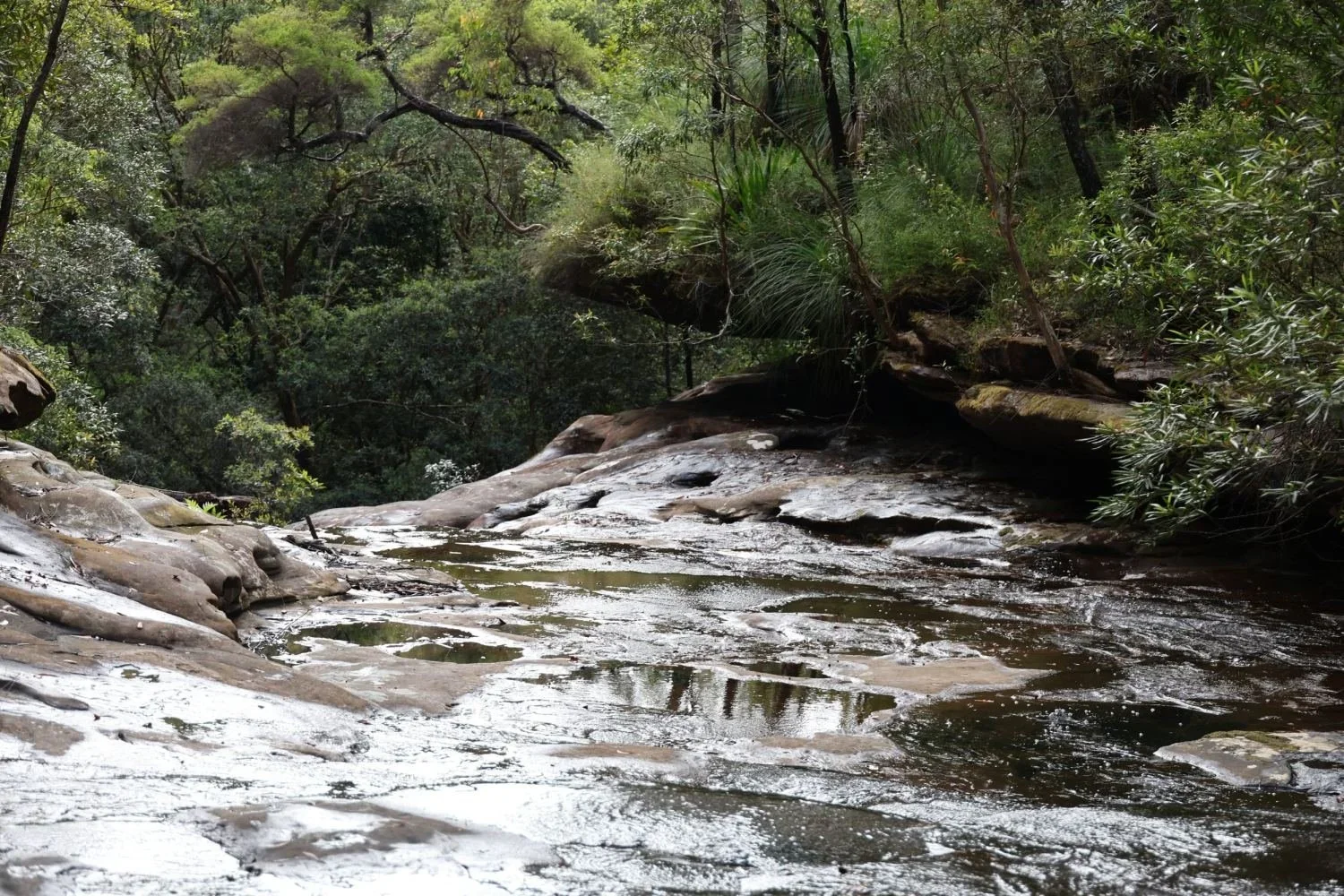
It’s all in the timing and our visit was rewarded with several refreshing swims in a peaceful bush setting.

If you want to hang out for a while a small nearby cave can provide shade from the strong summer sun.

goggles, not google, on show

new star mammal discovered

a nearby pool brought on a smile

Royal National Park - Palona Cave

Palona Cave is located in the Royal National Park and can be reached by starting from the gate at the southern end of Lady Carrington Drive.

Once on Lady Carrington Drive head north until you hit a sign stating limestone cave. It is likely to take at least 30 minutes to walk from the gate to this sign.

The sign is on your left and easily missed so be vigilant.

After a gradual ascent along a narrow fern enclosed track you will reach Palona Cave which is one of many sandstone rock formations at the top of the valley.

Palona Cave is not your average cave with stalactites and stalagmites.

Both of these formations are known as speleothems, which also include other shapes such as flowstones.

Without overdoing the technical side of things the formations have come about from groundwater that has seeped along the bedding plane of the cliff above the cave.

This water has absorbed small amounts of lime. The water drips into the cave leaving residual lime after evaporation on either the floor of the cave or the point from where it entered the cave.

Over much time the residual limestone forms stalagmites and stalactites.

The stalagmites and stalactites at Palona Cave have emerged from a sandstone cave and not a limestone cave, as is normally the case. 

The formations at Palona Cave do not have the classic beauty of formations at limestone caves such as Jenolan Caves and look like they could do with a good clean to remove dirt, dust, cobwebs and moss.

Close to the cave is a waterfall.

The last photo is taken from the creek above the waterfall although it is a difficult clamber to reach. Probably not worth the effort, just look at the photo and be happy.

If you want to see something unusual in a cave then Palona Cave is your place!

If you would like to increase the walk into something more serious (3hrs plus) add in the forest track in as well.


Palona added something special to this relationship

rocky and dry

is there an eye?

staligmite

what is that?

Palona Brook

Thar she blows! Whale watching in Sydney

Its whale watching time again and there are plenty out there at the moment.

Many hump back whales were spotted whilst walking to Eagle Rock on the weekend.

Slightly more were seen on Saturday (around 30) than Sunday (15-20) but whose counting!

Our international spotter and guest, Lyndon, did not miss a beat and was able to locate whales at will.

It is exciting to see whales close to your location and even more interesting if you come across a pod of whales.

We were lucky to succeed on both counts.

Hearing the spooky sounds made by a whale in the pod was an unexpected treat.

It is estimated that more than 40 000 hump back whales annually migrate from Antartica to the warmer waters of Queensland for the purposes of mating and calving.

The whales will begin migrating back south from September to November.

A long way to get some action!

with the flip of a tail

When the whale exhales through its blowhole the warm air condenses with the colder outside air. This reaction creates what looks like a spray.

line up whales

pod on the move northward

Bird watching in The Royal National Park Sydney

We regularly spot a variety of Australian native birds on our Royal National Park tours.

The Australian Raven and New Holland Honeyeater are often seen whilst walking on the coastal track in the Royal National Park.

Australian Raven

The glossy black Australian Raven is found in many parts of Australia and is common in southwest WA and the eastern parts of Australia. If you see a bird in Sydney that you think is a crow it is much more likely to be a raven. The two birds are very similar in appearance.

Some physical differences include ravens being slightly bigger than crows and ravens have longer feathers around their neck (known as throat hackles). They also make different calls and a special feature of the Australian Raven is its distinctive call.  Between each call there is a few seconds of silence which is then followed by another call. The last note can be either the same or a longer drawn out wail: ….ah….ah….aaah or ah…ah…ah…ah - they are unmistakable!

Australian ravens have a white iris and black pupil although younger birds may appear to have a light blue eye colouring due to an inner blue ring around the iris.

A pair of ravens have based themselves at Eagle Rock in the Royal National Park and are comfortable with visitors provided you don’t get too close (four or five metres).

New Holland Honeyeater

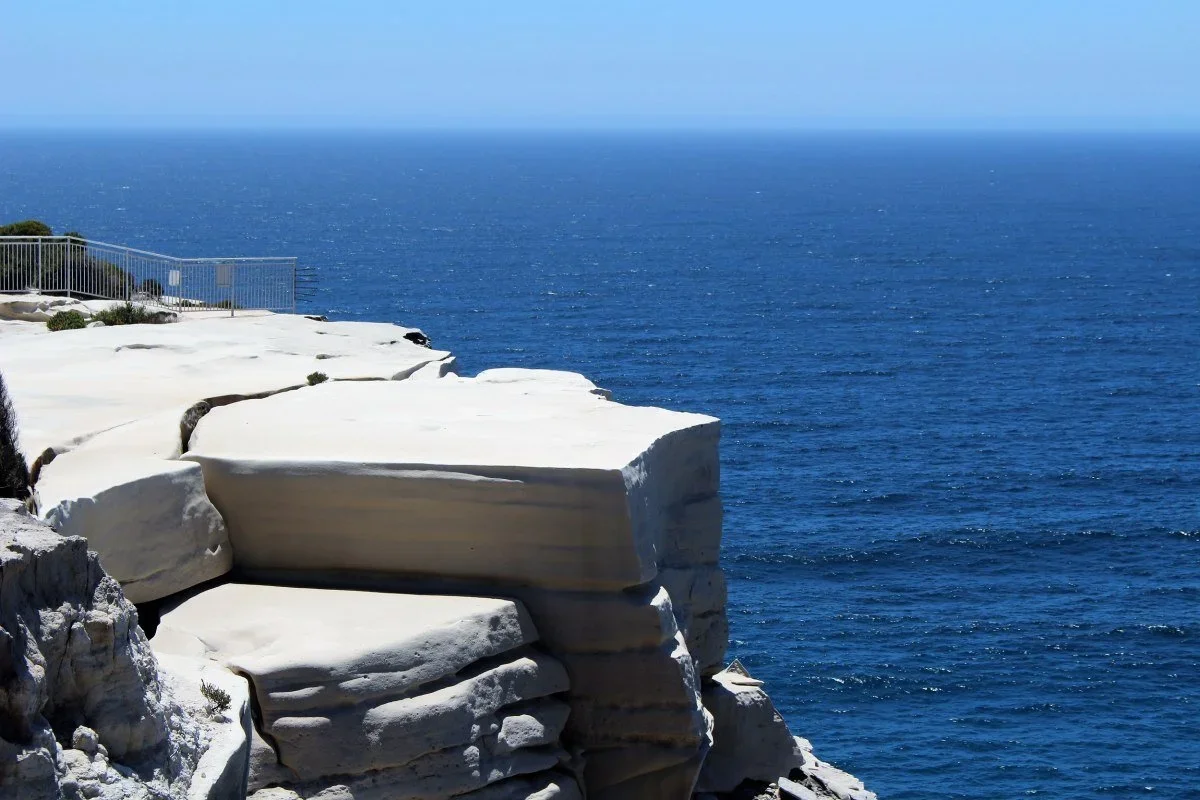
New Holland Honeyeaters are plentiful if you take the coastal walk to either Wedding Cake Rock or Eagle Rock in the Royal National Park.

The body of this small attractive bird is a mixture of black and white with a good dash of yellow on black feathers. They will often be seen flying in small flocks.

The New Holland Honeyeater is not an easy bird to photograph - if you get anywhere near them they quickly fly away. These birds dart in and out of bushes looking for nectar, fruit and insects and can scoop up nectar in less than a second using their brush tip tongue.

The time between getting your camera from your bag into hand seems forever and most often you will miss the shot - we’ve learnt that it’s best to have it ready, slung over the shoulder as you walk.

After many visits to Wedding Cake Rock it was exciting to get a few close up photos of these birds.

Two birds in the bush are worth more than a bird in the hand!

dead eye stare

glossy black feathers

perched and proud at Curracurrong Falls

inquisitive New Holland Honeyeater

and ever watchful

yellow tailed black cockatoo on the move

The Royal National Park - the Botany Bay diamond weevil

The Botany Bay Diamond Weevil (BBDW) generally comes in either green or blue mixed with black.

Whilst walking to one of gems in the Royal National Park, Eagle Rock, we had the pleasure of acquainting

ourselves with this little bug.

A chequered pattern of black and aqua made it stand out in the bush even though it is small (up to

2.5cms).

It is exciting to come across a new insect, particularly a striking one.

The BBDW was one of the first insects identified in the Botany Bay area by First Fleet Botanist, Joseph Banks.

A weevil is a type of beetle, which are known for their elongated snouts,

The snouts allow the weevil to chew holes in plants for food and to make holes for egg chambers.

It’s all about the snout

Love this place - good seating, plenty to eat

Sydney Spring Native Wildflowers in The Royal National Park

We are well into Spring and the Royal National Park’s native plants are producing some splendid flowers.

A few of the most spectacular wildflowers seen whilst walking on coastal tracks include the Drumstick, Gymea Lily and Waratah.

Two varieties of Drumstick are the Broad-leaf Drumstick and the Narrow-leaf Drumstick.

Bright yellow flowers are common to both species with the Broad-leafed Drumstick having leaves that are flat and fork-like whilst the leaves of the Narrow-leafed Drumstick are needle-like in appearance.

The first photo below of a Narrow-leafed Drumstick shows the delightful purple tinges that may appear prior to flowering on the spherical fruiting body.

If you look closely at the photo there is a spiraling pattern of thorn shaped purple hairs.

Over time the fruiting body which is at the end of the small branches will turn grey in colour and develop a barrel or cone shape resulting in the plant being named a drumstick.

Gymea Lilies are very different to other plants in the Royal National Park and can be seen in many places as you drive through the park.

These plants are native to the Sydney region, sending up long narrow green shoots that reach several or more metres and are topped with a striking red flower.

A third wildflower we came across whilst walking on the Curra Moors Track to Eagle Rock, is the Waratah.

The Waratah is the floral emblem of New South Wales, having a vivid red-pink flower which grows in the state’s bush in clumps of tall stems.

In the second last photo the small attractive red/pink and white bell shaped flowers of the Fushia Heath are in the foreground.

The white flowers of the Heath Myrtle can be seen in the background.

pre-flowering purple power of a Thin-leafed Drumstick

Broad-leaf Drumstick and insects

Flaming red flowers of the Gymea Lily

Waratahs on the Curra Moors Track

Fushia Heath and Heath Myrtle

An explosion of colour on the track to Wedding Cake Rock

Callistemon pachyphyllus Green - a bottlebrush with a fantastic lime green flower

A new forest walk in the Royal National Park

Forest Track

Sydney Nimble has added a new bush walk to its Royal National Park Tour.

Unlike some of our coastal walks through heathland (Wedding Cake Rock and Eagle Rock), the Forest Track offers a chance to see a very different environment in the national park.

Part of the walk is through a forest whilst the second half moves into a rainforest.

The track is a loop track so you finish within 50 metres of where you started. The track takes the rough shape of a loop as it follows and stays inside of Bola Creek and the Hacking River.

The range of vegetation is diverse and interesting.

There is a small patch of large Gymea Lilies where the sword like leaves are exceptionally high. Can’t wait for these plants to bloom with long shoots and wonderful red flowers on the end.

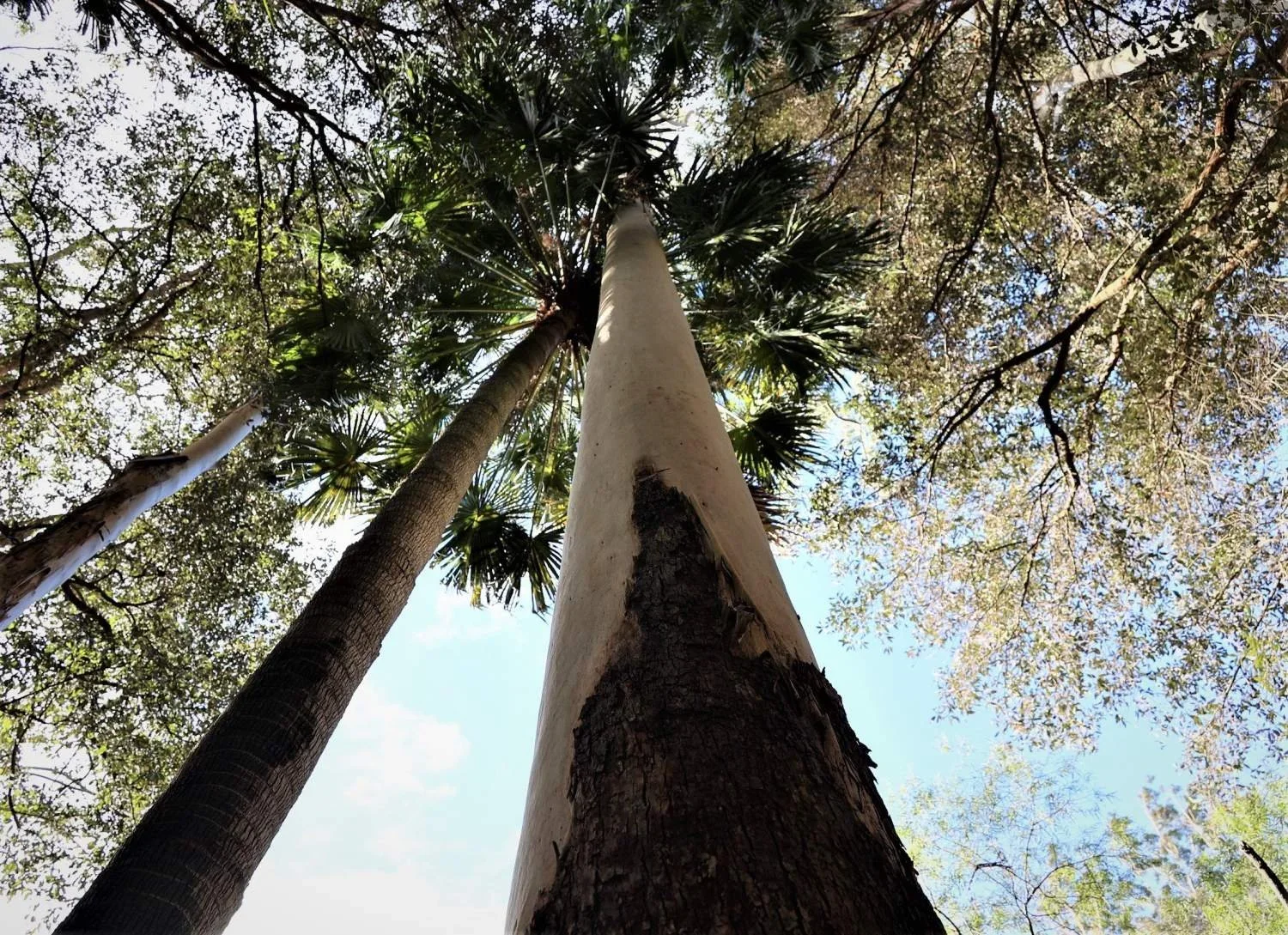
There are many cabbage tree palms of varying sizes, some as high as 25 metres, maybe more. Sorry didn’t bring the tape measure!

One of the real treats is coming across tall red cedar trees.

These trees were saved from loggers in the 1920s after community protest. In view of the high value of the timber from red cedar trees the trees were known as red gold. There’s gold in them there hills!

Attached to some trees are epithytes, which are plants that do not put down roots on the ground but instead have roots located on another plant or tree.

This allows the epithyte to exist closer to the forest’s canopy and obtain access to better quality light.

Unlike a parasite an epithyte does not take nutrients from the tree. It will instead rely on airborne nutrients, rain for water and compost on tree branches to survive.

Two attractive epithytes that can be seen on the Forest Track are the bird nest and staghorn ferns (first two pictures below).

There is fungi (check out third photo), lichen and much plant life to see when you walk through the rainforest: bright green moss on logs and boulders, epithytes, hollow trees, ferns, palms, eucalypts, casuarinas, red cedar trees and lianas.

Lianas are long stemmed woody vines that use trees and other means to make there way upwards to the rainforest canopy in search of sunlight.

if you are lucky you may come across a lyre bird whilst walking on the forest path.

Lyre birds are a native Australian bird which have the incredible capacity to mimic other birds and animals. They have also been known to imitate human sounds and sounds made by machines.  

The Forest Track takes around an hour and half to walk and Sydney Nimble is delighted to include it in our Sydney Tours.

high and healthy staghorn ferns

thriving bird nest ferns

Fungi (Hygocybe erythocrenata) encountered on the Forest Track

dont trip on the liana, it moves for no one

lyre bird on the move

hollowed out tree

tall timber

Australian Wildlife Experiences - The Tasmanian Devil

An option on our Royal National Park private day tour is a visit to Symbio Wildlife Park where visitors can see a number of unique Aussie animals.

One of our favourites is the Tasmanian Devil, one of Australia's most well known native animals.

It is a marsupial, which is basically a mammal whose young are incompletely developed at birth and typically carried in a pouch.

They are only found in the wild in Tasmania, becoming extinct on the mainland around 3000 years ago.

When you look at the Tasmanian Devil’s head and face there are no devilish horns and the standout features include a moist black nose, many whiskers, dark deep eyes, two fang teeth near the corners of the mouth and large flappy ears.

The devil’s body has an attractive colouring of black fur with a white band running across the chest.

Their front legs are larger than their back legs which helps with climbing.

This difference in the front and back leg sizes can result in devils looking like they are galloping or skipping when they run.

A keen sense of smell allows devils to find fresh carcasses at night and they may travel many kilometres seeking out the recently deceased.

A great Australian scavenger story!

Devils are inquisitive and may look you directly in the eye, or just stand and sniff the air.

Tasmanian Devils have extremely strong jaws allowing them to eat all parts of an animal – fur, muscles, organs and bones. Nothing gets wasted.

Their dietary requirements do not go beyond the living or recently living and include wombats, kangaroos, rabbits, possums, birds and even insects. Plants need not apply.

The animals ears are unusual being pink in colour that will turn to purple colour if the devil is agitated.

So why then are these creatures called devils at all?

The answer lies in the noises they usually make at night, being primarily nocturnal.

Devils will ferociously fight each other over food or finding and keeping a mate, making growling, blood curdling noises in the process.

This behaviour explains their naming as a devil, but I would suggest a very likeable one. 

standing tall

Why does Sydney Nimble keep visiting me?

born to sniff at Symbio Wildlife Park

cute brute

Natural pools in the Royal National Park - Olympic Pool & Karloo Pool

Olympic Pool has been on Sydney Nimble’s wish visit list for quite a while. Last Friday this desire was satisfied.

The conditions were highly suitable, warm weather and recent rains. It is best to visit after some rain as the pool will have a fresh flow of water.

We made our way to Olympic Pool after meeting at Heathcote Station and taking the track to Karloo Pool. The walk to Karloo takes about 50 minutes if you don’t stop.

Karloo Pool is a lovely freshwater pool and a good place to have a break.

The next leg of the journey requires following the twists and turns of the creek for quite a while until you reach Olympic Pool.

You may find that you have the pool to yourself as the solid walk to it reduces the enthusiasm of many adventurers.

Olympic Pool is a pleasant place to hang out having a few dips and maybe lunch in between. The green colouring of the water and reflection of the shrubs and trees on the water make for a pretty scene.

The pool’s name is based on its length which is similar, maybe longer, than the length of a 50 metre Olympic swimming pool. If your a swimmer bring goggles and do a few laps.

 Nothing like the feel of freshwater!

green and serene Olympic Pool

just walk off the rock into the refreshing green

capped and cool

tiny waterfall found on the way

pristine pool before OP

Deer pool and Marley Beach walk

The Marley Track takes you from the road into Bundeena down to Marley Beach. The track is 3.6 kilometres long and if walked without stopping it will take around 75-90 minutes to reach the beach, depending on your walk speed.

On the way to Marley Beach the delights of the Deer Pool await. There were no deers in sight on our visit.

Sydney Nimble has only encountered a deer in the Royal National Park on one occasion and that was later in the day on the road to Garie Beach. The deer looked at us and we looked at the deer, both a little stunned, and then we drove on.

The Deer Pool is small freshwater pool with a sandy bank and the refreshing waterfall that allows, should you so choose, to emerge yourself underneath.

Go on, enjoy the splash.

After having lunch at this lovely spot we headed to Marley Beach and walked over the rolling sand dunes behind the beach.

Don’t underestimate what appears to be a relatively short walk, as sand dunes are an arduous surface to walk on.

At the end of the dunes a sparkling lagoon awaits with many reeds.

When we returned to the beach the surf was powerful and a potential swim was left for another day.

Time to head back but as it was a hot day why not have another swim at Deer Pool, which we did.

this pool is dear

and loving it

So pretty! Marley Beach Lagoon

thundering waves - south end of Marley Beach

yellow power

Marley Beach surf

Karloo Pool, Royal National Park Tour Sydney

Karloo Pool is a freshwater pool located on Kangaroo Creek in the Royal National Park.

It takes around 40 minutes to walk down to the pool and little bit longer to return as the walk back is mostly uphill.

We visited Karloo Pool on a sunny February day. The sun brings out the best in the pool highlighting its clarity and emerald green colours.

Access to the pool is very easy as you wade in via some gently sloping rock ledges before hitting the deeper water.

The water temperature of the pool was fine for today’s visit and provided refreshing relief after the walk down to the pool from Heathcote Train Station.

A local goanna came out of the rocks to greet us or perhaps to share a dining experience. We did not indulge the goanna.

Kangaroo Creek offers many pools and a nearby pool provided a good reason for a second swim.  

Karloo Pool is yet another delightful swimming spot in the Royal National Park and a lot of fun to visit.

chilling at Karloo Pool

colourful local

gentle nearby pool

curling rock in a natural bush setting

Figure 8 rockpool near Gawarra Farm

The Figure 8 rockpool is located in the Royal National Park, south of Sydney. Most people park their vehicle at Garawarra Farm and walk from the carpark.

If you are planning a visit only consider visiting around low tide and when the seas are calm. In other conditions the rock platform can be very dangerous with breaking waves causing injury.

The walk to Figure 8 rockpool requires a long descent to Burning Palms Beach.

On the day of our walk the conditions were reasonable for surfing and the second photo shows a pleasant wave with an uncrowded line up.

Once you arrive at the beach walk south to the end of the beach and from this point some rock hopping is necessary to get around to the second headland.

The Figure 8 rockpool is as you would expect uniquely and naturally shaped in the form of the number 8.

It is a deep rockpool and photographs particularly well if the sun is shining.

Several other smaller interesting rockpools are located nearby.

The Figure 8 rockpool is in fact two potholes that have merged or coalesced.

Two theories are put forward in literature on the creation of potholes in rock platforms.

One view is that a pothole is created by the swirling action of sand, gravel, pebbles and larger rocks associated with wave action that grinds out the hole.

The depth however of the two potholes (approximately 3 metres) is thought to be of such an extreme that it is more likely that the pothole was created by the chemical breakdown of the rock, enhanced by salt and grazing molluscs.

After enjoying the rock platform you may wish to spend some time at Burning Palms beach.

Visiting Figure 8 rockpool is a fine day out but make sure your legs are in good condition!

Burning Palms Beach surf

going down

chill pool

gourd

fortitude required

Dolphins! Animal spotting The Royal National Park Sydney

Dolphins at Eagle Rock, The Royal National Park Tour

Sydney Nimble Tours took a newly married American couple to Eagle Rock two days ago.

Whilst at the rock we had the good fortune of coming across a group of dolphins playfully surfing the waves.

The view from the cliffs above offers great clarity and it was splendid to see the dolphins enjoying themselves.

The waterfall at Eagle rock cascades directly into the Pacific Ocean and it has a good flow at the moment.

For a private Sydney tour of the Royal National Park we have three options for different journeys in the Park.

You may get to see dolphins, a distant whale or even an echidna!

Sydney surfing of the marine kind

Sydney waterfall

re-charging after walking to Eagle Rock

Eagle Rock - Royal National Park Coastal Walk

Returning to the Royal National Park yesterday was like seeing an old friend.

This park never ceases to provide a wonderful natural environment. And fortunately the park has been spared from devastation of recent bushfires.

The tour group was impressively hatted up and had no trouble with the Eagle Rock walk. The walk was followed up with a visit to Symbio Wildlife Park.

We also noticed a few late season blooming banksias and wildflowers.

A blooming banksia is easy on the eye

marching to Eagle Rock

Symbio Wildlife Park - hanging on a branch all day can be hard work