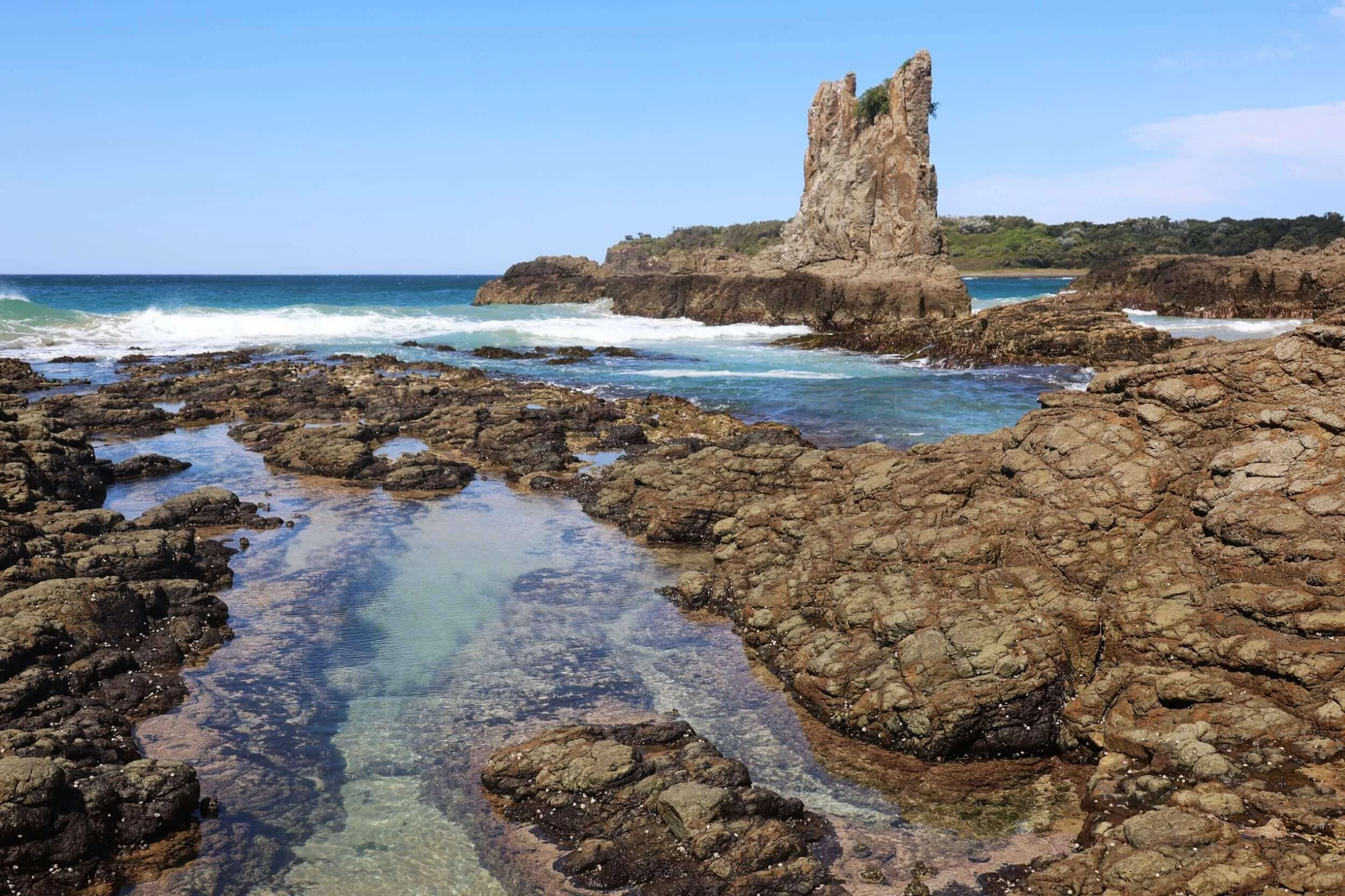
Sydney Harbour Bridge

Perception is often everything in determining how we feel about things. The Sydney Harbour Bridge (SHB) is a structure that can be perceived in many ways. What do you see when you look at the SHB?

From one perspective the SHB is a large steel bridge that allows for the efficient transport of commuters. It provides a crucial transport corridor connecting the north shore of Sydney to the city and several expressways.

Alternatively the SHB can be evaluated from an engineering perspective.

The construction of the SHB began in 1924 and finished in 1932. It was built during a period when computer assisted design and manufacture did not exist. The bridge was built from both ends so that the arch was complete when the two halves of the bridge met in the middle.

Would the two halves align when it was time for them to be joined and how would a steel bridge of this scale deal with expansion and contraction in varying weather conditions. Would the bridge be strong enough to take the large daily load of passenger vehicles and trains.

From an identity viewpoint the SHB is one of Australia’s most well known and popular symbols. It was a brilliant achievement for a young nation and the 100th year anniversary of the commencement of construction is only four years away.

That achievement came at a price. Sixteen workers lost their lives during construction and it took over 50 years to pay off the cost of building the bridge (1988).

Aesthetics as opposed to any functionality was behind the decision to build two massive granite covered pylons at each end of the SHB arch. The four pylons are 89 metres in height and the light grey colour of the granite complements the bluey grey colour of the arch.

The pylons project strength and provide symmetry when the bridge is observed from the distance.

The SHB offers ongoing activities, although a lot of people would not see it in this way.

You can simply drive across it and enjoy the view, walk or cycle across it, climb it, visit the Sydney Harbour Pylon or see it sparkle on News Year Eve when it is used for spectacular fireworks displays.

One final perspective on the bridge is captured in the words of John Bradfield (chief engineer of SHB) who described it as ‘the blue arch of Heaven’.
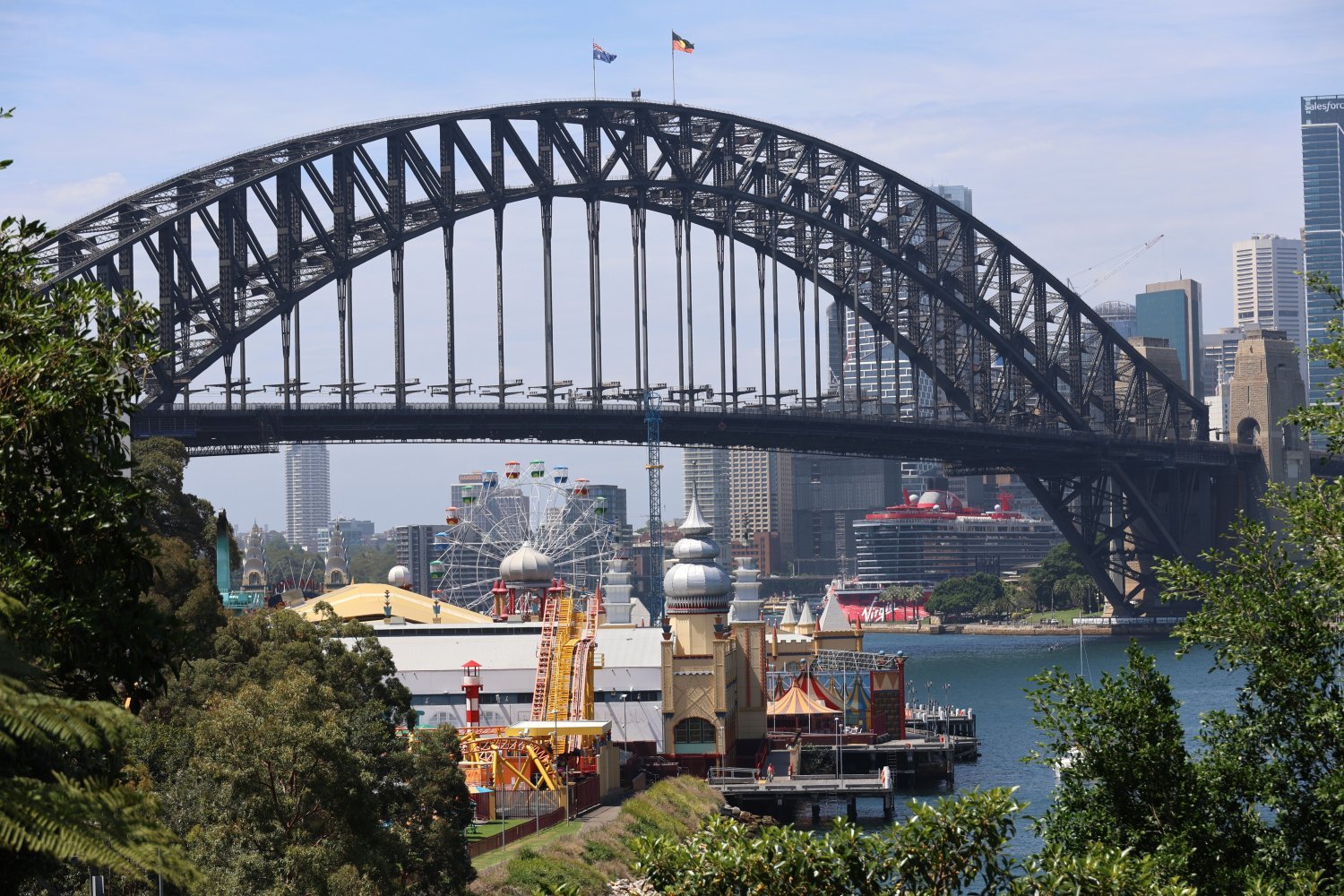
view from Lavender Bay

pylon power

Sydney Art Deco Architecture

Art Deco is a style that was adopted in both the exterior and interior of buildings, light fittings, carpets, ceramics, clocks, furniture, machines, household appliances, cars, ocean liners, jewellery, ornaments and posters in the period between the two world wars.

Art deco is unashamedly flamboyant and reflects the larger than life mentality of the 1920s.

The term Art Deco evolved in the 1960s from a shortening of two words, ‘Arts Decoratifs’, as used in the title of a 1925 design exhibition held in France: “Exposition Internationale des Arts Decoratifs et Industriels Modernes”.

Some of the characteristics and features of Art Deco designs include: geometric shapes in the form of triangles, trapezoids, zigzags; chevron patterns; straight lines and sweeping curves, layered shapes and symmetry; vibrant colors; stepped forms and modern materials.

Art deco buildings may include elaborate panels and ornate carvings.

Sydney has rich vein of Art Deco architecture both in the city and surrounding suburbs. If you look for it you will find Art Deco commercial buildings, apartments, cinemas, hotels, shops and lift foyers.

We recently visited a few of our favourite Sydney Art Deco buildings.

The towers in the entrance to Luna Park (last photo) have classic Art Deco features including vertical and horizontal straight lines, trapezoids, vibrant colours and scalloping in the upper part of the tower.

If you would like to visit some of Sydney’s best art deco buildings let us know and we can design a half day tour or adjust another tour to include an hour or two visiting these buildings.


The Metro Theatre (formerly Minerva Theatre) has striking vertical and horizontal lines and gracious curves.

Black marble adorns the entrance to the CML Building. The business chamber inside, which is occupied by a restaurant, is exquisite.

The lobby of the Primus Hotel (formerly MWSDB Building) is grand, with amazing height, glass ceiling and scagliola clad columns.

Geometric shapes galore

the entrance to Sydney’s palace of fun (Luna Park)

Belmore and Carrington Falls, NSW

As part of the plan to add to our range Sydney Nimble Tours visited Belmore and Carrington Falls.

These two waterfalls are located in the Southern Highlands and the drive time from the Sydney CBD is around 2 hours, or slightly more depending on traffic.

First stop was Carrington Falls which is located in the Budderoo National Park.

Carrington Falls is a two pronged waterfall. Water cascades from two separate points. Another smaller waterfall and pretty pool is also located nearby at Nellie’s Glen.

After Carrington Falls we visited Robertson which is a town near Belmore Falls.

Robertson has amongst other things, a good pub, a highly popular pie shop and a gimmicky big potato, which we refused to photograph!

Belmore Falls is exceptional in that first waterfall drops into a pool (midway pool), and water from that pool then flows down to another cliff face where a second waterfall starts.

The surrounding sandstone cliffs and Eucalypt forest add to the brilliance of two waterfall spectacle.

Belmore Falls can be seen from two main vantage points.

One is accessed by parking on the roadside after driving across a small portion of road which dissects the Barrengarry Creek. It had a few centimetres of water running across it during our visit.

From this point you are at the start of the falls and the midway pool is almost directly underneath the lookout. It is a long drop down to the pool.

Focus on the gentleman in red, who posed for us in the fourth photo, to gain a perspective of the distance down to the pool.

The other vantage point, has several lookouts.

It is a short drive away and allows you to photograph the Kangaroo Valley and the falls from the distance (last photo).

We enjoyed our day in the Southern Highlands and will be adding it to a new tour.

Carrington Falls

Nellie’s Glen

top of Belmore Falls

a decent drop but not one to drink

Belmore Falls is magnificent

Blue Mountains Tour - Sydney's fascinating bush ecosystem

It’s time we had a conversation about Epicormic growth and lignotubers!

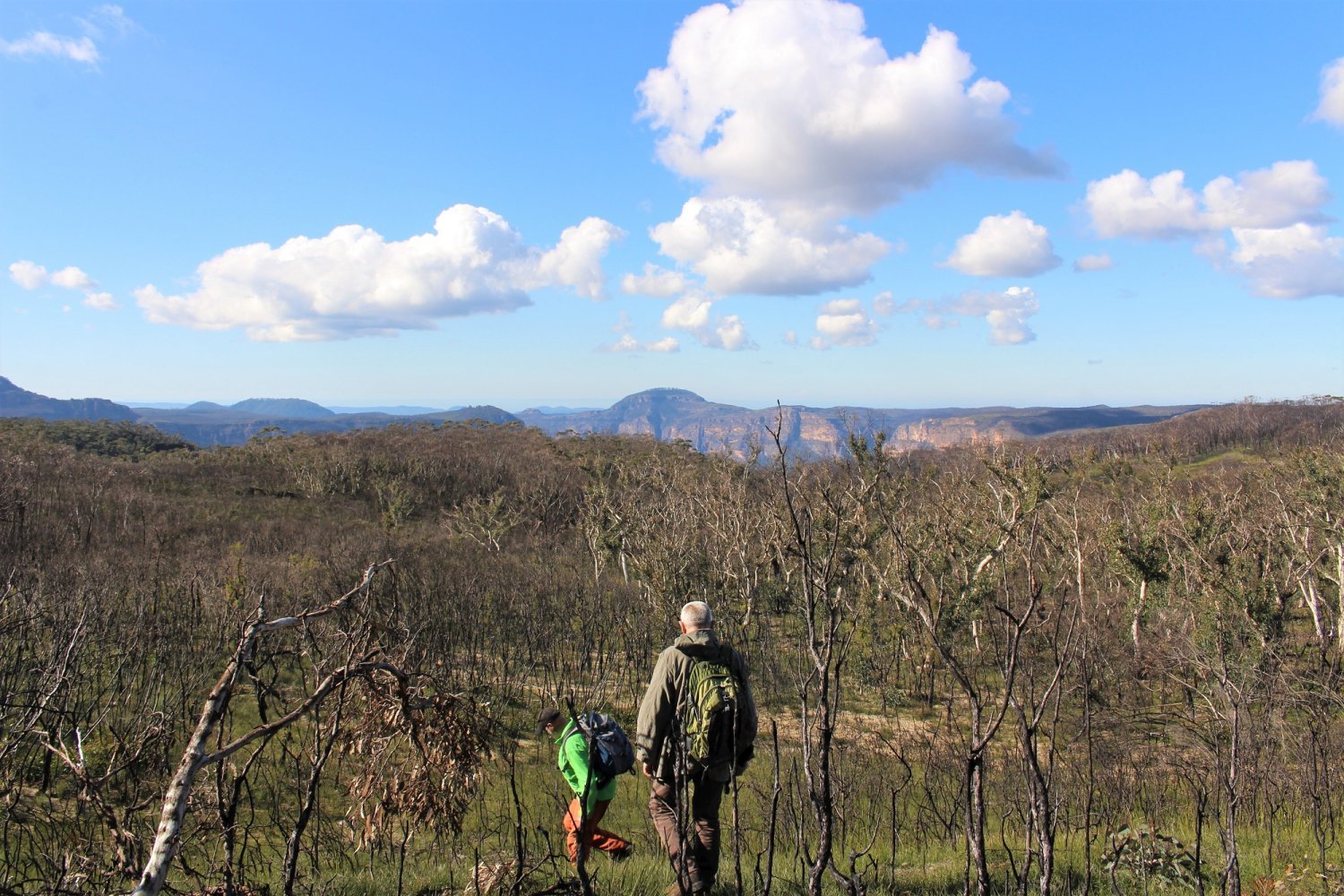
Sydney Nimble Tours visited the Blue Mountains to enjoy a bush walk and see how the bush is recovering from the January fires.

And the news is we have a compelling recovery story. The new growth is vigorous and brilliant to see.

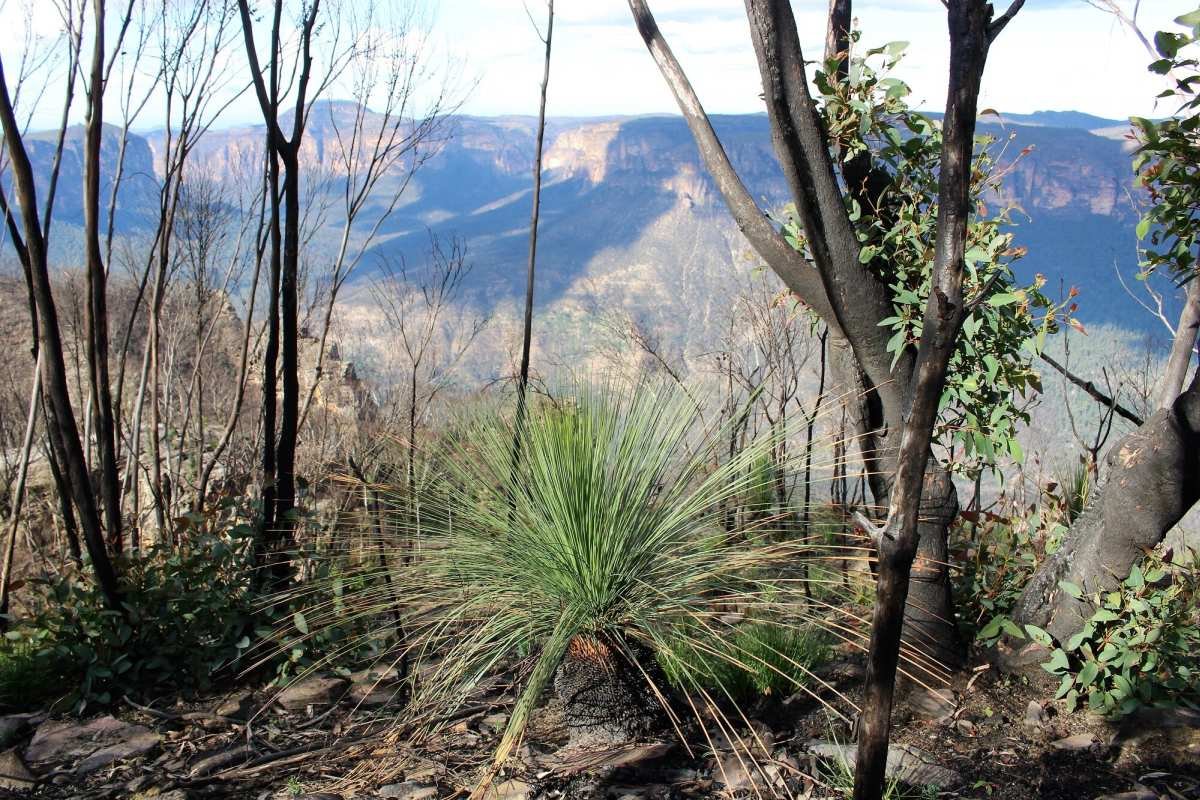
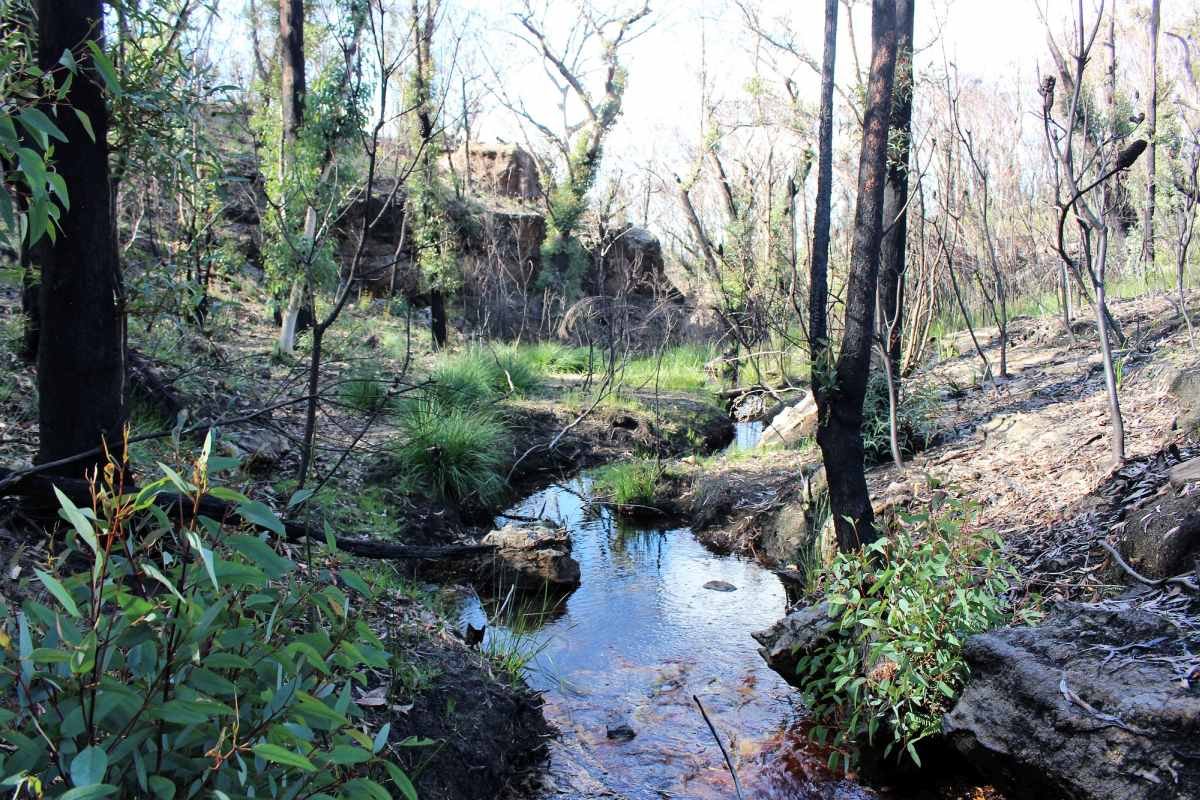
Lush ferns have come back in a small gully we visited, whilst the remarkably fire resistant grass trees look like they were never touched by fire.

Many of the Eucalypt trees are bursting with fresh pockets of growth.

Some of the Eucalypts have within a few months completely shed their burnt bark revealing a new layer of bark underneath (see first photo below).

More detail - a bit technical

The Australian bush is a fire prone ecosystem. It is a tough place. Two ways in which Eucalypt trees may regenerate is through epicormic growth and lignotubers.

Epicormic buds are dormant growth buds located deep beneath the bark of gum trees. Their positioning under the bark provides insulation from fire.

In normal times they are not active due to the hormones of buds above them. However after a fire or other stressful event these buds are activated.

Once activated the epicormic buds allow the tree to resprout with new growth in different places on the trunk and branches of the tree.

Lignotubers provide another way for some Eucalypt species to survive a bushfire.

Although a Eucalyptus tree may not survive an intense fire this form of regrowth occurs via large underground roots which remain alive.

New growth will sprout from these roots which are close to the fire damaged tree.

Can you see the two types of growth in the photos?

remaining patch of burnt bark

lush growth

rugged mountain types

grass trees are programmed to survive a fire

stream tranquility

Cape Solander surfing Sydney

It is late May 2020 in Sydney and the seas have been up due to a low pressure system off the coast of New South Wales.

There are a few places in Sydney that surfers seek out when large swells arrive.

One of these places is Cape Solander, which is located just south of the entrance to Botany Bay in the Kamay Botany Bay National Park.

Cape Solander was named after the Swedish naturalist, Daniel Solander, who visited Australia on the Endeavour in 1770.

Cape Solander is a hair raising break that is suited to surfers who are highly skilled, courageous and fit.

A give away for a large wave is the spray you can see at the top of the wave (first photo).

The waves at Cape Solander only start to perform when a reasonable swell is around, otherwise there is nothing to catch.

The boogie board rider in the photos was not being toed in whilst the stand up surfer at a nearby cliff break to the south (see last photo) was assisted by a jet ski.

If the seas are up and you want to experience the raw power of the sea Cape Solander is hard to beat.

You may also be treated to some spectacular surfing.

Sydney Nimble Tours can include a visit to Cape Solander in one of our days out.

take off

solid wave size

end of the line

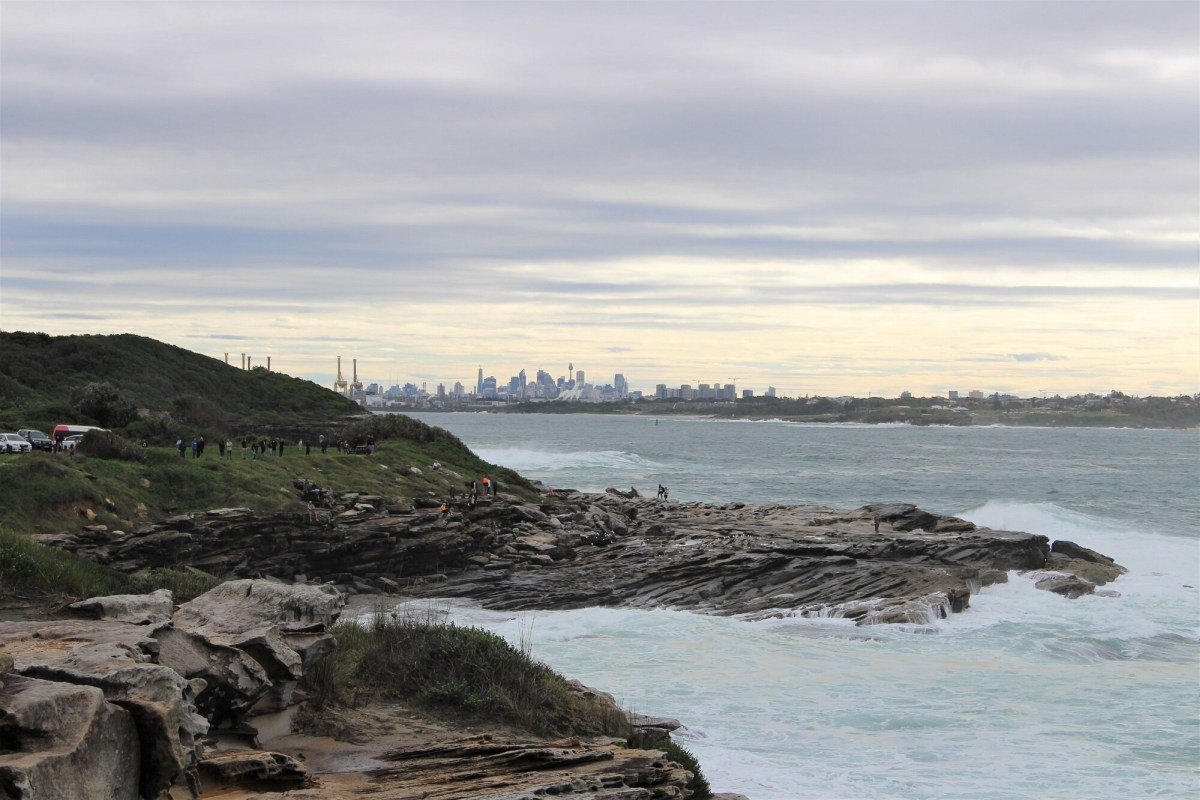
grassy knoll views, city in background

another powerful break

Northern Beaches Tour Spectacular Sydney Harbour lookout - Georges Heights

Sydney Nimble Tours visits Georges Heights on our Northern Beaches, Sydney Harbour, National Park tour.

This area has spectacular harbour vistas that include the entrance to Sydney Harbour, Watsons Bay, Rosebay and Shark Island. A good view of the city of Sydney is on offer if you look south west.

The harbour aspect also provided a solid location to install defensive artillery should Sydney Harbour come under attack.

Military memorabilia in the form of gun pits, fortifications, canons and anti-aircraft guns have been well maintained and are on display at Georges Heights.

A former military hospital which was built for patients from World War I houses the anti-aircraft gun.

Close to the gun pits is the Gunner’s Barracks, a fortified sandstone building built in the 1870s. This building was constructed to accommodate artillerymen whose job was to look after the artillery and if necessary fire it.

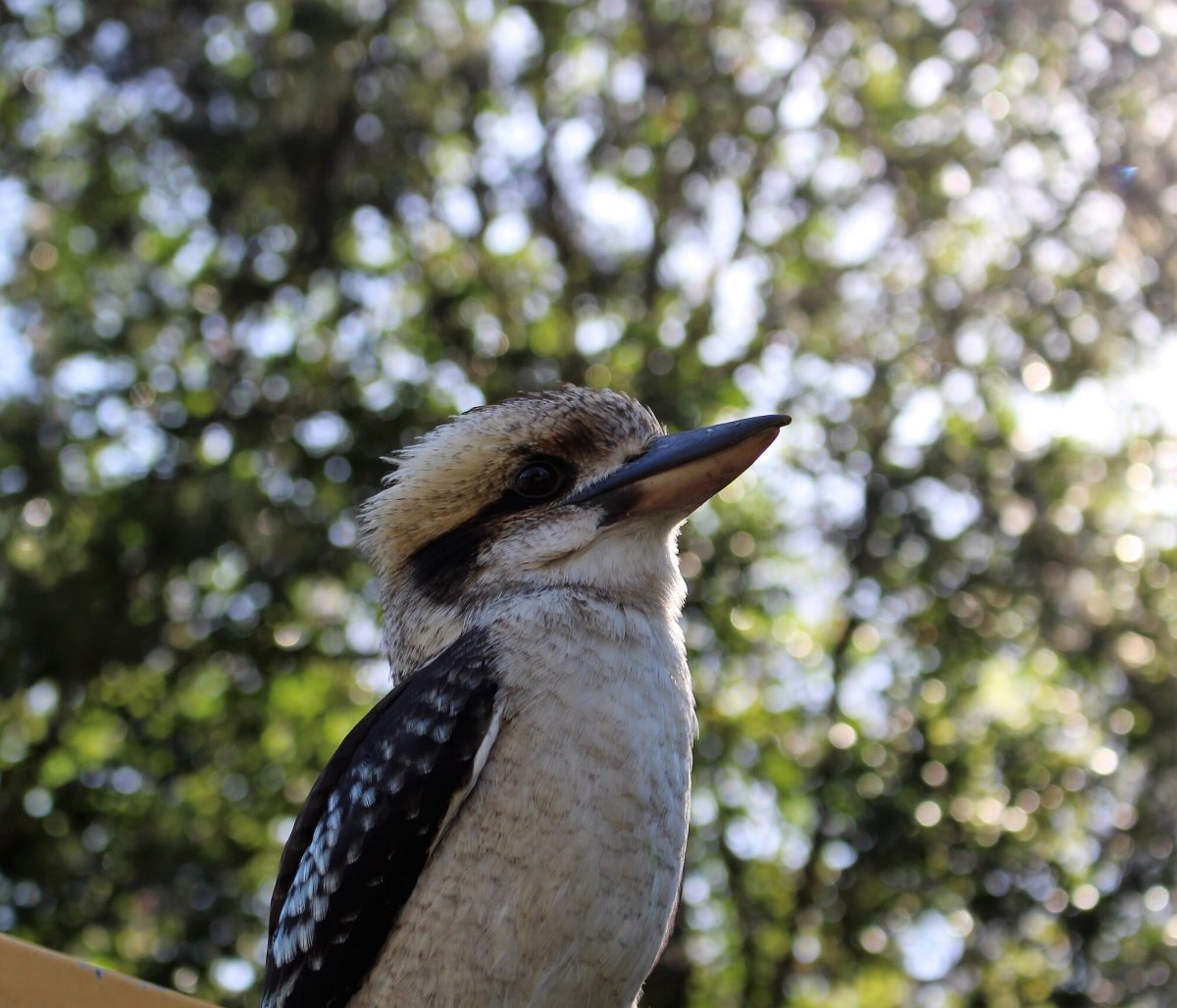
In the course of a recent visit to Georges Heights we came across a chilled kookaburra resting on a sign near the Barracks.

Our feathered friend was most accommodating and happily posed for photographs.

The kookaburra is a member of the Kingfisher family and has one of the most unusual bird calls.

The laughing Kookaburra is not laughing at another kookaburra’s jokes! The cackle of the Kookaburra is a territorial call aimed at warning other birds to stay away.

Be gone, the insects, lizards, rodents and small snakes in this patch are mine!

The word kookaburra is yet another example of an indigenous word enriching our language and originates from the Wiradjuri word “guuguuburra”.

a delightful Australian bird

boom

loud and proud

Dolphins! Animal spotting The Royal National Park Sydney

Dolphins at Eagle Rock, The Royal National Park Tour

Sydney Nimble Tours took a newly married American couple to Eagle Rock two days ago.

Whilst at the rock we had the good fortune of coming across a group of dolphins playfully surfing the waves.

The view from the cliffs above offers great clarity and it was splendid to see the dolphins enjoying themselves.

The waterfall at Eagle rock cascades directly into the Pacific Ocean and it has a good flow at the moment.

For a private Sydney tour of the Royal National Park we have three options for different journeys in the Park.

You may get to see dolphins, a distant whale or even an echidna!

Sydney surfing of the marine kind

Sydney waterfall

re-charging after walking to Eagle Rock

Spectacular sightseeing on our Blue Mountains day tour

Sydney Nimble Tours took two travellers on a personalised tour of the Blue Mountains a few days back.

It was our first tour since the recent fires and we did so with some trepidation.

The bush has been badly burnt in some parts whilst in others it has been left untouched.

The beauty of the Blue Mountains still remains and it was pleasing to see new growth on many eucalyptus trees.

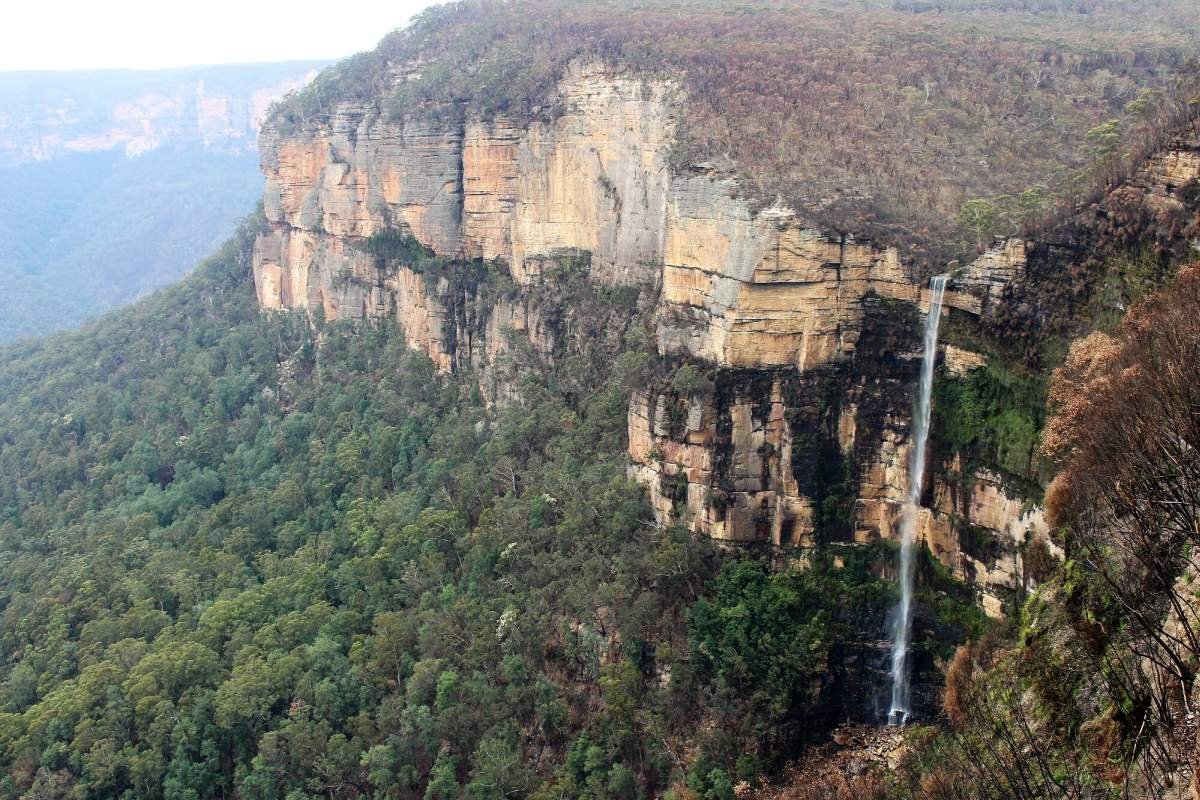
Due to recent rains there was plenty of cascading water at the Bridal Veil waterfall.

A few photos from our recent trip.

Bridal Veil Waterfall

green Jamison valley can be seen from Lincoln rock

a hard job but somebody has to hold this rock up

Eagle Rock - Royal National Park Coastal Walk

Returning to the Royal National Park yesterday was like seeing an old friend.

This park never ceases to provide a wonderful natural environment. And fortunately the park has been spared from devastation of recent bushfires.

The tour group was impressively hatted up and had no trouble with the Eagle Rock walk. The walk was followed up with a visit to Symbio Wildlife Park.

We also noticed a few late season blooming banksias and wildflowers.

A blooming banksia is easy on the eye

marching to Eagle Rock

Symbio Wildlife Park - hanging on a branch all day can be hard work

Swimming Spots in Sydney National Parks

A bush walk followed by a cooling swim in the heat can't be beaten.

Sydney Nimble Tours recently visited a waterfall and refreshing pool in the Blue Mountains.

The next few months provide a great opportunity to enjoy the water, whether that be a swim at the beach, lounging in a rock pool or visiting a freshwater pool.

On a recent Sydney Harbour, Northern Beaches & Ku-Ring-Gai National Park tour a visitor made the point that Sydney beaches have a lot of swimming pools.

The comment is spot on and if you are interested we can easily include a short visit to a saltwater pool or a protected harbour beach as a part of the day.

By only taking small groups, including Sydney solo travellers, Sydney Nimble Tours can be truly nimble getting you to places that Sydney visitors often don’t see.

trickling waterfall

temperature drops as you head to the darker water

Curl Curl Ocean Pool at dusk

Curl Curl beach is a handy place for a cooling swim

Sydney Walking Tour The Royal National Park

Our Eagle Rock walking tour is a popular option for visitors.

Sydney Nimble Tours visited Eagle Rock on Friday, walking north from Garie Beach. The walk provides fantastic views from the headland of Garie Beach to the south and the coastline facing east.

The walk finished at Eagle Rock and the waterfall just near it. This place is spectacular and when a large wave hits the cliff a loud thunderclap can be heard for hundreds of metres.

The ocean near the Eagle Rock is not deep and the sand can be seen when you look down from the cliffs.

The water on a sunny day takes on a light emerald green colour.

A walk to Eagle Rock takes around 2 and a half hours return.

If you would like a Sydney hike there are so many options - easy and short up to longer and more expansive.

Talk to us and we can work out what is best for you.

up the creek

the eagle is stranded

green machine

Looking south from Garie Beach headland

Royal National Park Tour plus koalas

Sydney Nimble Tours visited Wedding Cake Rock yesterday.

We then left the Royal National Park and headed to Symbio Wildlife Park. One option available with our Royal National Park Tour is to include a visit to Symbio.

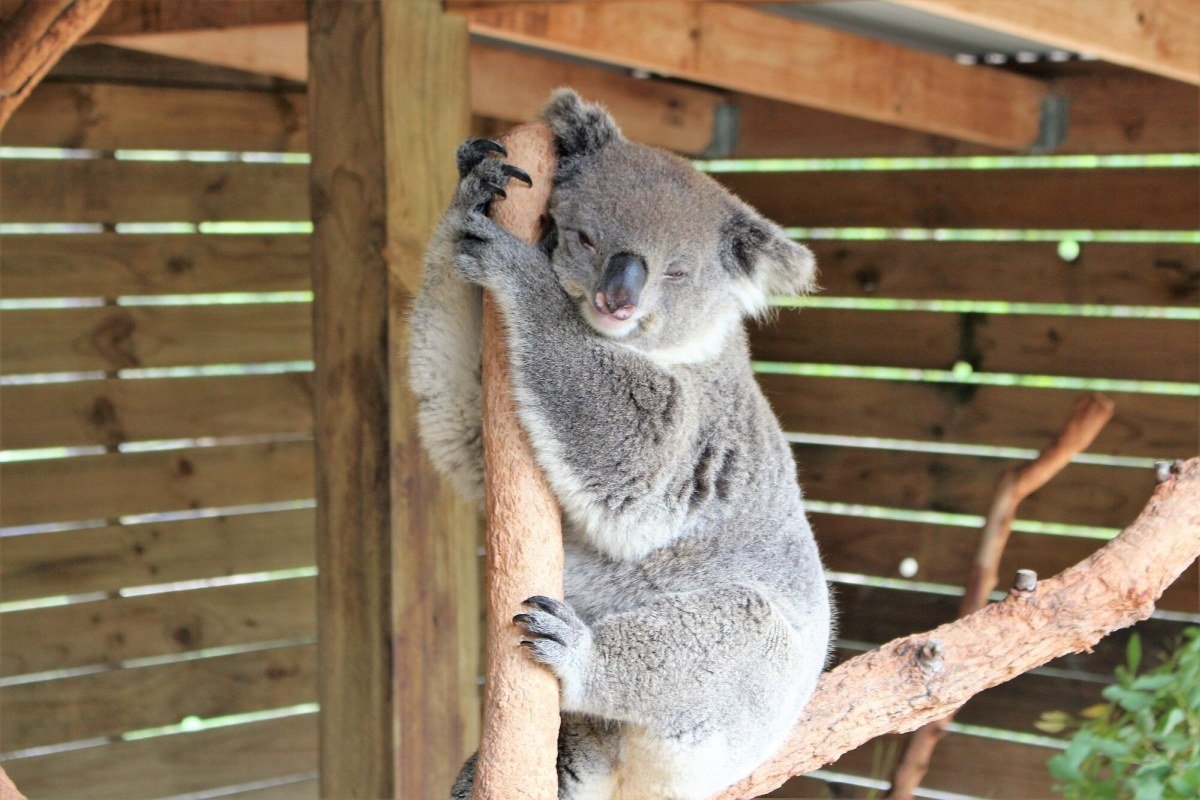
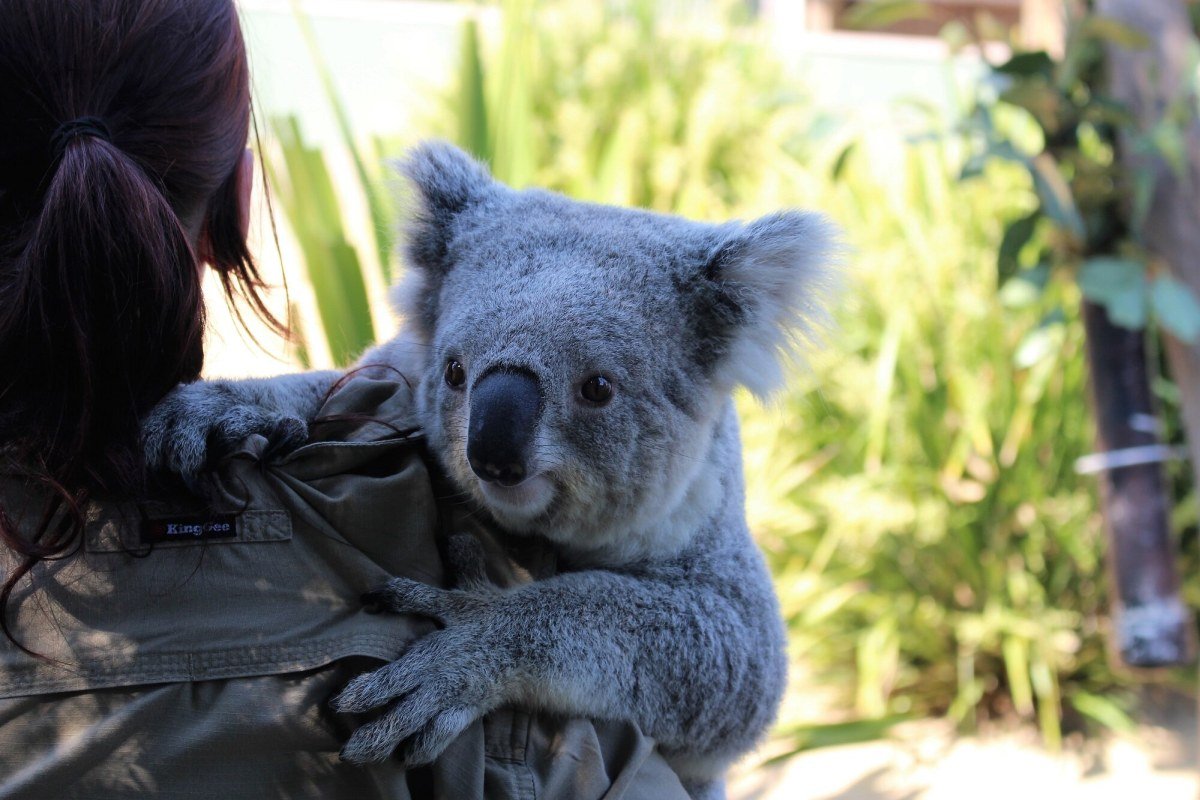
One of the favourite animals at Symbio is the koala, which is a herbivorous marsupial native to Australia.

It is often a rush to make the park by 3.00pm for the Koala Presentation. The effort to see the koalas in an active state is time well spent.

Koalas sleep a lot (up to 20 hours a day) due to the poor nutritional value of the food they eat (mainly gum leaves). Sleeping conserves energy.

We were very fortunate to get some close up photos of the koalas whilst they were with staff for a short period, after the 3.00pm presentation.

These guys are a joy to behold and one of the cutest animals on the planet.

I like the look of those gum leaves

this is my domain

khaki shirts are so easy on the claws

would you like a cuddle

Blue Mountains Tour - Mt Tomah Botanic Gardens

The Mt Tomah Botanic Garden is located in the Blue Mountains and is a cool climate garden. It can be found on the Bells Line of Road.

It is the first stop on one of our Blue Mountains itineraries.

Mt Tomah is one of three Botanic Gardens located in Sydney and surrounds.

The other two exist at Mt Annan and just near the city, the Royal Botanic Gardens.

The Botanic Gardens website for the Blue Mountains advises that the indigenous meaning of the word ‘Tomah’ is reputed to be tree fern.

Mt Tomah is more than alive with tree ferns. It has spectacular flowers and colour. Although they are of a high standard year round, Spring is the best season to visit these gardens.

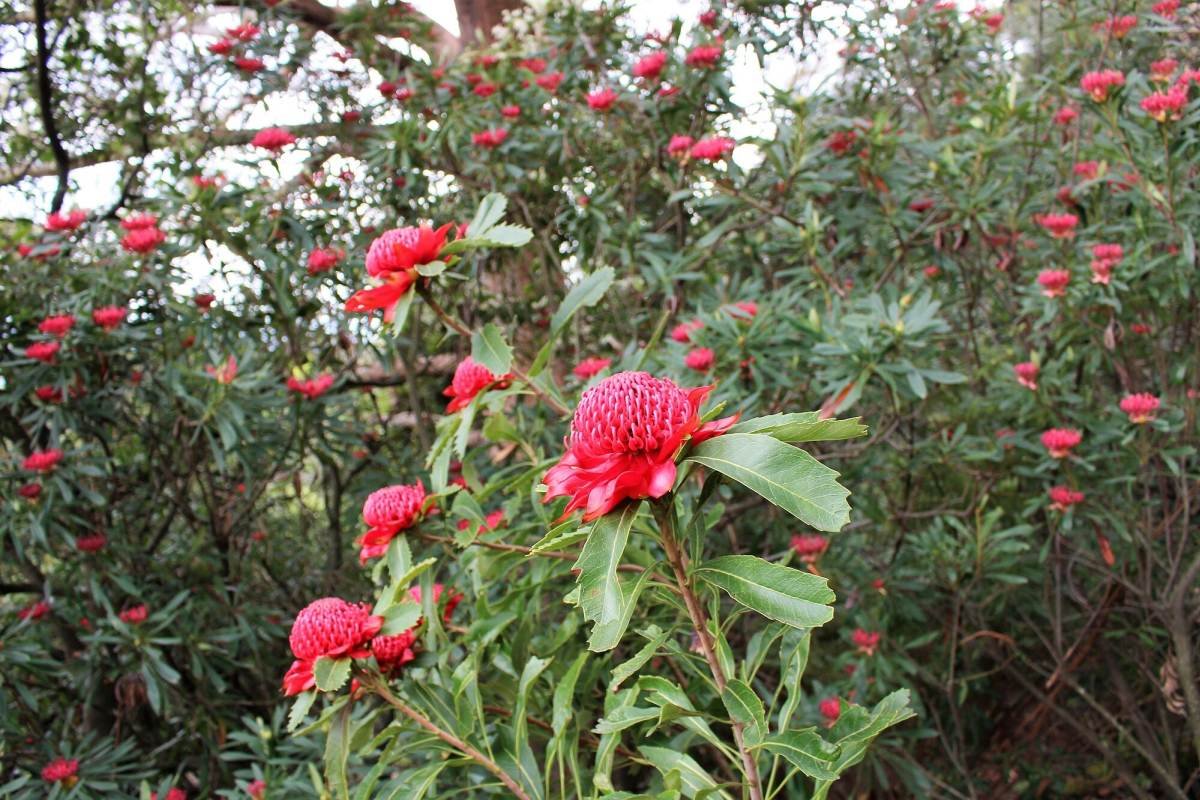
The waratahs are sensational, whilst the proteas are also brilliant when in flower. In our opinion Mt Tomah is a must do inclusion in any Blue Mountains tour during Spring.

This blog is deliberately short as it is best to let the flowers do the talking. Enjoy the magic.

Protea perfection

proud and yellow

majestic

the viewing platform

wave after wave of waratahs came at us

Royal National Park tour Australian wildflowers - Gymea Lily

One of the most delightful plants in the Sydney region is the Gymea Lily. It is flowering at the moment and if you keep your eyes out there are plenty to see on a drive through the Royal National Park.

The leaves are sword like and sprout from the ground. The flower is located on the top of a long narrow green shoot which can reach up to six metres.

When these plants are not in flower they are just your average plant in the bush. When they flower it is a whole different story.

Arising from the leaves below is a crimson red flower that will immediately catch your eye.

The Gymea Lily takes a while to flower, at least five or more years. They are a hardy native and a bush fire does not set the plants back for long.

The word Gymea originates from the local aboriginal people and is attributed to either the Dharug or Dharawal Language group. The word means ‘a small bird’.

When you look at the plant in flower the name makes sense.

The flower is a long way from the plant, many metres, and looks like it could be flying if you don’t take in the long narrow stork supporting it. It is roughly the size of a small bird.

Two nearby suburbs also go by this name, Gymea and Gymea Bay.

If you take the Royal National Park tour with Sydney Nimble Tours in Spring you will see the Gymea Lily and a number of other native plants in flower.

The flowers of the Gymea Lily are followed by oval shaped capsules and in late summer the capsules split and release seeds.

It is a great time to be out and about in a Sydney national park.

sword shaped green leaves and long green shoot

a striking Australian wildflower

wild red

power of one plus Australian navy vessel and Sydney city

Wedding Cake Rock - The Royal National Park tour

Yesterday Sydney Nimble took a visitor on our Royal National Park Tour. The main game was to see Wedding Cake Rock.

The construction work at the site, which detracted from the ambience of the rock as construction work does, has finished and the new fence is in place.

The new fence is a significant improvement.

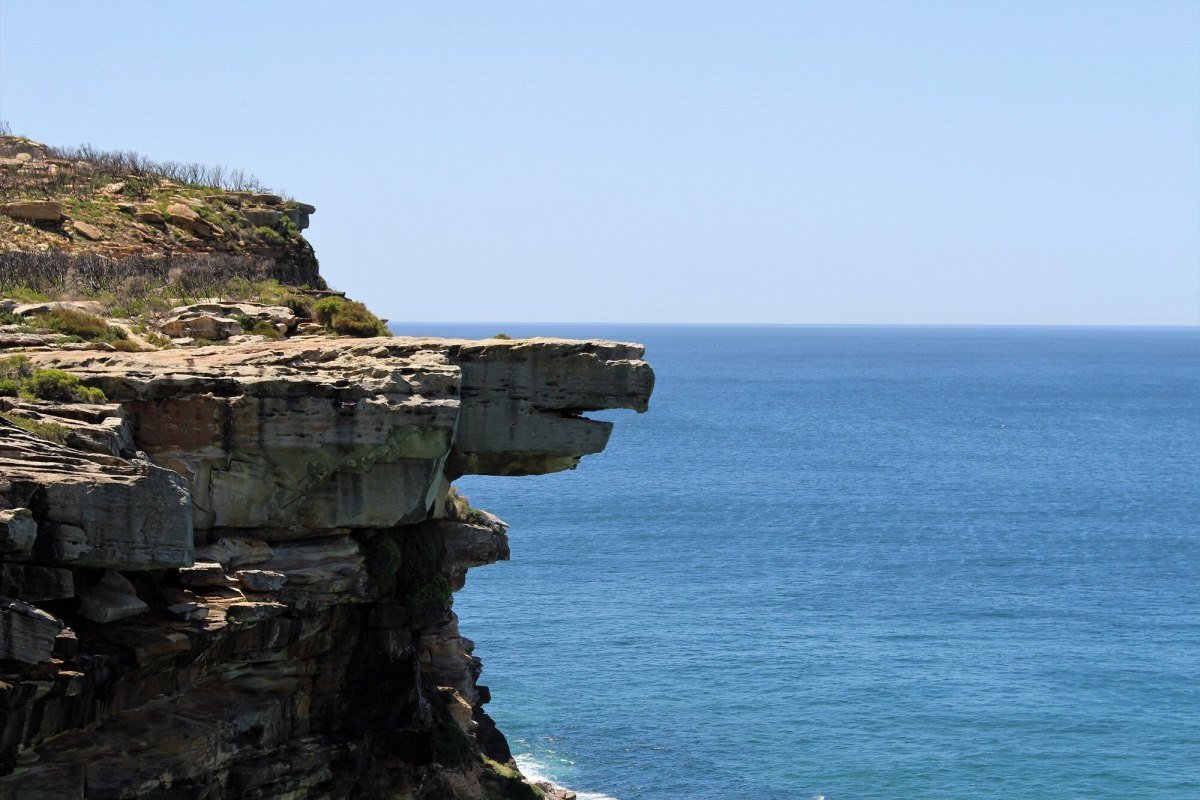
It is less clunky than the previous fence and allows visitors to get a much closer look at the rock. The rock still has the goods and the walk to the rock provides the chance to see some spectacular coastal scenery.
The naming of the rock came from its white appearance and cuboid shape, that can be compared to a piece of wedding cake.

Wedding Cake Rock is best seen on a sunny day and yesterday we had the sun. It is also preferable if rain doesn’t precede a visit as surface puddles form and these may detract from the rock’s appearance.

There are numerous interesting sandstone formations on the way to the rock if you take a few detours. Sandstone is found around the world and has many natural variations in colour, shade, tone and grain.

Variation in sandstone colours is on display in the images below, ranging from white, grey through to yellow, orange, brown and tan.

A visit to Wedding Cake Rock is one of the highlights of our Royal National Park Tour. Join us and keep rocking.

the rock, there and fair

and again in case you missed it

between a rock and a hard face

watch your step

layered for perfection

Eastern suburbs or custom itinerary tours - Waverley Cemetary

Waverley Cemetery is one of those places that is overlooked by visitors to Sydney but well worth a stop - the coastal views are spectacular!

The coastal walk way from Bondi to Coogee runs just below the eastern edge of the cemetery. A walk along this impressive scenic pathway offers the chance to make a detour into the cemetery.

The second reason we find it appealing relates to the history and attitudes that are captured in a cemetery. Many of Sydney’s well known people have been buried here and Waverley cemetery contains an expansive collection of death memorabilia, including sculptures, graves, vaults, mausoleums and memorials.

The cemetery opened in 1877 and an intact drinking trough for horses remains on the pavement near the cemetary entrance. There is a vast quantity of stonemasonry on display including sculptures of angels, neo classical symbols and tombstones.

The cemetery is well laid out and designed with many internal roads and retaining walls. Fatigued cortege members may choose to rest in a number of sandstone shelters interspersed throughout the grounds.

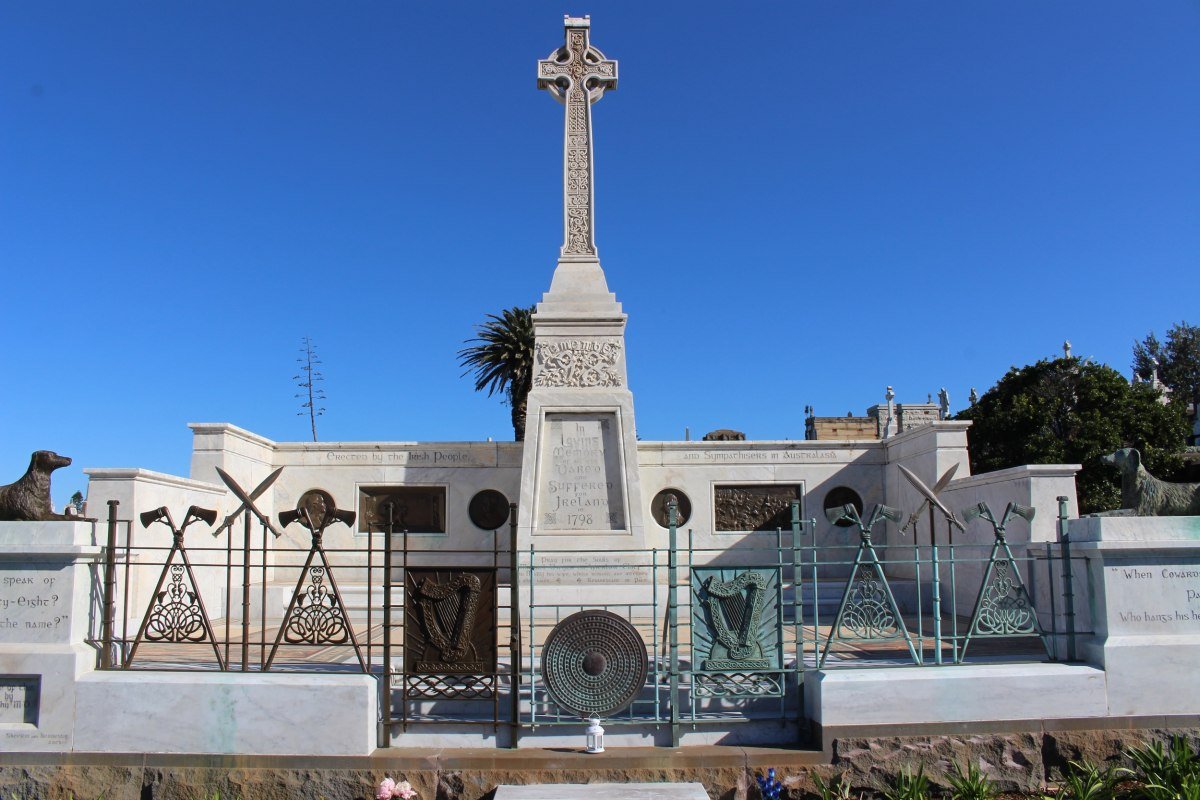
The stand out monument in Waverley Cemetery is the Martyr’s Monument which is dedicated to the 1798 uprising against British rule in Ireland. The remains of one of the leaders of the rebellion, Michael O’Dwyer and his wife, reside here.

The memorial includes a large Celtic cross and also commemorates the Easter Rising of 1916 and the Long Kesh Hunger Strikes in 1981.

It is estimated that around 100 000 people have taken up digs at the cemetery, ranging from poets (Henry Kendall and Henry Lawson) to well known business people, politicians and sporting stars.

A Sydney tour of Waverley Cemetery is easily accommodated in our Sydney Bespoke Tour. Get in touch and we can discuss.

Two Irish Wolfhounds guard the entrance to the Irish Memorial

Angelic embrace

something is alive in the cemetary

a graceful sculpture remembering a woman who passed away in 1910

Sydney custom day tour - historic Darlinghurst Gaol

Sydney Nimble recently had the pleasure of going on someone else’s tour. Our guide Tom took us around the National Art School, which was formerly the Darlinghurst Gaol.

The buildings in the National Art School represent one of the most formidable collections of sandstone colonial architecture in Australia.

For those of us who like colonial architecture they are right up there - well preserved and swirling with stories.

The Darlinghurst Gaol specialised in accommodating bushrangers, rapists and murderers. It operated from 1841 until 1914.

76 people were hanged in the Darlinghurst gaol, and Sydney’s most notorious 19th and early 20th century criminals were provided with either short or long term accommodation: Captain Moonlight; Jimmy Governor (aka Jimmy Blacksmith) and the Rennie boys.

Famous Australian poet, Henry Lawson, did some time for failing to pay alimony and child desertion. Henry used the time well writing a number of poems.

The tour focused on the history of the buildings when they were used as a gaol.

D Block housed women prisoners and in one corner of this building plug marks can be seen on the wall where a padded cell was kept for more difficult customers.

D Block was connected to the prison chapel by a walkway as those in charge were uncomfortable with the idea of female prisoners venturing onto the general grounds of the gaol.

Probably a good idea in view of a number of rapists residing in the vicinity.

D Block was used as a theatre and for other events from late 1950s through to the 1970s. Catherine Hepburn and Robert Helpmann visited D Block in 1955 to assist in promoting the theatre whilst it was being restored.

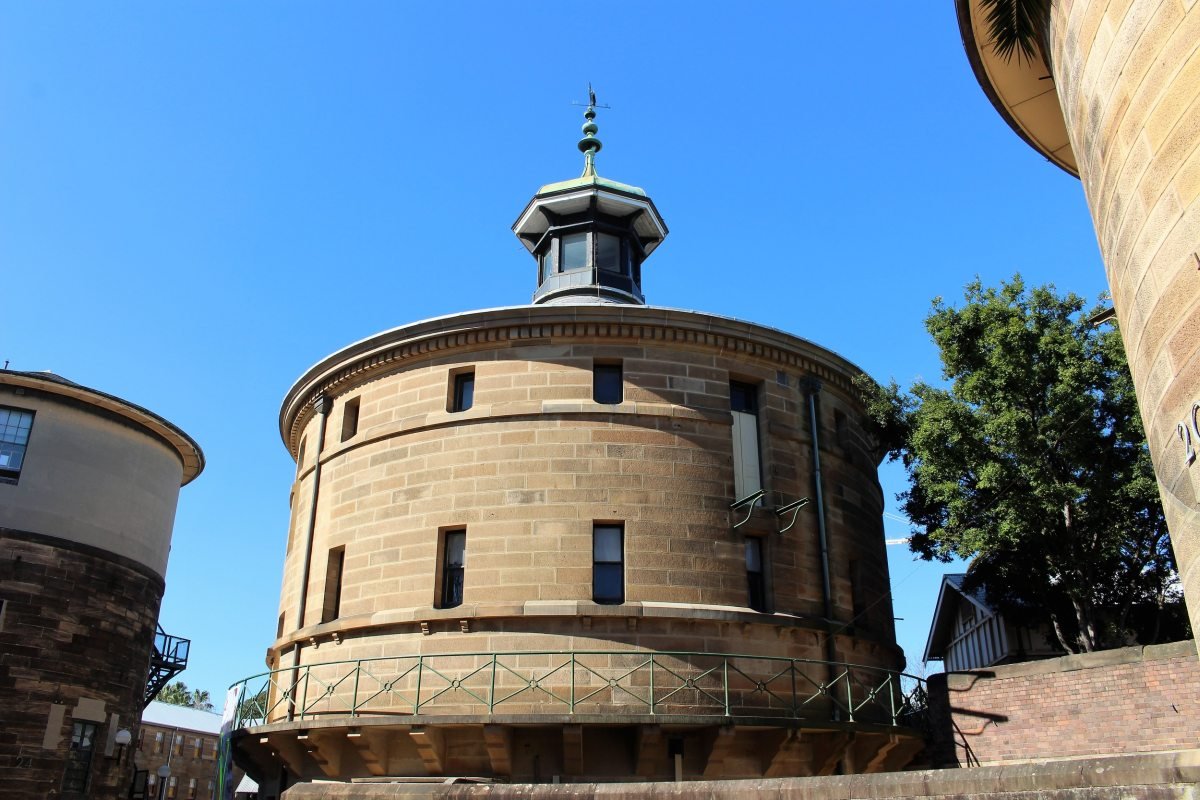
The prison’s chapel has a cupola, which is a small structure placed on the dome or roof of a building. Cupola’s are used to provide light and or ventilation. Two photographs below show the chapel’s cupola from inside as you look up from the floor and from the exterior.

The sandstone for the prison walls was cut and hewn by convicts working in a chain gang at nearby quarries. Each sandstone block was marked so that a tally could be kept and the first photo below shows these markings.

The sixth photo shows D Block, which was comprised of three levels when the gaol operated. If you look behind the projector the markings can be seen where the stairs used to be located.

We highly recommend Tom’s tour, which can be booked through the National Art School’s website.

The Darlinghurst Gaol was a cruel place and tormented those persons that were incarcerated here.

Nevertheless stories about the prisoners, jail conditions, executions, and the public’s reactions to the gaol are fascinating.

markings identified the prisoner who worked on the sandstone block

chapel and cupola topped with a weather vane

the dark side of the cupola

not a metaphor - real ball and chain

dreaded D Block

Blue Mountains Tour - The Royal Botanic Gardens Mount Tomah & Bells Line of Road to

Bells Line of Road

The majority of people visiting the Blue Mountains from Sydney will travel on the Great Western Highway. The road less travelled to the Blue Mountains is the Bells Line of Road. This name was derived from the efforts of Archibald Bell jnr, who in 1823, with the help of local Aboriginal guides marked out the route of this road.

The Bells Line of Road provides access to some great lookouts, walks and gardens.

The Royal Botanic Garden Mt Tomah

One of these gardens is the Royal Botanic Garden at Mt Tomah, which sits 1000 metres above sea level and features over 5000 species of cool climate plants. Cool climate vegetation from Africa, South America, Asia and Europe can be found here.

The Mt Tomah garden has one of the best collections of advanced Wollemi pines, which is not unexpected as these trees were found (1994) in the nearby Wollemi National Park.

Another much smaller garden, Windyridge Garden, is located further west in the historic village of Mt Wilson, and has many wonderful trees, shrubs, ponds, waterfalls and sculptures. Full credit to the owners, Wai and Rodger Davidson.

The amount of work maintaining a garden of this nature is not to be underestimated. The garden is not only beautiful but has a calming tranquillity. It is one of the highlights of the day.

The lookouts

There are many lookouts on the drive along Bells Line of Road. Some are marked, while some are not so well marked, or not marked at all. Walls lookout is very impressive and the walking time is around 30 minutes each way.

Our Sydney Blue Mountains Tour takes the Bells Line of Road and we visit the gardens and lookouts mentioned plus a fair bit more.

Scribbly Gum trees

On the way to a lookout you may come across a Scribbly Gum. Scribbly Gums are a variety of Australian Eucalyptus trees which play host to the larvae of the Scribbly Gum Moth.

Scribbly Gum Moths lay their eggs in Autumn and the larvae develop in the bark throughout winter. The scribble patterns are caused by the boring and eating process. Initially the larvae bore through the bark creating irregular loop tunnels, followed by zig zag loops.

Scar tissue forms and the tunnel is filled with highly nutritious thin walled cells. The larvae then eats its way back along the same path it created. When it leaves the bark cracks off leaving the scribble patterns underneath.

A fascinating process!

Protea perfection in Mt Tomah Botanical Garden

no key required for this Windyridge pond

primary school vandals?

Would you like a lichen covered chair with your coffee?

Australian wildlife experiences - Symbio

Sydney Nimble visited the Symbio Wildlife Park (Symbio), with three clients yesterday. The name Symbio is a shortened version of the word symbiosis. Symbiosis is a relationship between two different organisms living in close physical association, typically to the advantage of both.

Symbio is a well run wildlife park and has a good mix of native and non native animals. The native animals include: kangaroos and wallabies, dingoes, echidnas (including an albino echidna), koalas, cassowaries, emus, wombats, goannas, Tasmanian Devils, and a variety of birds and reptiles.

When we parked at Symbio’s outside car park sulphur crested cockatoos were flying overhead and screeching loudly.

At certain times during the day there are presentations where a representative of the zoo talks about a particular animal. Koalas sleep a lot so feeding the koalas at presentation time brings these marsupials out of their slumber. Zoo staff advise that they get quite active at night. Unfortunately the zoo is not open!

Our small group also enjoyed the kangaroos and wallabies, which are remarkably tame and had no trouble with our presence. These guys are very relaxed.

The red pandas are cute and the monkeys (Tamarin and Marmoset monkeys from Central and South America) were not what we expected as they are some of the smallest types found. They looked very different to your typical monkey.

We give Symbio a big thumbs up.

Symbio is an excellent addition to our Sydney Royal National Park Tour. The only problem is deciding which part of the itinerary has to be dropped off to fit in the visit to Symbio.

We recommend allocating at least 90 minutes for a visit to Symbio, but you could easily spend more time here if you wanted to see a few of the animal presentations. Get in touch and we can provide a draft itinerary for a Royal National Park Tour which includes Symbio.

you looking at me - Bush Thick-knee

I am the king

prowling red panda

I know I heard something

Barangaroo Reserve

Barangaroo Reserve

Barangaroo is a 22 hectare inner city suburb of Sydney located on the north west side of Sydney’s CBD.

The suburb is named after an aboriginal woman who had a significant influence in early contact between Aboriginal people and British authorities. She has been described as a powerful woman and was a respected provider of food (fisherwoman). Her second husband was Bennelong. Unfortunately Barangaroo passed away shortly after giving birth to her daughter in 1791.

The adoption of the word Barangaroo as the name of this newly created suburb is yet another example of a distinctive indigenous word adding to the richness of Australia’s vocabulary.

Many of Sydney’s place names are derived from Aboriginal words (eg , Bondi, Collaroy, Coogee, Cronulla, Curl Curl, Kirribilli, Maroubra, Narrabeen, Tamarama and Woolloomooloo).

The urban renewal of Barangaroo has been a landmark project in Sydney for well over ten years. The area was formerly docklands and known as the ‘hungry mile’. It was a tough, competitive and sometimes violent place. Workers from the 19th Century until the 1940s were known to walk from wharf to wharf searching for low paid work.

Barangaroo includes a 6 hectare headland park (Barangaroo Reserve) which was completed several years ago.

A significant part of the urban redevelopment in this new suburb has already occurred, however a six star resort and several residential buildings are still at the planning stage or under construction. A metro station is planned for Barangaroo.

The reserve is essentially an artificial hill, but it doesn’t look like one. Its contouring with the harbour, terraced plantings and dimensions generally make it fit in with its surrounds. Clever engineering and earthworks have given it the look of a hill whilst allowing a large void, known as the Cutaway, to exist underneath the parkland above.

The roof of the Cutaway required the fabrication, transportation and installation of massive concrete spans, which underpin thousands of cubic metres of rock, soil, grass and trees.

The Cutaway provides a unique area for events, exhibitions, television shoots, concerts and large gatherings. It is 120 metres long, 45 metres wide and the height of a six storey building. Natural light enters the space through a long vent on its east side.

A large scale planting of native plants, shrubs and trees (75 000 in total) has been undertaken at Barangaroo Reserve and the horticulturalists have largely chosen native flora that existed in the area prior to European settlement.

An incredible amount of sandstone has been used around the foreshore and throughout the reserve, showcasing the attractive look of this beautiful local material.

Barangaroo Reserve is a pleasant green addition to the City of Sydney which will improve over time as the trees increase in size whilst providing a unique multipurpose area that can be used by all Sydneysiders.

Sydney Nimble Tours includes a Barangaroo tour in our Eastern Suburbs, Woolloomooloo, Barangaroo day out. Alternatively we can include a tour of Barangaroo in our Sydney Bespoke Tour.

Barangaroo Reserve fits in well with the Rocks and Walsh Bay

the three green towers that descend in height are known as the International Towers

it came from the purple tent - opening night of Vivid at Barangaroo

looking west from the Stargazer Lawn at Barangaroo Reserve