
Sydney Art Deco Architecture — Buildings Worth Seeking Out
Art Deco emerged in the 1920s as a self-consciously modern style — flamboyant, geometric and optimistic in a way that reflected the decade's mood before the Depression changed everything. The term itself came later, shortened from Arts Décoratifs, after a landmark 1925 design exhibition in Paris.
The visual language is consistent: geometric forms — triangles, trapezoids, chevrons, zigzags — combined with sweeping curves, symmetry, stepped profiles and bold colour. When it works well it is immediately recognisable and satisfying to look at.
Sydney has a substantial Art Deco inheritance concentrated in the city and inner suburbs built up during the interwar years. These are some of the best examples.
Metro Theatre, Orwell Street, Potts Point
The former Minerva Theatre is a classic art deco theatre. The stepped tower, vertical lettering and gracious curves read clearly from the street — a building that announces itself without apology. Built in 1939 and acquired by Gretel Packer in 2024 - we are looking forward to seeing how Gretel renovates this building.
CML Building, Martin Place, Sydney City
The Colonial Mutual Life Building is located in Hunter Street of the Sydney city and is more restrained than the Metro but arguably more impressive up close. Black marble at the entrance, sculptural bronze panels above the doors, and an interior business chamber that rewards the detour. The restaurant now occupying it is worth seeing for the room alone.
Kimpton Margot Hotel, Pitt Street, Sydney City
The former Metropolitan Water, Sewerage and Drainage Board building contains one of Sydney's finest Art Deco interiors. The lobby has extraordinary height, original terrazzo and travertine marble flooring, glass ceiling and scagliola-clad columns. It is now the Kimpton Margot Hotel and accessible to anyone who walks through the door.
Bondi Pavillion
The Bondi Pavilion is a mixture of Spanish Mission and art deco styles - built in 1929 and sits in the middle of Bondi Beach. The rendered facade, arched colonnades and symmetrical frontage are classic interwar design — restrained by CBD standards but well suited to a seaside setting. It has housed changing rooms, a theatre and community spaces across its life and remains one of the better-preserved examples of the style outside the city centre.
Potts Point
Potts Point, a short distance from the city, contains one of the highest concentrations of Art Deco apartment buildings in Australia. The streets around Macleay Street and Victoria Street are lined with interwar residential buildings — stepped facades, geometric detailing, decorative entrance surrounds and the kind of considered streetscape that accumulates when a suburb is built out in a single decade. Worth an hour on foot for anyone with an interest in the period.
Luna Park, Milsons Point
The grand mouth and two towers entry point for Luna Park have looked across Sydney Harbour since 1935. Vertical lines, trapezoid forms, vibrant colour and scalloped detailing in the upper sections — most of Art Deco's key characteristics in a single facade.
Hayden Orpheum, Cremorne
The Orpheum on Military Road in Cremorne is one of Sydney's surviving picture palaces (thank you Mike Walsh) — a cinema built for the golden age of Hollywood and still operating. The interior geometric detailing is the main attraction but the front is also impressive when the neon lights up at night.
Sydney's Art Deco buildings can be included as part of a custom private tour — a half day focused on architecture, or an hour or two added to another day depending on your interests and itinerary. it is a great add in to our Bondi and Eastern Beaches private tour or the Sydney Nimble Northern Beaches tour.
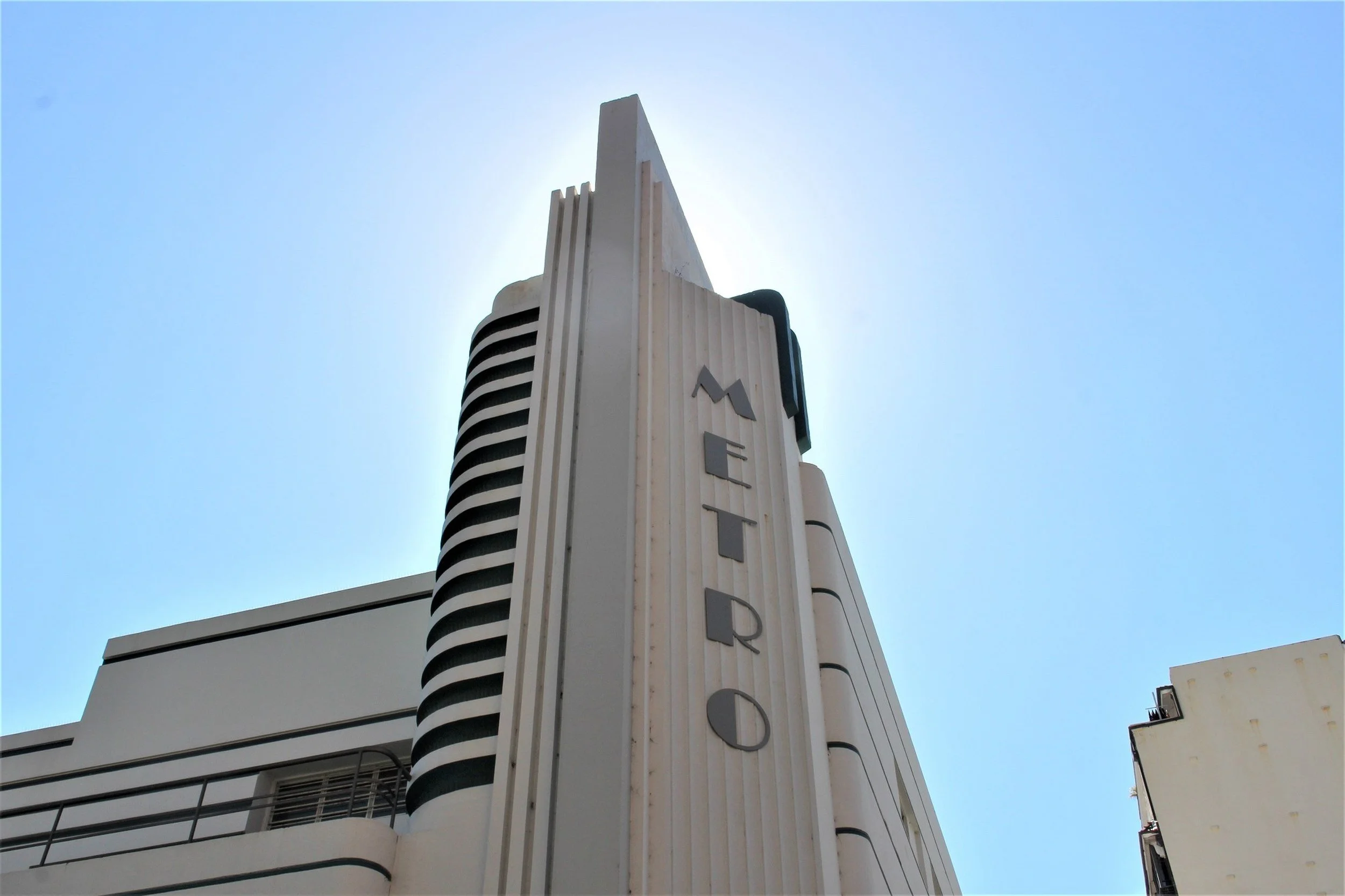
a real pearler - Metro theatre Potts Point
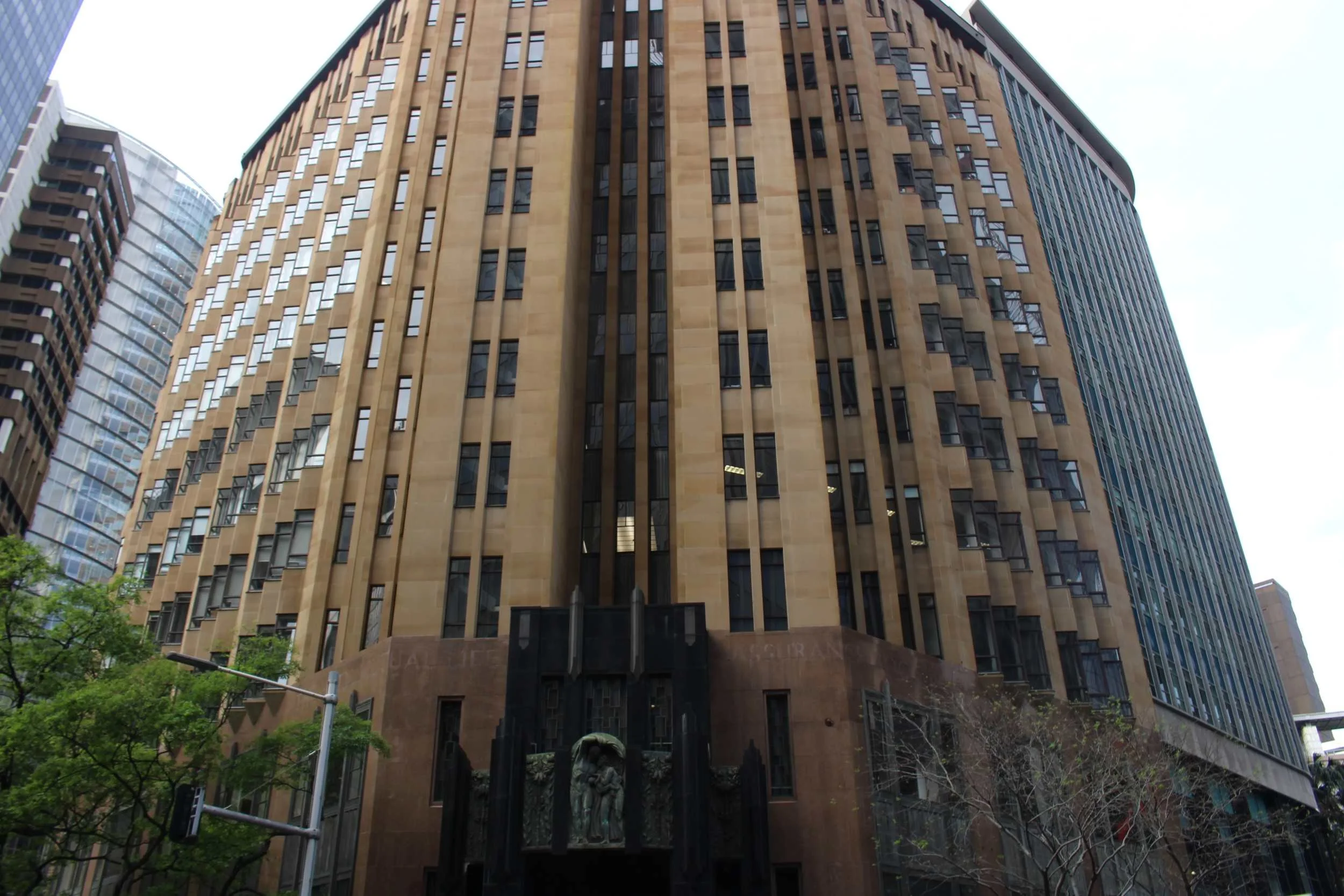
CML is a quality commercial art deco building in Sydney city
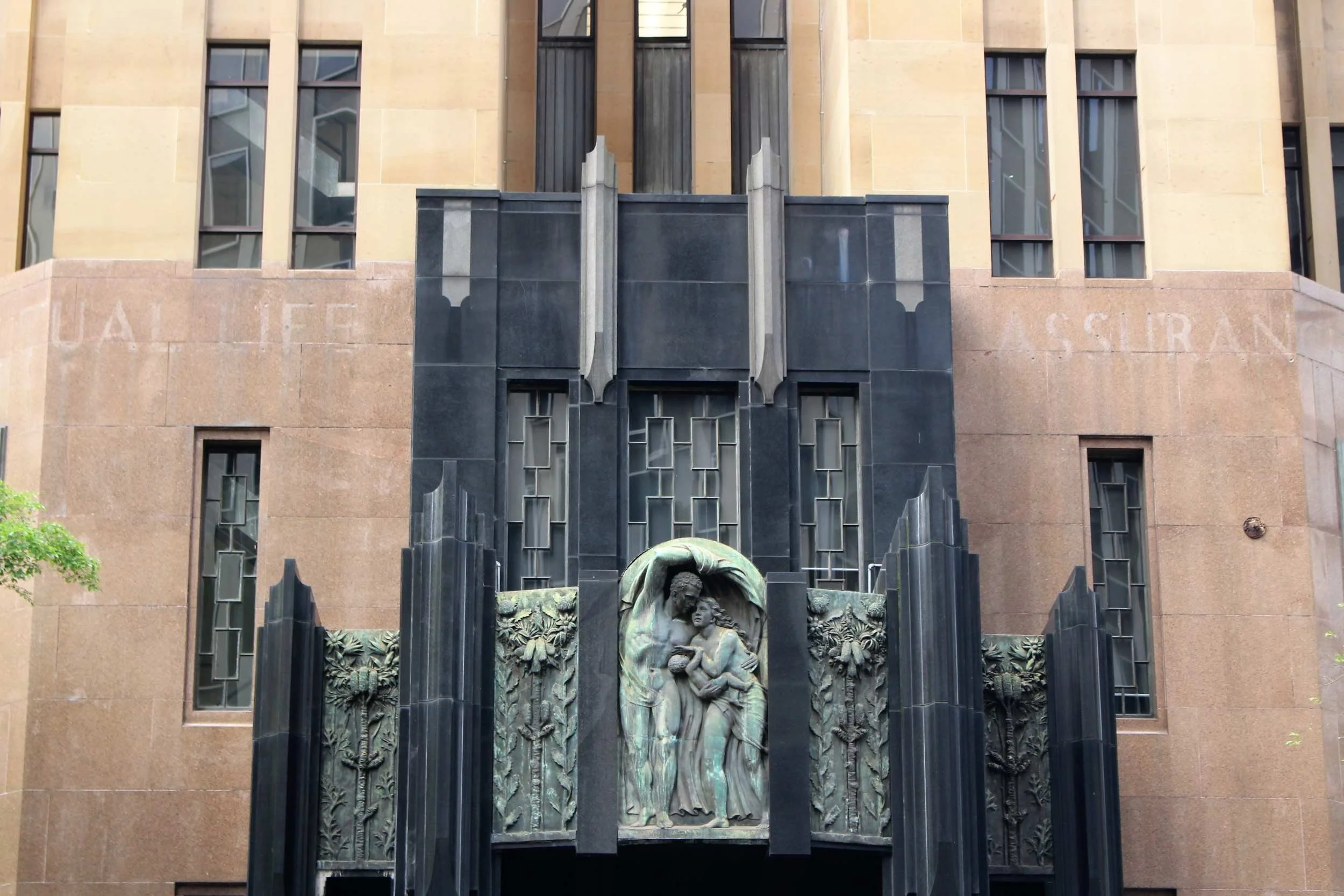
zoom-in to CML delightful black marble entrance facade which includes a Raynor Hoff sculpture
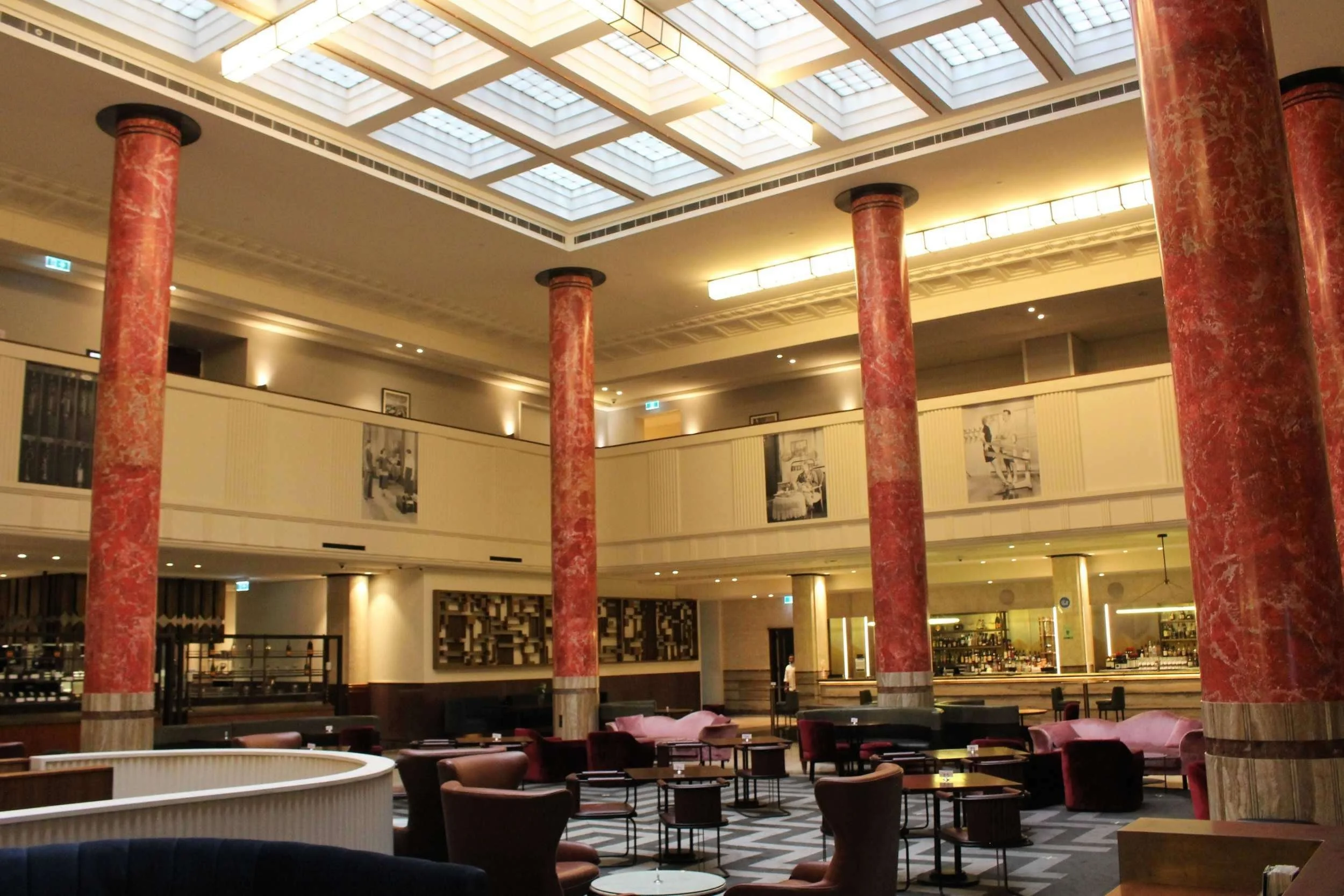
The lobby of the Kimpton Margot (formerly MWSDB Building) is grand, with amazing height, glass ceiling and scagliola clad columns.
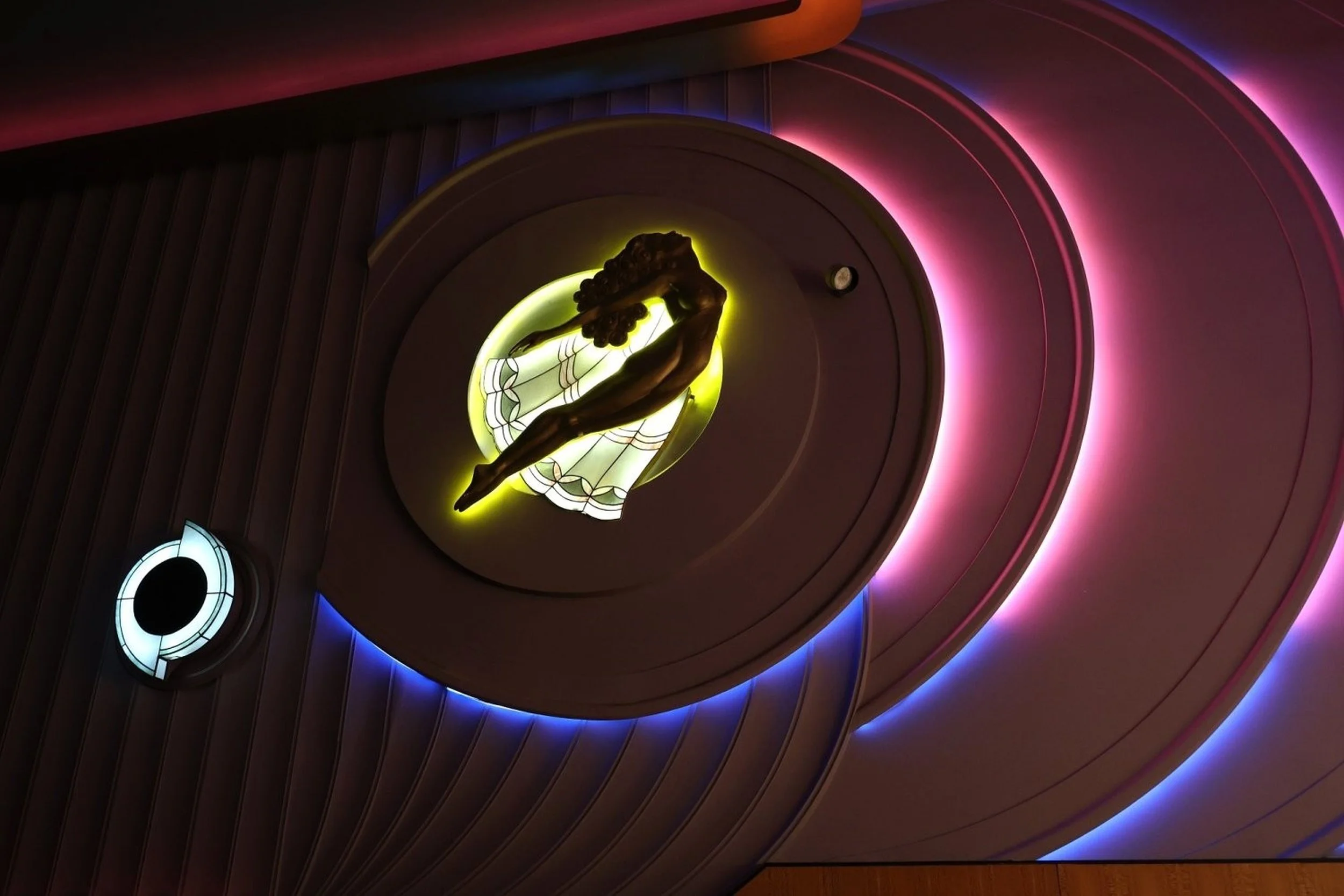
Hayden-orpheum cinema - see a movie here and you get two for one - the movie and an amazing art deco picture palace

the entrance to Sydney’s palace of fun (Luna Park)
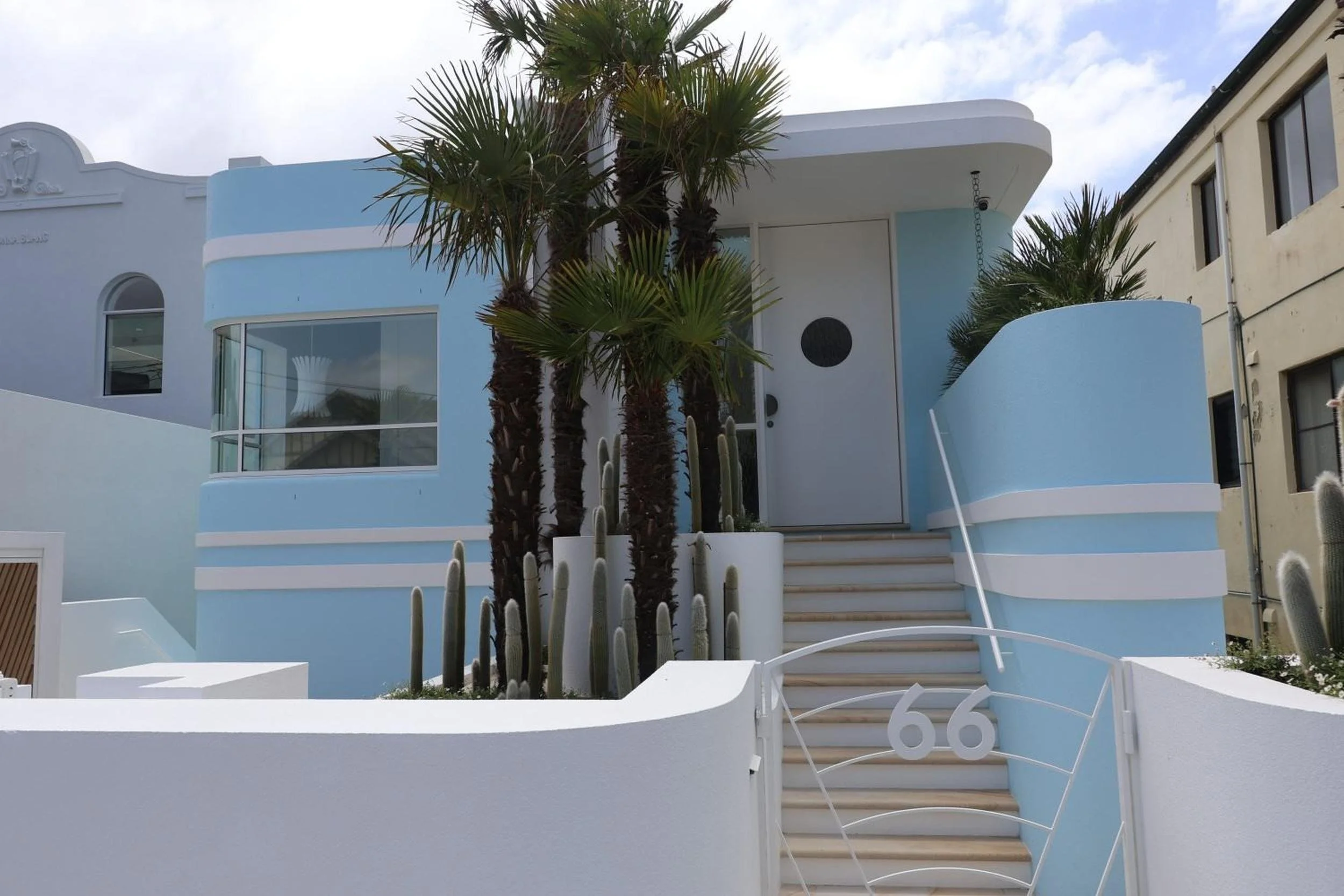
recently restored to its former glory - art deco house in Bondi