
Sydney Sandstone: The Rock That Shapes Sydney & its National Parks
There's a material that connects almost everything worth looking at in and around Sydney — the coastal cliffs, the ocean rock pools, the national park headlands, the grand civic buildings of the city centre. It's sandstone, and once you start noticing it, you can't stop.
On our Royal National Park private tour and Blue Mountains private tour we discuss different aspects of sandstone in the context of the formations we see on the day.
The Rock That Made Sydney
Sydney sits on one of the world's great sandstone basins. The rock makes up more than half of the sedimentary sequence beneath the city, and for the first century of European settlement, it was the most logical building material available — it was literally underfoot. Convict labour quarried it from the same ridgelines where the city now stands.
The result is a built heritage almost entirely made from the same material as the landscape. The Queen Victoria Building, Sydney Town Hall, the University of Sydney Quadrangle, St Mary's Cathedral — all sandstone. The Rocks district got its name from it. Walk the historic parts of the CBD and you're looking at the same geology as the Royal National Park cliffs, just cut into blocks.
How It Formed
The sandstone you see today began forming roughly 220–250 million years ago, during the Triassic period, when the land that would become Sydney was part of the supercontinent Gondwana.
The process is essentially a two-stage recipe. First, sand grains accumulate in layers and are slowly compacted under the weight of water and sediment above them. Then, mineral-rich groundwater seeps through — carrying silica, calcite or iron oxides — and acts as a cement, binding the grains together. The result is a new rock composed almost entirely of tiny fragments of older rocks, predominantly quartz.
What makes Sydney's sandstone particularly distinctive is its colour and texture — the warm honey and ochre tones, the coarse grain, the way it weathers into rounded curves and undercut ledges rather than sharp angles.
What Weathering Does to It
The interesting shapes come later. Over millions of years, wind, water and the coastal climate have eroded the softer layers faster than the harder ones, creating the formations that make these parks so visually striking.
In the Royal National Park, the coastal track is essentially a gallery of sandstone geology. The formations most people have heard of — Wedding Cake Rock and Eagle Rock - are just the beginning. Look carefully and the park reveals dozens of smaller formations: caves undercut by wave action, honeycombed surfaces where softer minerals have dissolved out, overhanging ledges and wind-carved hollows. There's actually a second sandstone formation in the park that resembles an eagle - one of those details we enjoys pointing out to guests who think they've already found the famous one.
The names of many formations reflect something humans are wired to do with ambiguous shapes: find familiar objects in them. Pareidolia — the tendency to see faces or recognisable forms in random patterns — has been naming rocks for as long as people have been walking past them. Wedding Cake Rock, Eagle Rock, Boars Head in the Blue Mountains. All of them started as someone saying: doesn't that look like...?
The Blue Mountains
In the Blue Mountains, the same sandstone story plays out at a different scale. The plateau was pushed upward by tectonic forces, and rivers and rain have been cutting into it ever since — carving the deep valleys and sheer cliff faces that define the landscape.
The Three Sisters at Echo Point are the most famous result, three weathered spires standing above the Jamison Valley, but they're far from the only one. A walk to Lincoln Rock reveals a substantial cave hollowed out beneath it. Near the Grose Valley, wind erosion has carved deep chambers into the cliff face. Dargan's Arch is the skeletal remains of a massive sandstone cave whose roof has long since collapsed — a reminder that the landscape continues to change, just on timescales that are hard to comprehend from a single visit.
The Megalong Valley lookouts on Cliff Drive offer a view of Boars Head — a formation whose resemblance to its namesake is, once seen, difficult to unsee.
Seeing It Properly
Sandstone is easy to walk past without really registering what you're looking at. On our Royal National Park Private Day Tour and Blue Mountains Private Day Tour, we take the time to explain what shaped the landscape — the deep time, the processes, the stories behind the formations — so the view means something beyond the view. The geology is part of what makes these places extraordinary, and it's worth understanding why.
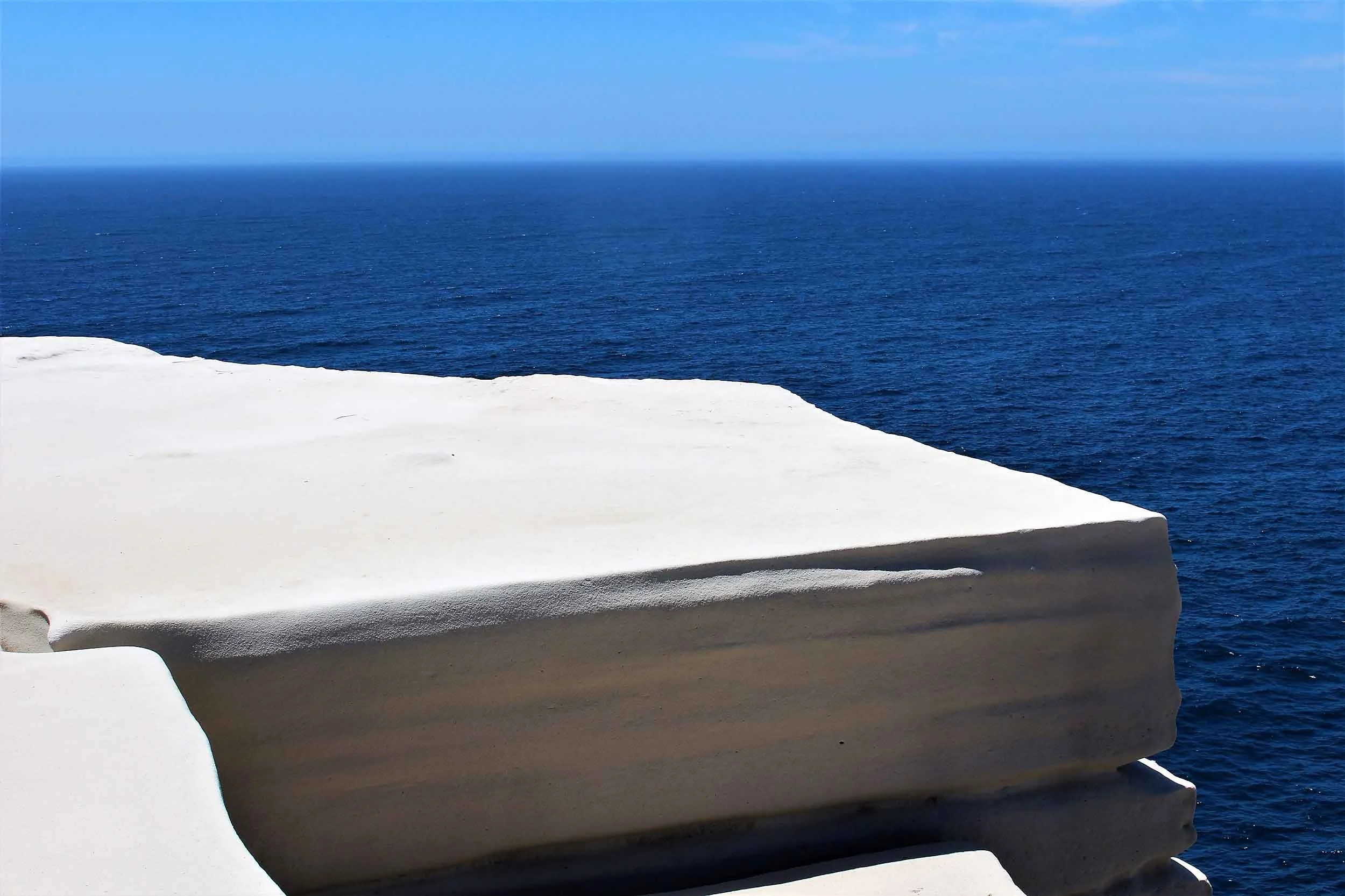
Wedding Cake Rock’s fame was greatly increased by Instagram
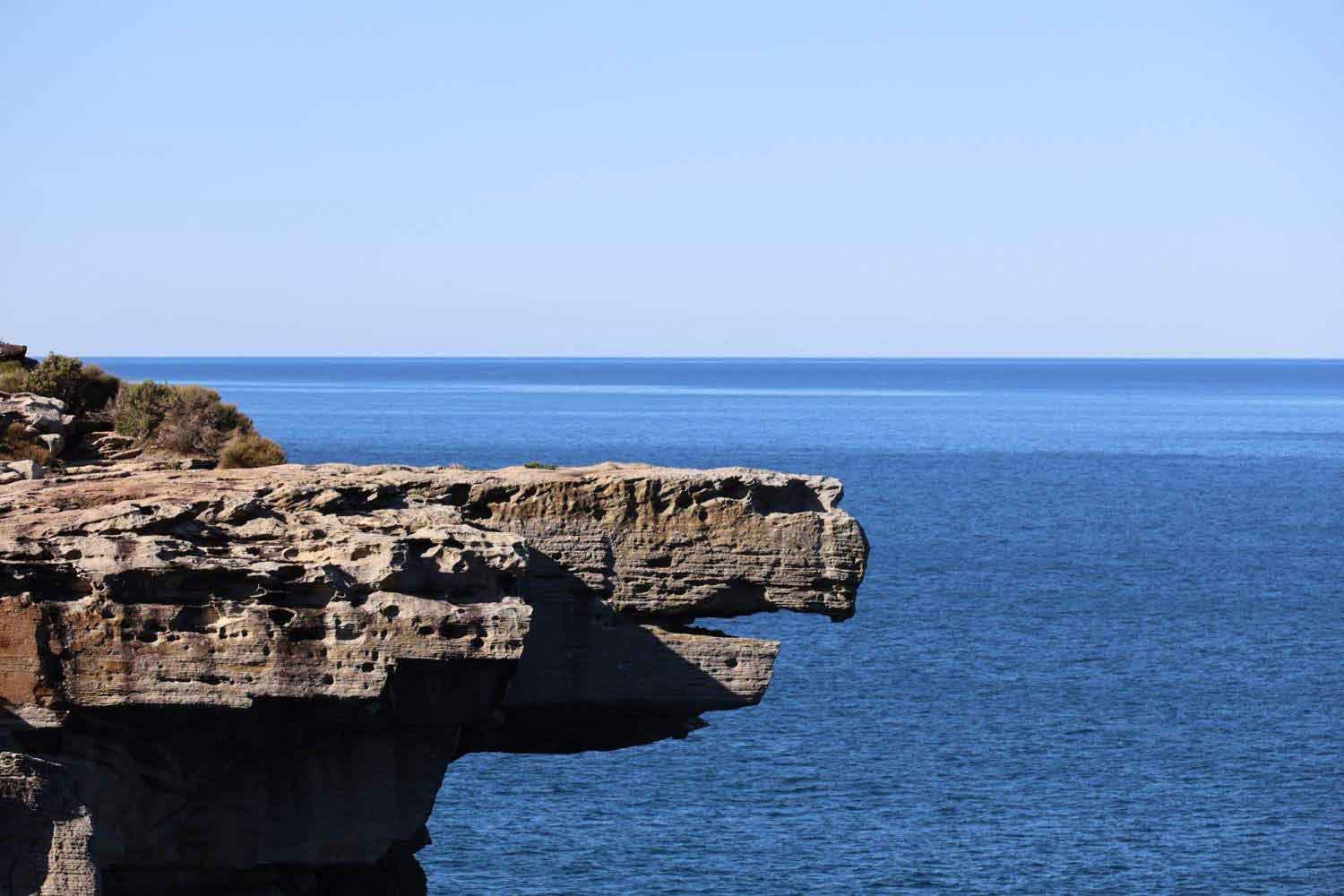
Oprah Winfrey described Eagle Rock as an ‘unbelievable scenic experience’ when she hiked to the rock in 2025
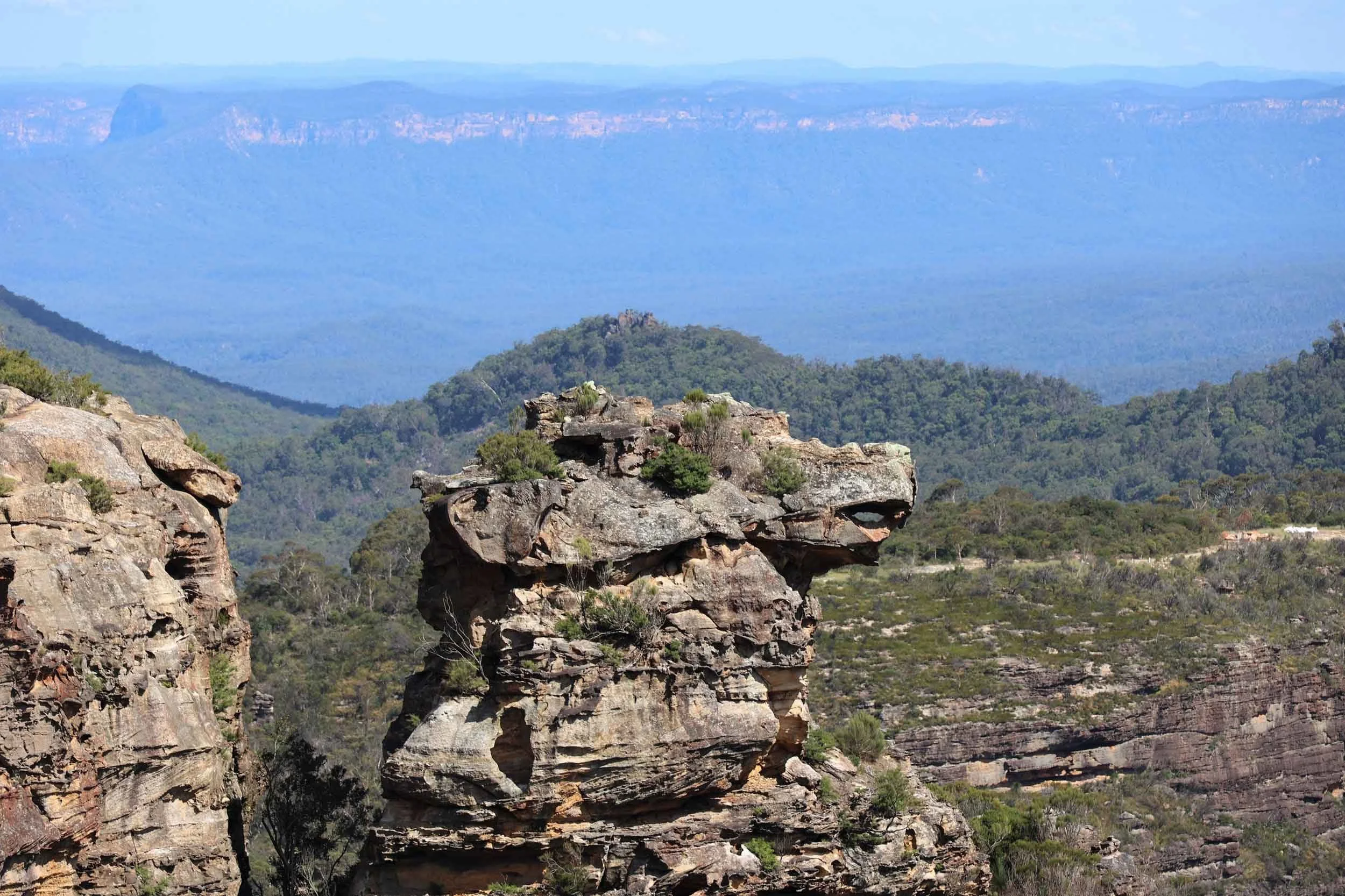
Boars Head in the Megalong Valley was described by this name in guidebooks as far back as the 1880s
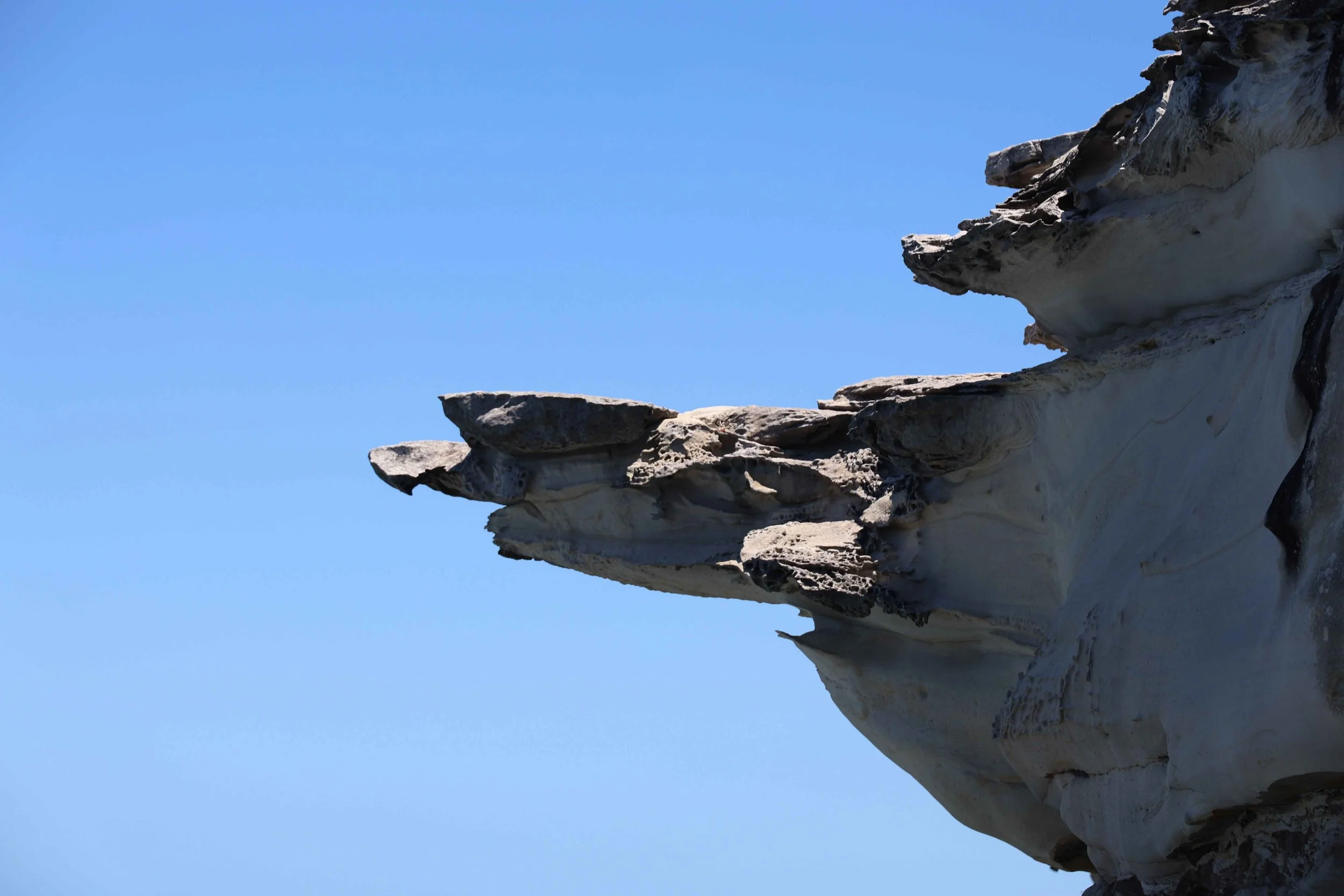
See the ‘other’ Eagle Rock whilst hiking in the Royal National Park with Sydney Nimble Tours
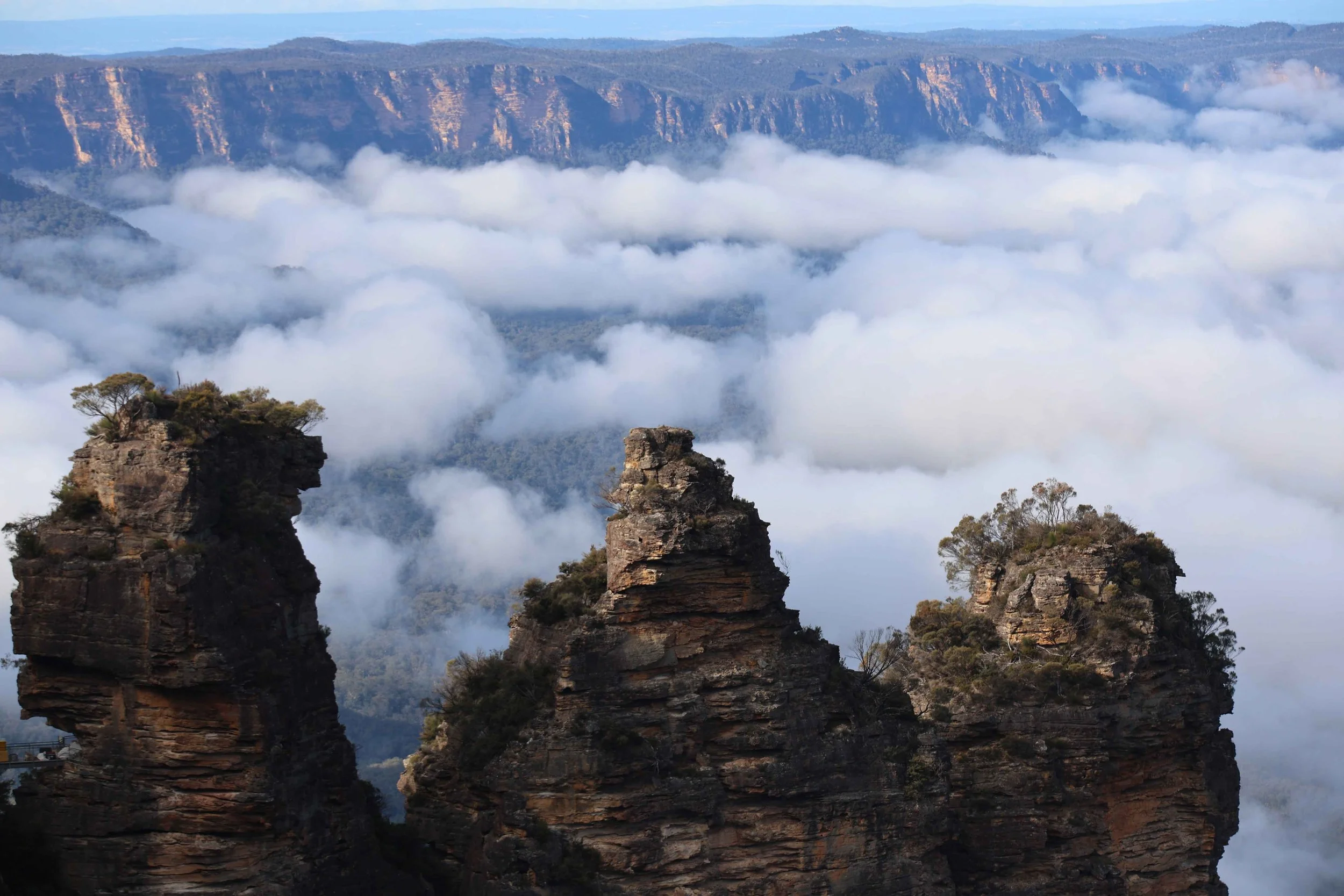
The Three Sisters in the Jamison Valley are a legendary sandstone formation
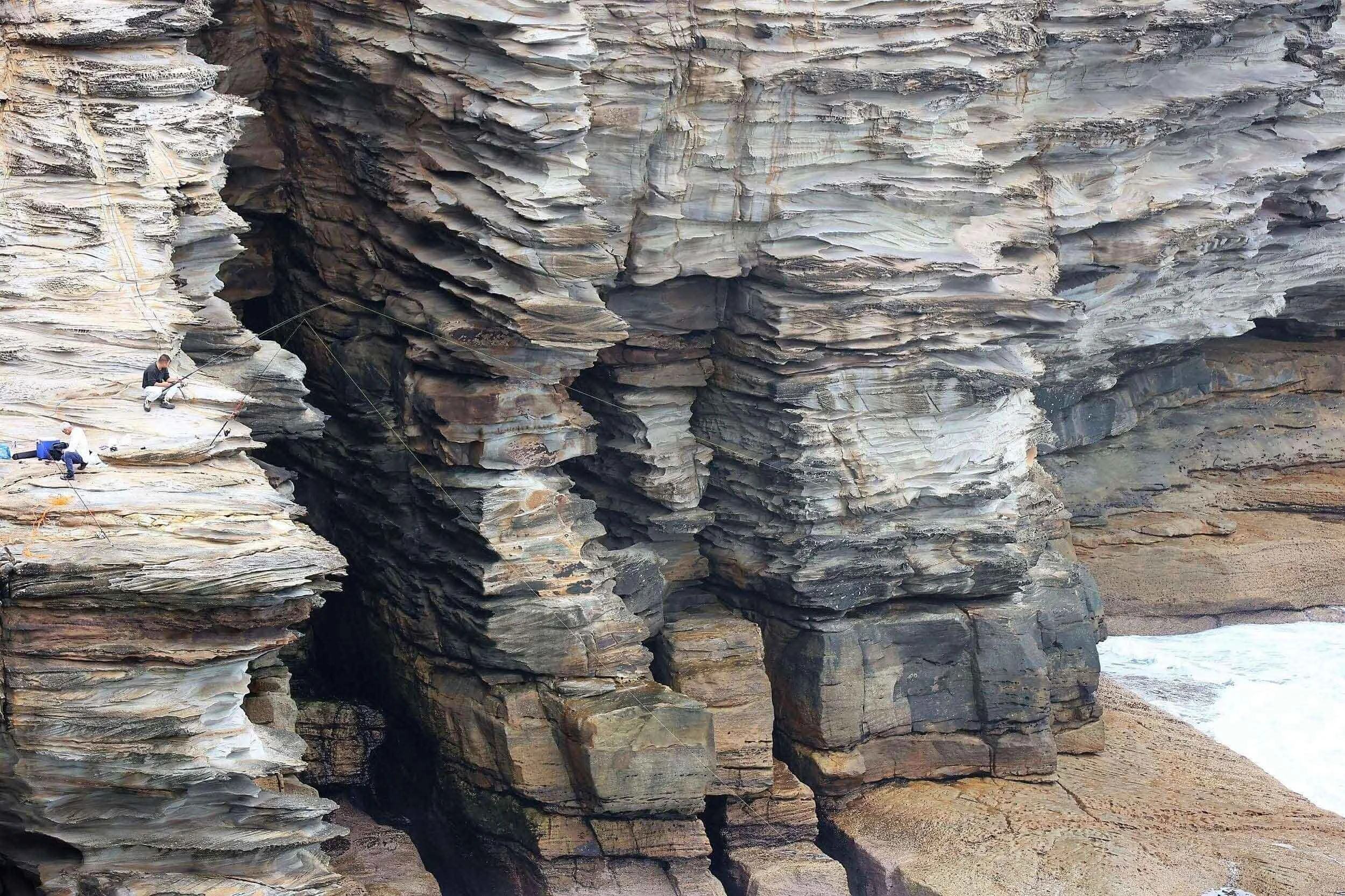
The Cobblers in the Royal National Park include vertical caves and amazing sandstone ledges
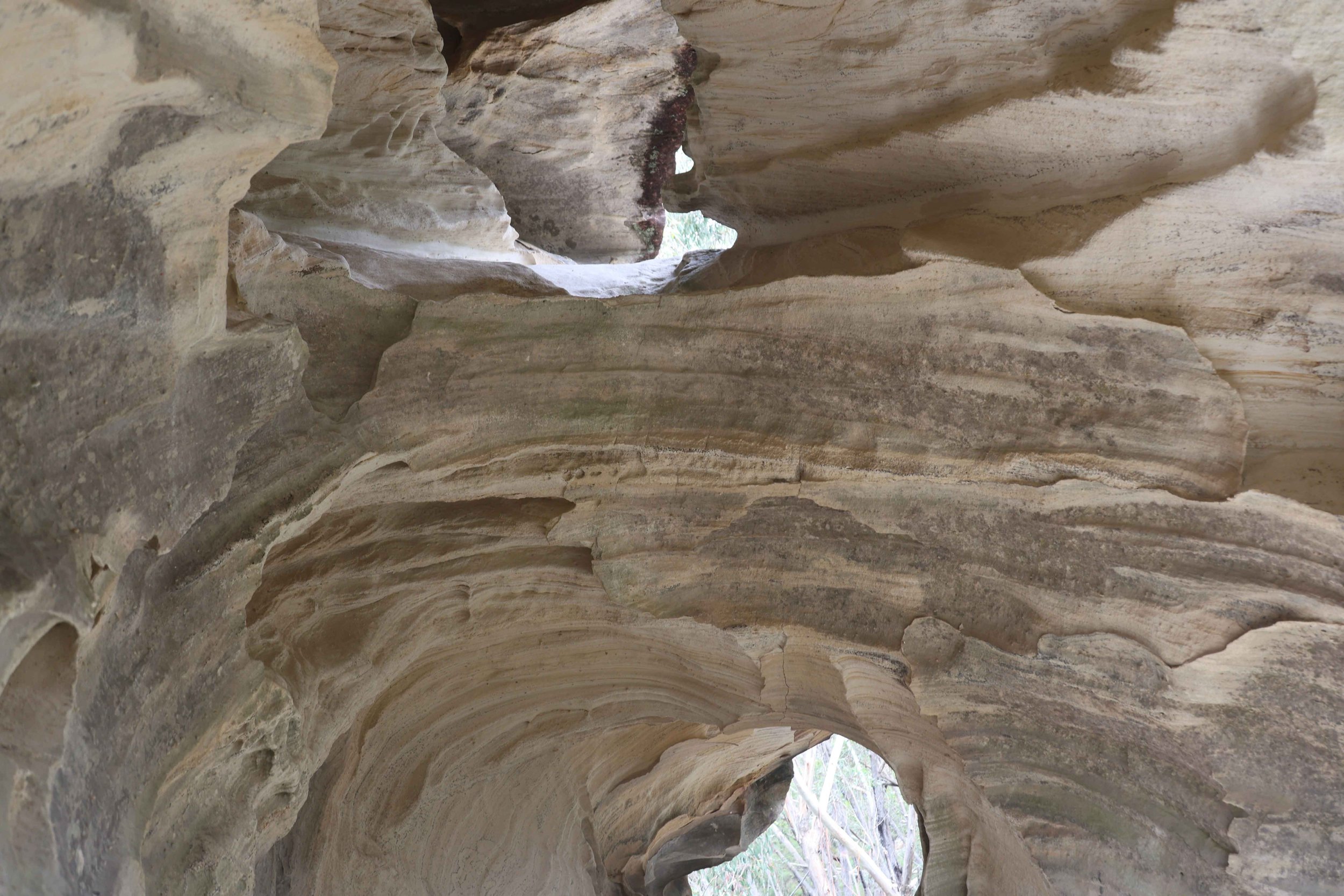
Fortress Ridge Cave
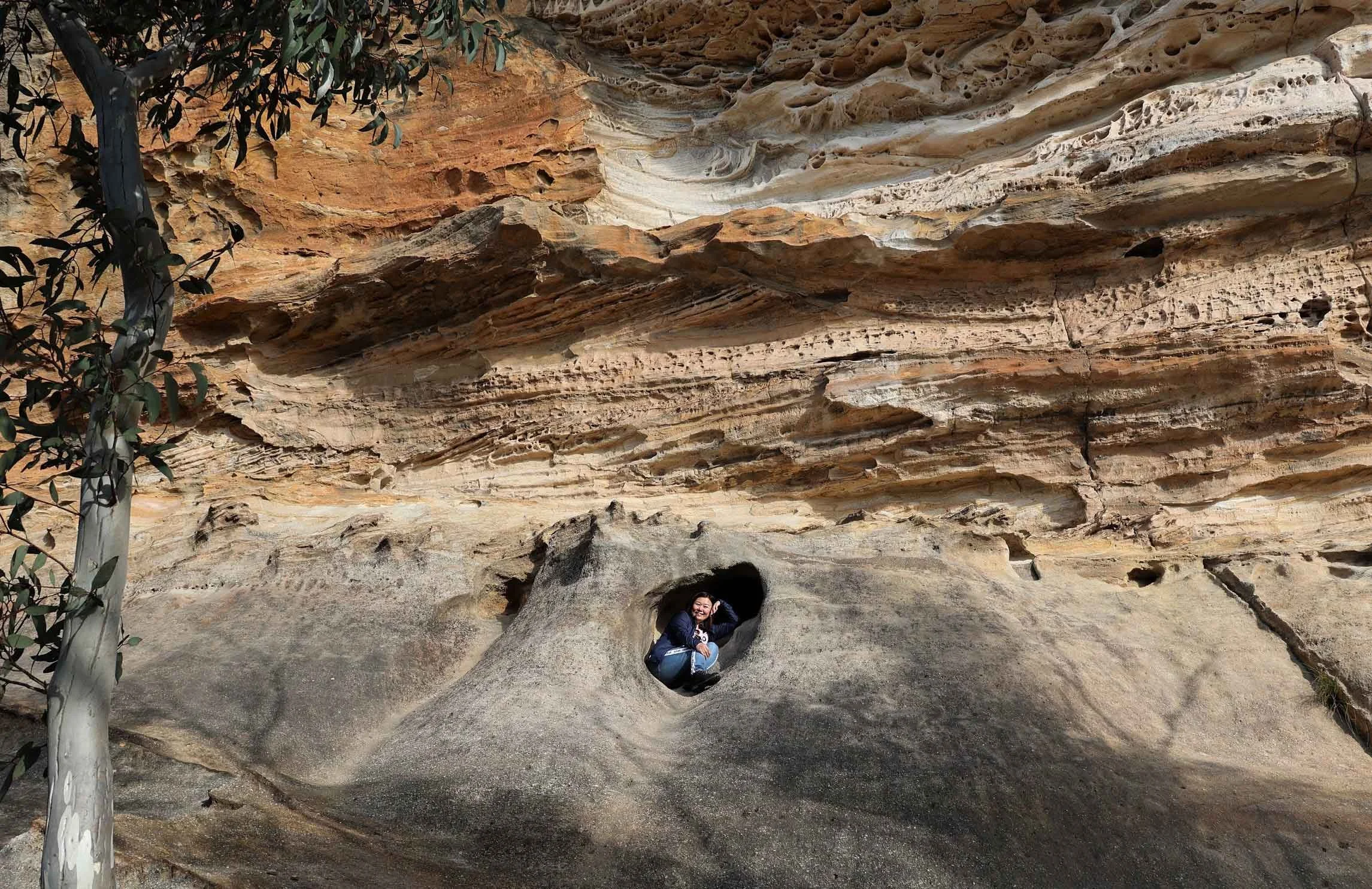
wind eroded cave plus one