Posts in sydney city coast
Barangaroo Reserve

Barangaroo Reserve

Barangaroo is a 22 hectare inner city suburb of Sydney located on the north west side of Sydney’s CBD.

The suburb is named after an aboriginal woman who had a significant influence in early contact between Aboriginal people and British authorities. She has been described as a powerful woman and was a respected provider of food (fisherwoman). Her second husband was Bennelong. Unfortunately Barangaroo passed away shortly after giving birth to her daughter in 1791.

The adoption of the word Barangaroo as the name of this newly created suburb is yet another example of a distinctive indigenous word adding to the richness of Australia’s vocabulary.

Many of Sydney’s place names are derived from Aboriginal words (eg , Bondi, Collaroy, Coogee, Cronulla, Curl Curl, Kirribilli, Maroubra, Narrabeen, Tamarama and Woolloomooloo).

The urban renewal of Barangaroo has been a landmark project in Sydney for well over ten years. The area was formerly docklands and known as the ‘hungry mile’. It was a tough, competitive and sometimes violent place. Workers from the 19th Century until the 1940s were known to walk from wharf to wharf searching for low paid work.

Barangaroo includes a 6 hectare headland park (Barangaroo Reserve) which was completed several years ago.

A significant part of the urban redevelopment in this new suburb has already occurred, however a six star resort and several residential buildings are still at the planning stage or under construction. A metro station is planned for Barangaroo.

The reserve is essentially an artificial hill, but it doesn’t look like one. Its contouring with the harbour, terraced plantings and dimensions generally make it fit in with its surrounds. Clever engineering and earthworks have given it the look of a hill whilst allowing a large void, known as the Cutaway, to exist underneath the parkland above.

The roof of the Cutaway required the fabrication, transportation and installation of massive concrete spans, which underpin thousands of cubic metres of rock, soil, grass and trees.

The Cutaway provides a unique area for events, exhibitions, television shoots, concerts and large gatherings. It is 120 metres long, 45 metres wide and the height of a six storey building. Natural light enters the space through a long vent on its east side.

A large scale planting of native plants, shrubs and trees (75 000 in total) has been undertaken at Barangaroo Reserve and the horticulturalists have largely chosen native flora that existed in the area prior to European settlement.

An incredible amount of sandstone has been used around the foreshore and throughout the reserve, showcasing the attractive look of this beautiful local material.

Barangaroo Reserve is a pleasant green addition to the City of Sydney which will improve over time as the trees increase in size whilst providing a unique multipurpose area that can be used by all Sydneysiders.

Sydney Nimble Tours includes a Barangaroo tour in our Eastern Suburbs, Woolloomooloo, Barangaroo day out. Alternatively we can include a tour of Barangaroo in our Sydney Bespoke Tour.

Barangaroo Reserve fits in well with the Rocks and Walsh Bay

the three green towers that descend in height are known as the International Towers

it came from the purple tent - opening night of Vivid at Barangaroo

looking west from the Stargazer Lawn at Barangaroo Reserve

Balmain and Ballast Point

At times Balmain seems to have no end of small, narrow and windy streets. These streets contain a plentiful supply of heritage architecture, ranging from tiny cottages to grand colonial sandstone homes. It is a colourful suburb that is largely overlooked by visitors to Sydney.

Balmain is located across the water from Barangaroo and can be accessed by ferry or road.

We like Balmain’s history, heritage architecture, harbour panorama and vibrant atmosphere. It’s a nice place to take a stroll.

The East Balmain Wharf at the end of Darling Street and adjacent Illoura Reserve provide spectacular views of the Sydney Harbour Bridge and Barangaroo.

Nearby Fenwick Store was built in the 1880s and used for storage by a local tug boat operator. A first class restoration of this stone heritage building has recently been completed and it will soon commence a new life as a café/gallery.

There are other heritage houses nearby such as Ewenton House and Clontarf House that can be seen whilst walking on the Tom Uren walking route. Have a look at the Balmain Watch House (179 Darling St) which was built from Hawkesbury sandstone in 1854.

In the 19th century Balmain was known for ship building, engineering and boiler making. For a period of time the area even had a coal mine.

Balmain was a working class area. The industrialisation of the suburb resulted in many tiny cottages being built for workers and surprisingly drinking establishments flourished in this environment! Many of these pubs (public houses) still operate in Balmain today and they are great places to visit even if only to admire the architecture.

Balmain began to move away from its working class origins in the 1960s when its industry began to wane and Sydney siders started to appreciate the suburb’s desirability. The Balmain basket weavers, as famously referred to by a former Australian prime minister, began to move into the area. Gentrification and renovations followed bringing back to life many decaying historic homes.

If you have time squeeze in a short walk around Ballast Point Park, which is only a 5 minute drive from the East Balmain Wharf. The park was created in 2009 after an oil refinery was demolished and the land decontaminated.

This urban renewal project has given the community several different recreational areas and provides a great place for a picnic or BBQ on the harbour’s foreshore.

Sydney Nimble Tours would be delighted to take your small group on a walking tour of Balmain and Ballast Point Park https://www.sydneynimbletours.com.au/inner. This activity can form part of our Inner Sydney Tour or added to one of the other days out. We visit Balmain for about two hours.


Fenwick Store was in a dilapidated state for many years. The recently completed restoration is a job well done.

Ewenton House with exquisite oriel window

The Exchange Hotel is part of the fabric of Balmain.

No this is not a tribute to an Easter Island Moai. The rustic quote at Ballast Point Park reads ‘Stone statues of ancient waves, tongue like dingoes on shore’. These words are taken from a poem (The Death of Isaac Nathan) by recently deceased Australian poet, Les Murray. The font is designed in dots to represent the rivets used on this former industrial site.

The bright colours of Mort Bay as seen from Ballast Point - Barangaroo and city buildings in the background.

butcher and candlestick maker?

Inner Sydney Tour

Listed below are places that are often missed by visitors to Sydney. They pass our highly discerning ‘great place to visit’ filter:

  • White Rabbit Gallery and neighbouring green building, Central Park

  • Brett Whiteley Studio (Friday to Sunday)

  • Sydney University

  • Short walking tour of Balmain including the wharf area, Fenwick House and the dry dock

  • State Library

  • The Grounds of Alexandria

  • Artisan distillery or microbrewery at or near the end of the day

All of these places are close to the city (within 10-30 minutes).

Why not check some or all of them out?

If you are interested let us know and we will reply with a day plan for your approval.

The minimum time is 4 hours, so pick at least three or four places. If you would like to select most or all of the above places the inner Sydney tour can be made into a longer day trip (6-8 hours). 

Personalise an existing tour

If one or two of the above inner Sydney destinations appeal to you we can include these in any one of our other existing tours (except for the Blue Mountains).

After you have advised which one or two places you would like included and the tour you would like adjusted we will send a revised day plan for your approval.


Sorry but Harry Potter was not filmed here - entrance to the Quadrangle at Sydney University

don’t forget your hat, Ewenton House, Balmain

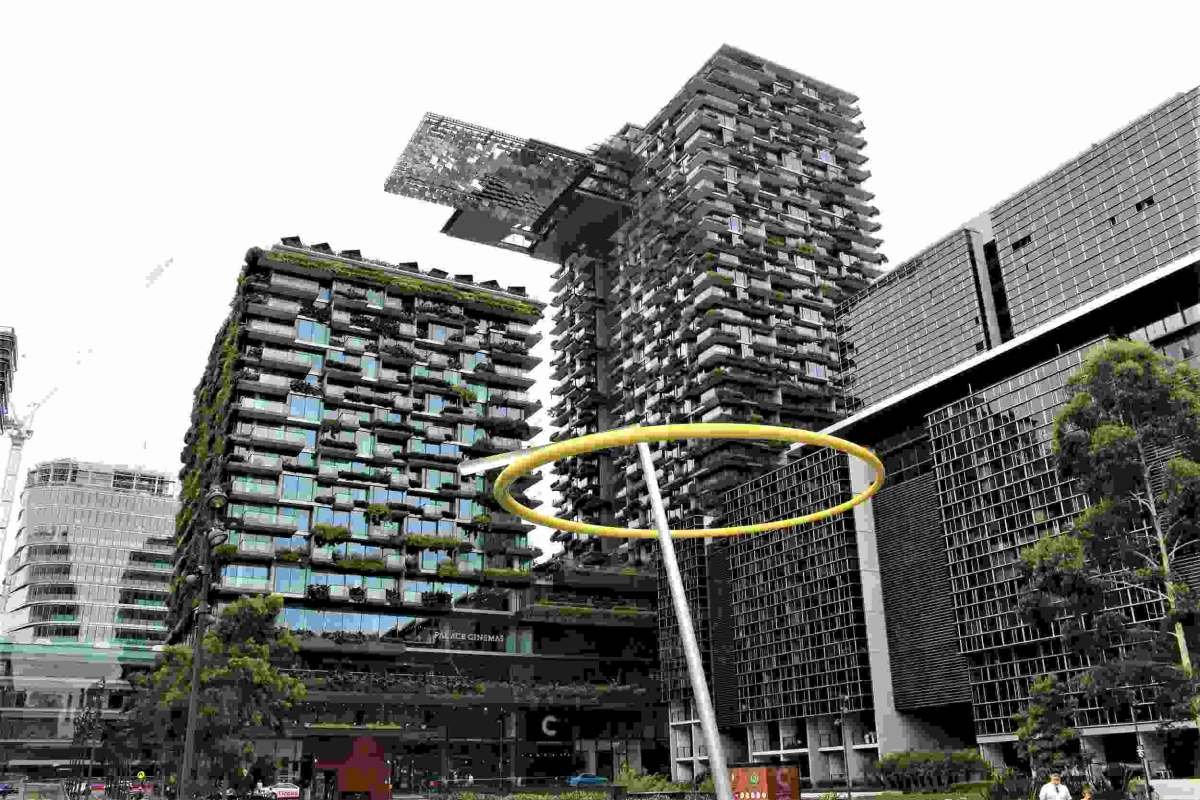
Buildings don’t get any greener than Central Park, Chippendale

Sydney Town Hall

As a part of Sydney Nimble’s continuous improvement program several representatives of the company attended a tour of the Sydney Town Hall (STH).

We were fortunate today in that most of the building was accessible. Sometimes areas are off limits if meetings or other events are being held. The STH is a working building.

It is a proud and forthright building constructed from brick and local fine grained yellow sandstone. The land on which it is built was formerly the site of the Sydney Old Buriel Ground (Sydney’s first cemetary). The STH was constructed in stages and officially opened in 1889. It is a mix of architectural styles, incorporating details from different periods and countries.

It has many exquisite features including, large doors and joinery crafted from red cedar, marble tiles and mosaics, two large triptych stained-glass windows, etched glass windows, tiled daddo panels, intricate plaster work, metal pressed ceilings and a 9000 pipe grand organ.

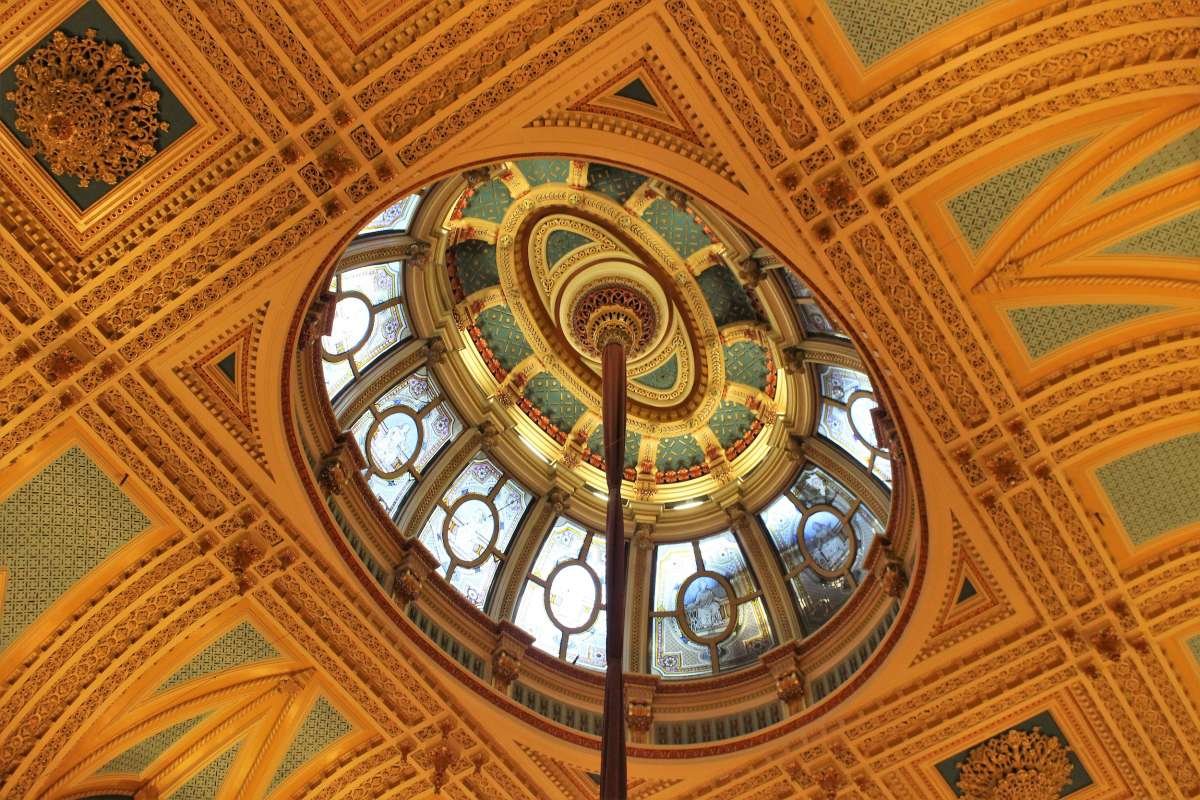
The vestibule to the main hall is exceptional. Its ceiling comes with altitude and is decorated in High Victorian style. The elliptical dome in the centre of the ceiling contains no less than 12 panels of curved stained glass. Each panel represents an allegorical virtue (eight in total) or one of the four elements (earth, wind, air and fire). A large crystal chandelier is suspended beneath the dome.

The main hall can accommodate approximately 2000 people. It has been used for multiple activities ranging from civic and public meetings, concerts, balls, dinners, corporate events and school presentations.

Tours of the STH are conducted by passionate volunteers and are a worthwhile investment of time, particularly if you like heritage buildings and or have an interest in Australian history.

Sydney Nimble Tours can include a visit to the STH in one of our days out but if you are staying in the city it is an activity that you can easily organise on your own. Whilst there don’t miss, if you haven’t already seen it, the Queen Victoria Building across the road.

the vestibule dome is stunning

Captain James Cook

The stained glass in this image was made for the centenary of the Colony of New South Wales in 1888. The woman signifies New South Wales.

The stained glass in this image was made for the centenary of the Colony of New South Wales in 1888. The woman signifies New South Wales.

Sometimes referred to as a ‘temple of democracy’ Centennial Hall is a pleasant place to enjoy an event

Coat of arms from yesteryear - it was thought appropriate at the time for the indigenous gentleman on the left to be clothed in yellow shorts!

Coat of arms from yesteryear - it was thought appropriate at the time for the indigenous gentleman on the left to be clothed in yellow shorts!

Sydney Harbour, Northern Beaches and National Park Tour

Sydney Harbour has some quality beaches which are often overlooked by visitors and locals alike. Bondi Beach, Palm Beach or Manly Beach are more likely to attract the attention of beach goers.

Standout harbour beaches located to the north of the Harbour Bridge include Balmoral Beach, Chinamans Beach, Clontarf Beach and Castle Rock Beach.

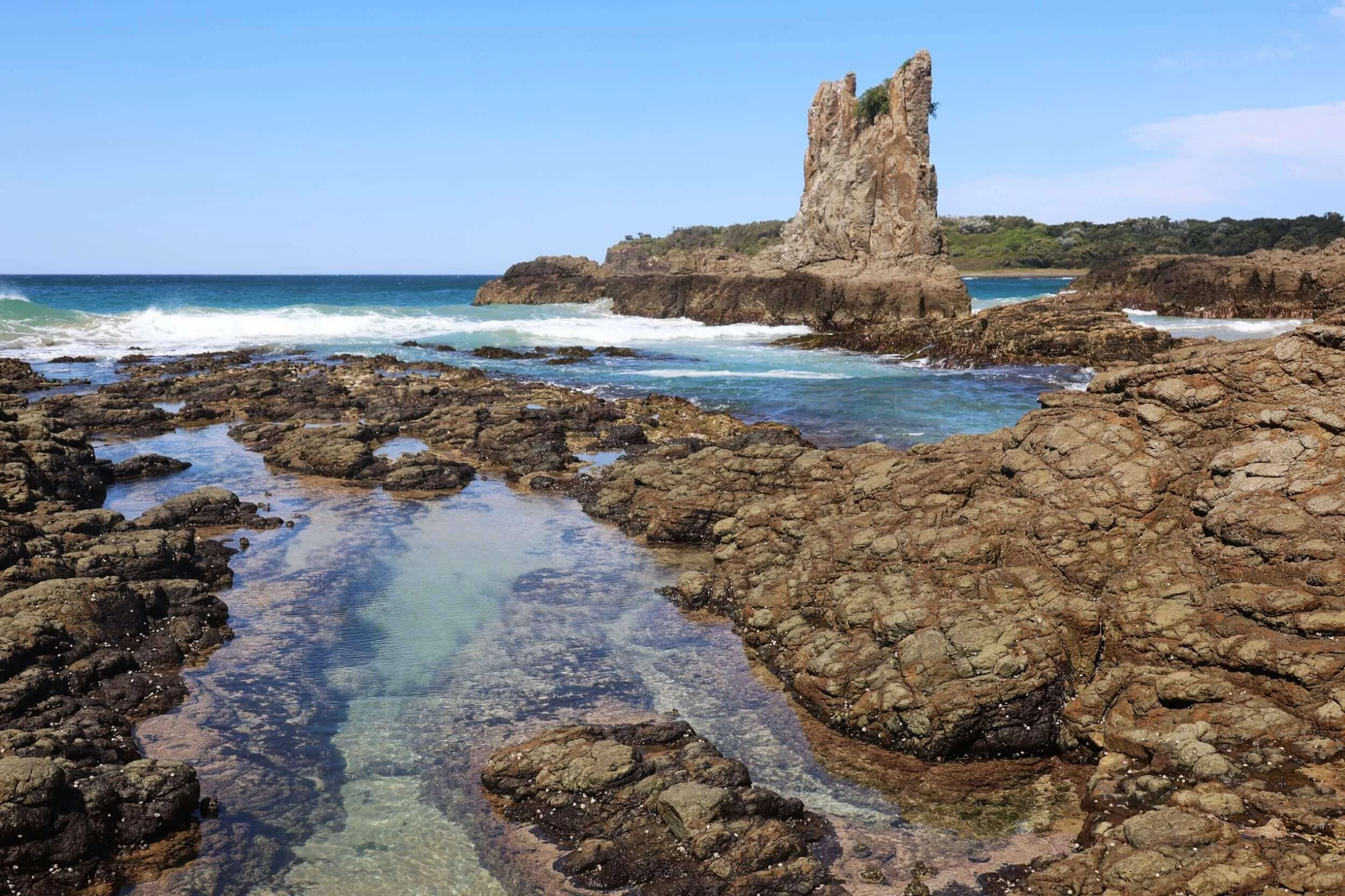
These beaches offer something different by providing a safer place for a dip, being largely protected from the surf. Some harbour beaches, such as secluded Castle Rock Beach, are enhanced by a natural bush setting. Castle Rock Beach can be accessed via the Manly to Spit Bridge coastal walk and is adjacent to the Sydney Harbour National Park.

Another less known beach is Chinamans Beach, which was named after Chinese residents who organised market gardens in the reserve approaching it. The beach stretches for about 200 metres and faces directly north. This beach is a solid choice if you seek a mellow experience away from the crowds.

Balmoral Beach’s popularity can sometimes be a negative as it gets busy on warm weekends - too much love! The better option is to visit during weekdays or early in the day on a hot weekend. It is however a beautiful beach with great views towards the entrance to Sydney Harbour (the Heads). On a Saturday afternoon you may catch the impressive sight of yachts racing in the distance.

There are several restaurants on Balmoral Beach. Alternatively follow the advice of local real estate agents and have take away fish and chips at the beach whilst enjoying the village atmosphere!

Although referred to as Balmoral Beach, it is in fact two beaches, with Edwards Beach being located to the north of Rocky Point Island (you can’t miss it) and Balmoral Beach located to the south.

Sydney Nimble Tours can include a visit to any of these beaches in our Sydney Harbour, Northern Beaches, National Park Tour. There are other harbour beaches on offer but why give away all of our secrets in one blog?

Go forth and get harbour beached!

a small and secluded harbour beach

The official canine representative of Sydney Nimble Tours at full speed - Sandy Bay, a designated dog beach near Clontarf Beach.

slick curves at Clontarf

no mob at Chinamans

A harbour beach to yourself?

Time to dust off the board

Dust storms do not generally occur in coastal areas of NSW but yesterday was the exception. Sydney was hit by gale force winds. The city was enveloped in a cloud of dust. The dust storm was brought by a cold front which moved through the western parts of NSW.

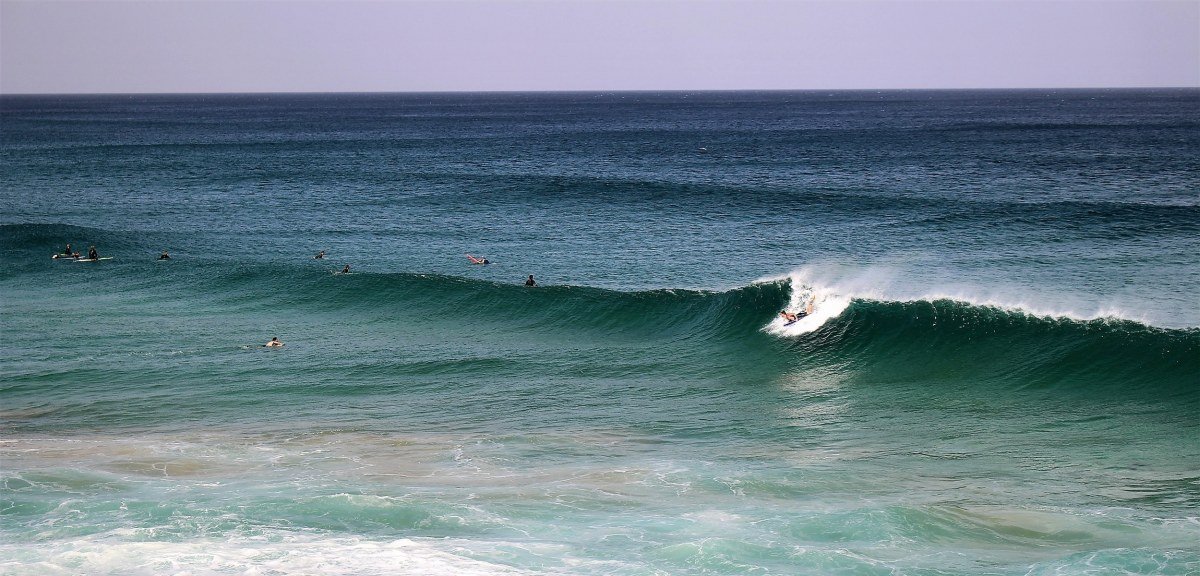
On a positive side surf conditions were excellent. Offshore winds and 3-4 feet plus of southern swell made for some very nice lines and quality waves. Curl Curl in particular had one of its best days in quite some time. Whilst Manly was also shapely it was smaller as it missed some of the Southern swell.

Sydney Nimble Tours visits Curl Curl, Freshwater, Manly, Bilgola and Palm Beaches on the Harbour, Northern Beaches and National Park Tour https://www.sydneynimbletours.com.au/sydney-harbour-and-northern-beaches-tour/

Please enjoy the photos of surfing glory at Curl Curl and Manly Beaches.

Manly Beach tube

Curl Curl surf on the day of dust

Boogie boarder carving it up

Going right late in day

Manly hanging ten

A Magnificent Log

If you are walking through the side streets of the city you may come across an artwork called ‘Underwood Ark’. It is a suspended Blackbutt tree that appears to pierce through three pedestrian walkways located above Underwood Street. The large root system can also be seen from Dalley Street (a street that runs between George and Pitt Streets, not far from Circular Quay).

A person walking along Underwood or Dalley Street may be surprised when they come across Underwood Ark. Why is a large tree stripped of all bark hanging 10 metres above Underwood Street? Is it there to create a feeling of walking under wood?

The tree is 35 metres long, with an estimated age of two hundred years and weighs 18 tonne.

Underwood Ark was installed in 2017 and resulted from a collaboration between Mirvac and the National Art School. The tree was sourced from the South Coast of NSW.

The artist, Michael McIntyre, who sculpted the root ball explains in a vimeo that the concept behind Underwood Ark was to respond to the natural bush that once existed on the land and evoke a feeling of pre-settlement.

Blackbutt (Eucalyptus Pilularis) is a type of hardwood that is native to the east coast of Australia. The name Blackbutt originates from the base or butt of the tree being blackened after fires.

Underwood Ark is not only a novel artwork but a reminder that you never know what you may randomly find in the streets of Sydney.

Connection with pre-settlement

Sydney open

Sydney Open is presented by Sydney Living Museums and allows Sydneysiders and visitors to see 40 different buildings in the CBD of Sydney, over two days. Today (4/11/18) was the second and final day. Most of the open buildings would not otherwise be available for the public to inspect and enjoy.

The open buildings extend over a significant distance and it is not possible to see all 40 buildings in the 6 hour window period (10am-4pm). Difficult choices have to be made!

Of the buildings visited today by Sydney Nimble Tours the following were considered exceptional: 50 Martin Place; Baker McKenzie premises at Barangaroo (levels 44-46) and the AMP Building at Circular Quay.

Level 46 of Baker McKenzie’s premises provided outstanding views of Sydney, particularly to the south, west and north. Macquarie Bank is located at 50 Martin Place and provided access to wonderful art deco architecture on the ground floor whilst the rooftop area displayed sophisticated Australian artwork, super stylish boardroom and unique views of Martin Place.

The AMP Building has a box seat view of the Sydney Harbour Bridge, Sydney Opera House and Sydney Royal Botanical Gardens. The first photograph below was taken from the AMP Building; second and third photos are of 50 Martin Place foyer, fourth photo is Sydney Tower through the eye of a silver doughnut and the final photograph shows the turbulence created by a turning catamaran on Sydney Harbour.

https://sydneylivingmuseums.com.au/sydneyopen


Open Sydney - Art deco foyer of 50 Martin Place

Indigenous art and art deco staircase

Sydney Tower

Sydney Nimble Tours - wake of a catamaran on Sydney Harbour - photographed from level 46 of Baker McKenzie premises in Barangaroo

Palm Beach tour - Long Reef kite surfing

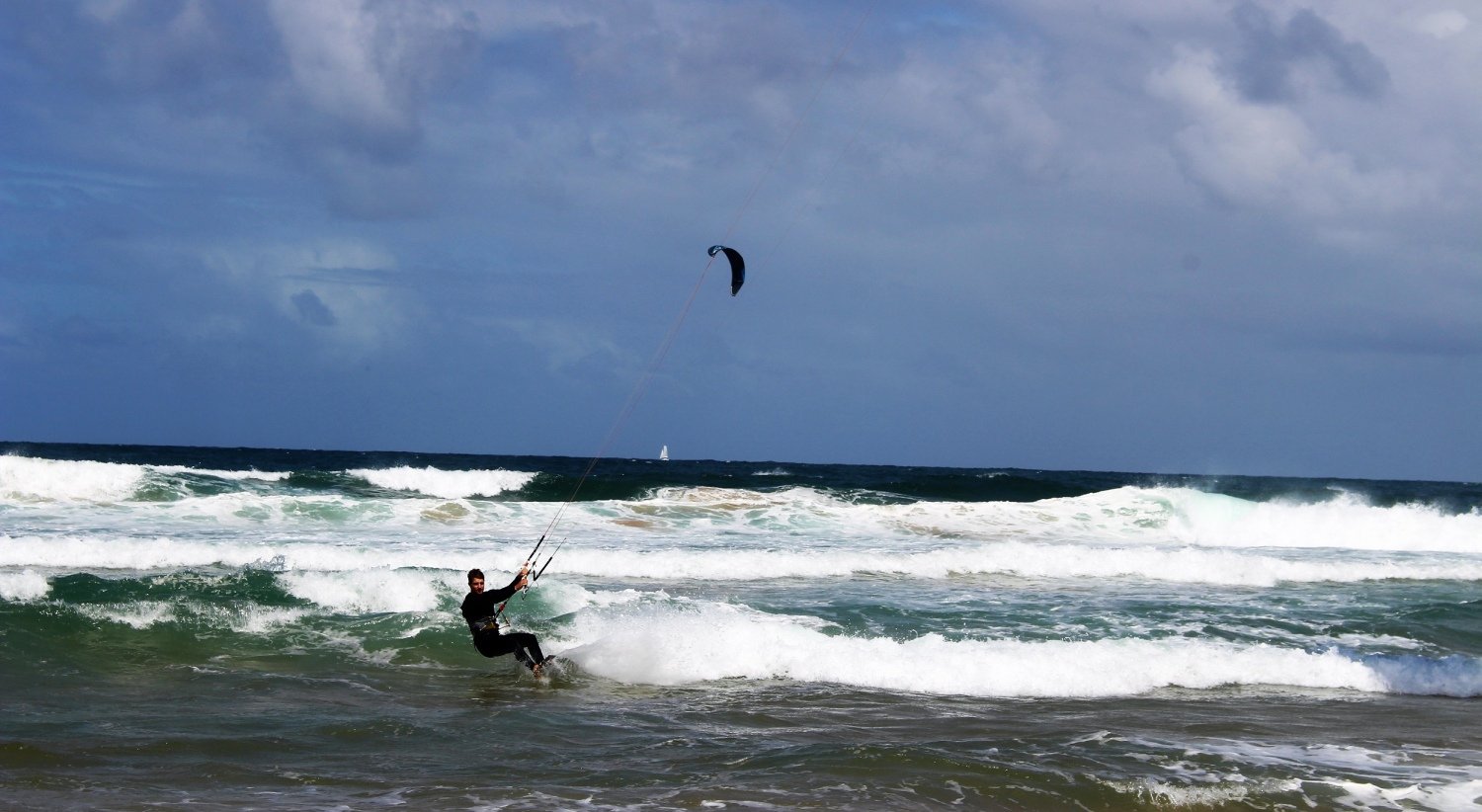
Whilst on a northern beaches tour we observed half a dozen kiteboarders speeding through the water and doing some amazing aerial manouvres. If you are fortunate enough to be driving by a beach and spot this activity it is worthwhile pulling over and having a look, even if only for ten or fifteen minutes. Kite surfing requires a reasonably strong wind so the conditions will not always be right. The photographs below, taken at Long Reef Beach, show the acrobatic feats being achieved in the course of what can only be described as a thrilling sport.

no fear of heights

cruising back to beach

hard landing?

controlling the kite can be challenging

Royal Botanic Garden Sydney

The Royal Botanic Garden Sydney is one of the most delightful and expansive places in Sydney.

The land area is 30 Hectares. Whilst there you have the option of visiting the NSW Art Gallery, Government House (inside tour by appointment only) and the Music Conservatorium as these three buildings are in the broad area.

The Gardens are centrally located to the east of the city, offer a perfect location for photographs, and the Opera House can be accessed from the Gardens. There is a lot to see and the only limitation is the amount of energy you have.

If I had only a few days in Sydney a reasonable time allocation would be one and half to three hours. There are plenty of spots to have a picnic and enjoy the ambience and vistas of the opera house and harbour bridge.

Some of the highlights for me include: Calyx, Southern African Garden, succulent garden, native plants and trees, Mrs Macquarie chair and the gardens of Government House.

As we are in Spring the next few months are a perfect time to visit. The Waratah is the floral emblem for New South Wales and one of Australia’s most brilliant native plants. A patch of these plants are currently in full bloom. Sydney Nimble Tours can include a visit to the Gardens in any of our days out.

The photos below in top to bottom order: crimson coloured Waratahs, Government House gardens with photo bomber, flowers in Southern Africa Garden and Government House entry.

Waratahs in the Gardens

Government House with photo bomber

Southern African Garden

Entrance to Government House