
Grose Valley Blue Mountains — Govetts Leap, Bridal Veil Falls & the Lookouts Above the Wilderness
The Blue Mountains has three great valleys that we visit on our Private Blue Mountains Tours. The Jamison Valley, seen from Echo Point at Katoomba, is the one most visitors know. The Megalong Valley, below the escarpment at Blackheath, is the quieter one you descend into. And the Grose Valley — stretching north east from Blackheath through the heart of the Blue Mountains wilderness — is the one that stops you in your tracks.
Deeper, wilder and less accessible than the others, the Grose Valley is World Heritage-listed wilderness. There are no roads into it, no facilities at the bottom, and the only way in is on foot down tracks that drop hundreds of metres through cliff and forest. From the lookouts above, the valley floor is a distant green world of blue gums trees and sandstone cliffs — the kind of view that showcases the scale of the mountains.
Govetts Leap
One of the best lookouts to acquaint yourself with the Grose Valley is Govetts Leap, a five minute drive from Blackheath. The lookout is easily accessed from the car park and by looking to the right you will see Bridal Veil Falls dropping 180 metres into the valley below. The waterfall starts where Govetts Leap Brook tips over the cliff edge - named after William Govett, a government surveyor who first recorded the location in 1831, the word "leap" is old Scottish dialect for waterfall.
The view from the Govetts Leap lookout platform is one of the best in the Blue Mountains: a wide sandstone amphitheatre, sheer cliff walls on three sides, dense eucalypt forest covering the valley floor, and the falls themselves. After rain the falls are at their most dramatic. In drier months they soften to a veil of mist — which is presumably where the alternative name comes from.
If you are looking directly across at Mt Hay from Govetts Leap you will not see a second waterfall, Horse Shoe Falls. A short walk must be taken along the track towards Cripps Lookout to see this waterfall.
Walking tracks of varying difficulty begin from the Govetts Leap car park and these will take you in different directions along the rim of the valley. Our Blue Mountains tours can include a Grose Valley walk if you would like to take in more of this wonderful valley.
The Other Lookouts
There are a whole string of lookouts from which to view the Grose Valley, each offering a different angle on this extraordinary landscape. Which ones we visit depends on the group and the day. Driving is also a factor as some of the lookouts require a significant amount of driving.
Evans Lookout sits at the end of its own short road and looks across to the southern wall of the valley — a wide, uninterrupted view of sandstone cliffs and the forested plateau beyond.
Anvil Rock is a sandstone formation on the cliff edge, named for its shape that is compared to an Anvil. There is even a real anvil at the lookout. The lookout here gives a different perspective on the valley's depth — you're standing on the rock rather than looking across from a platform, which changes the feeling considerably. This lookout is also different in that you look over a blue gum forest to the other side of the valley.
Fortress Ridge rewards the walk with views along the valley that are less visited and harder to replicate elsewhere in the mountains.
The wind-eroded cave — just 50 metres from the car park for Anvil Rock — is one of those places that looks unremarkable on a map and extraordinary in person: a large chamber hollowed out of the sandstone cliff by thousands of years of wind and weather, the rock worn smooth and curved in a way that feels almost deliberate.
Perry's Lookdown is an occasional stop depending on the group — a more remote vantage point with long views down into the valley's lower reaches, and a starting point for one of the classic overnight walks into the valley.
The Rockface and Its Residents
One of the quieter pleasures of the Grose Valley lookouts is what the sandstone cliffs reveal over time — and what people see in them.
The existing Grose Valley post on this site (1 June 2022) has mentioned the seahorse, a rockfall from 2021 that carved a shape into the cliff face below Lockleys Pylon that bears an unmistakable resemblance to a seahorse. It's still there. In August 2025, another rockfall added a new resident: a section of cliff that collapsed and left behind something that — depending on your angle and willingness to commit to the interpretation — looks remarkably like Daffy Duck. Greg has the photo to prove it (see below).
This kind of thing has a name: pareidolia, the human tendency to find familiar shapes in random patterns. The Blue Mountains sandstone has been producing these formations for as long as people have been looking at it. Some of them get official names. Others just get pointed out quietly to guests who then can't unsee them for the rest of the day.
A Valley Worth the Drive
The Grose Valley side of the Blue Mountains — Blackheath and its lookouts — is further from Sydney than Katoomba and gets fewer visitors as a result. That's a reasonable trade: the crowds thin out, the lookouts are quieter, and the landscape feels less managed.
On our Blue Mountains Private Tour, Govetts Leap is a regular stop — it's too spectacular to skip. The other lookouts that we visit depend on the group, the season, and how the day unfolds.
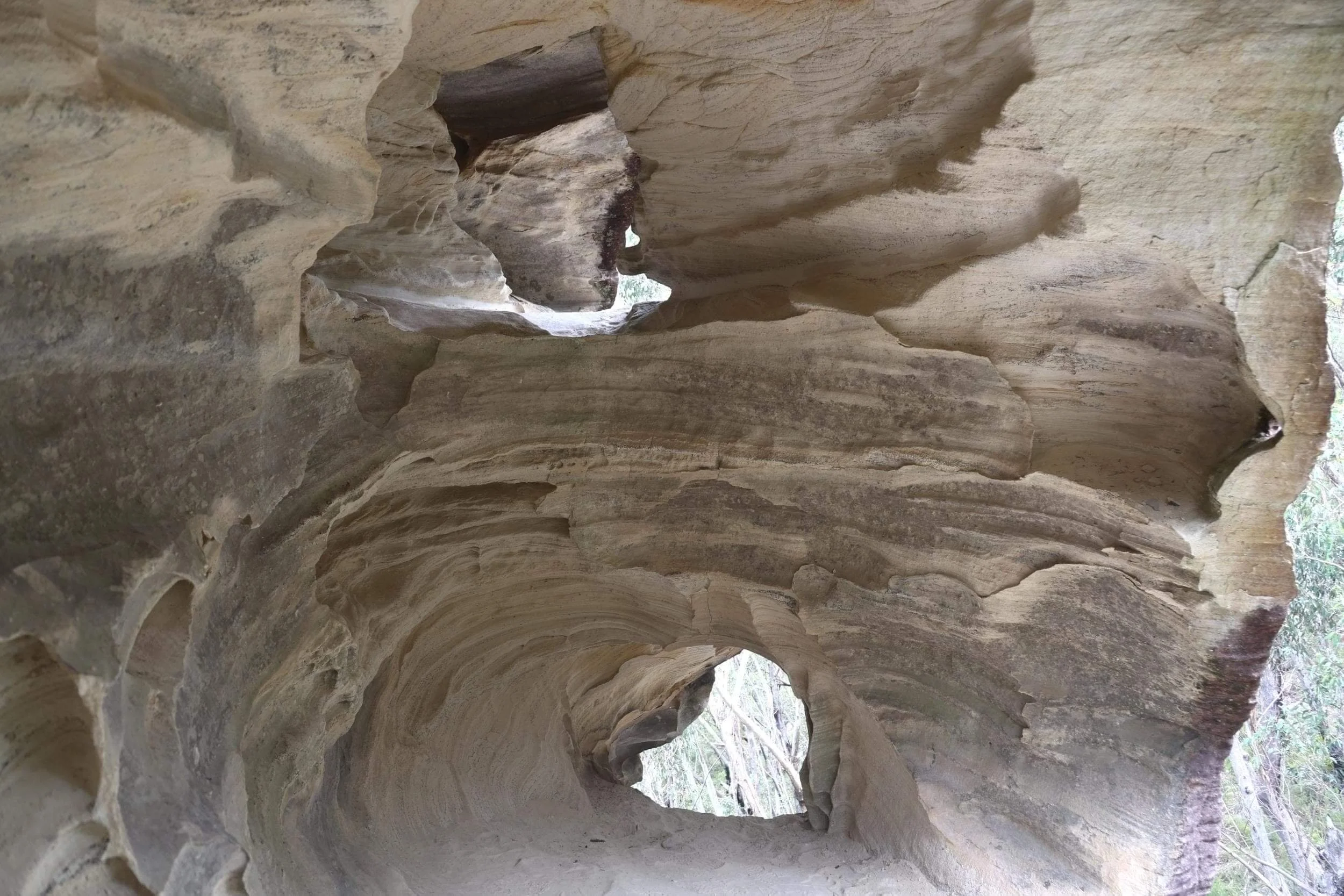
sandstone cave formation near fortress ridge
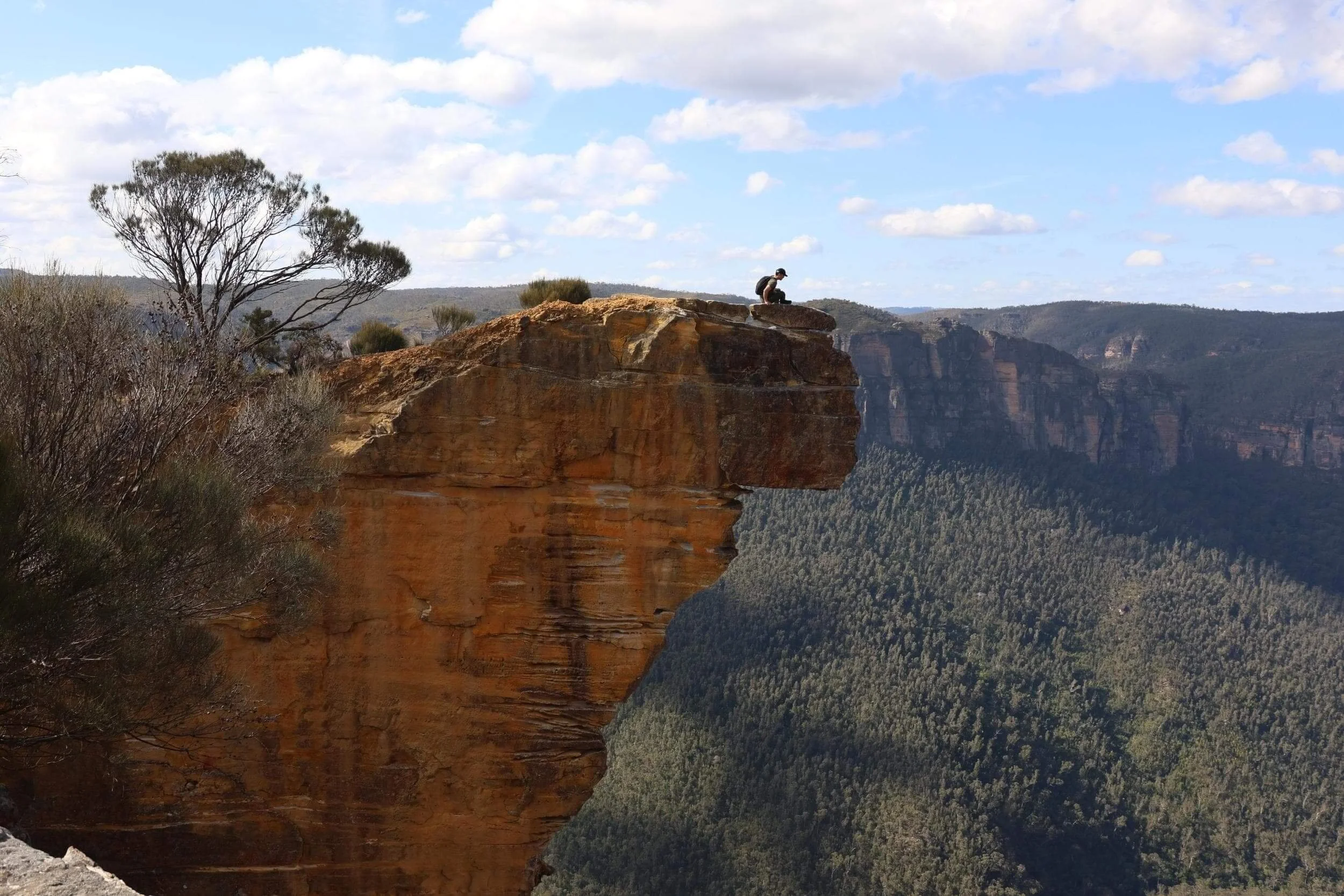
hanging rock perched above the Grose Valley - what a view
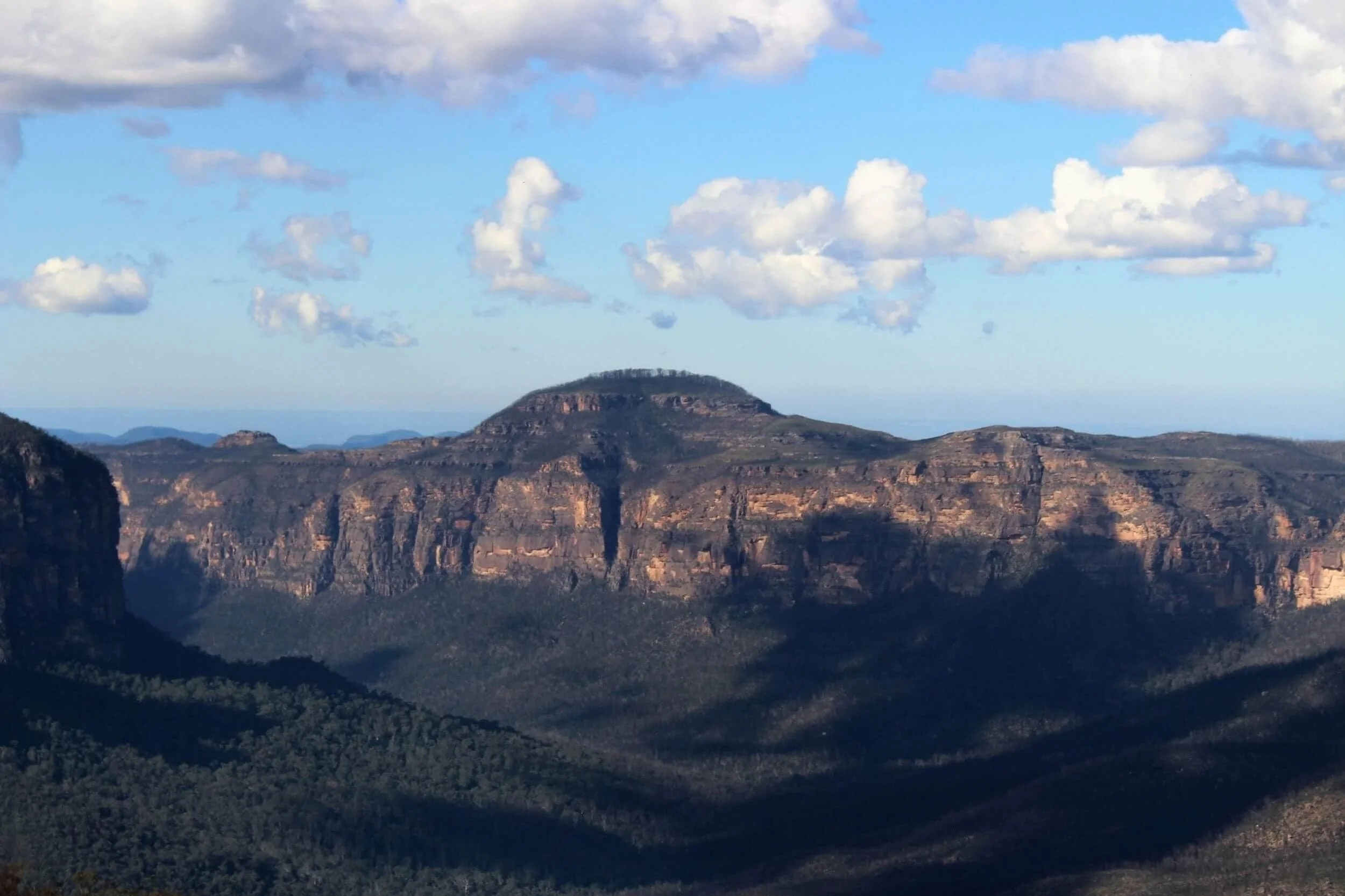
Mt Hay as you look across the Grose Valley from Govetts Leap
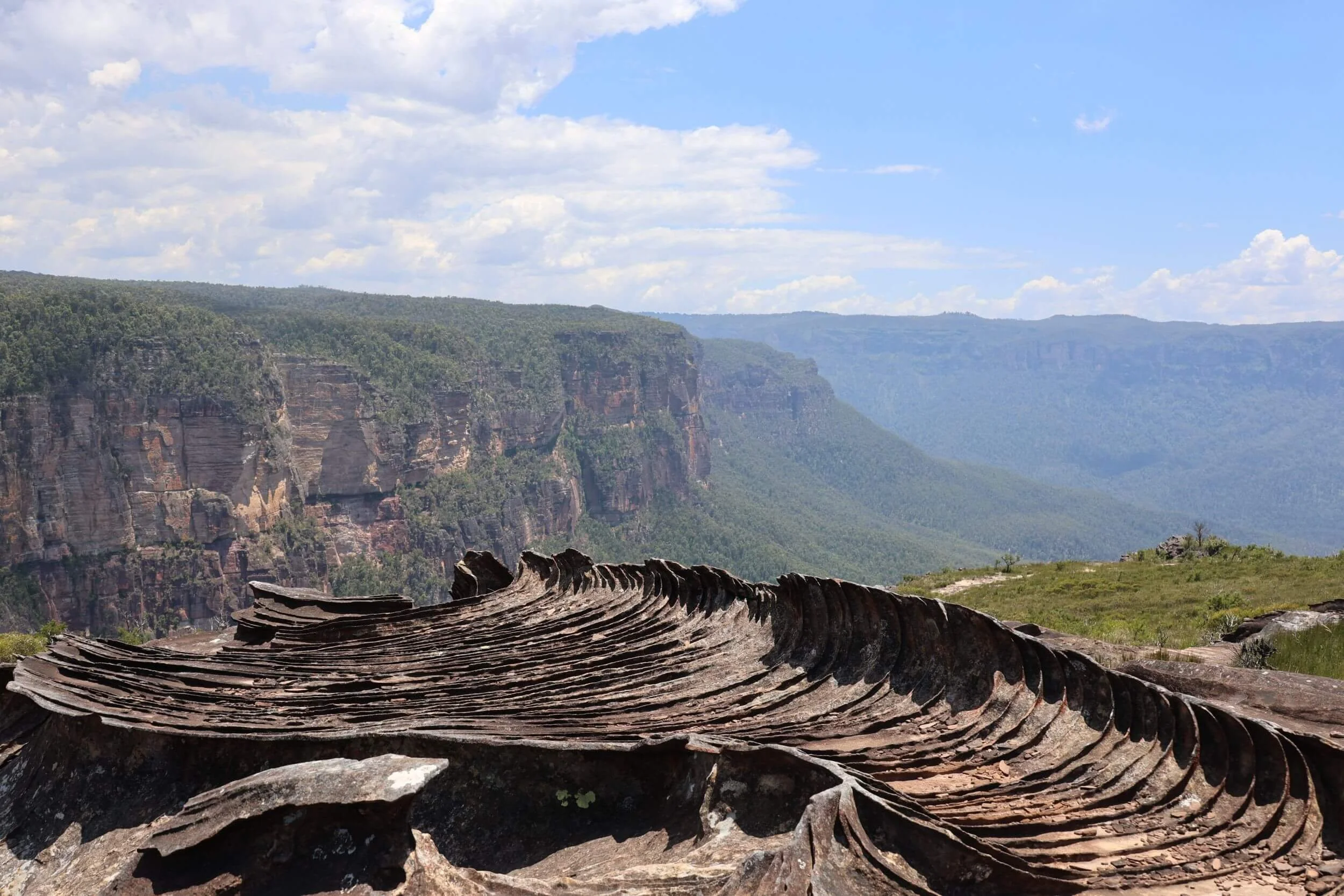
ironstone formations near Mt Hay - Grose Valley in distance
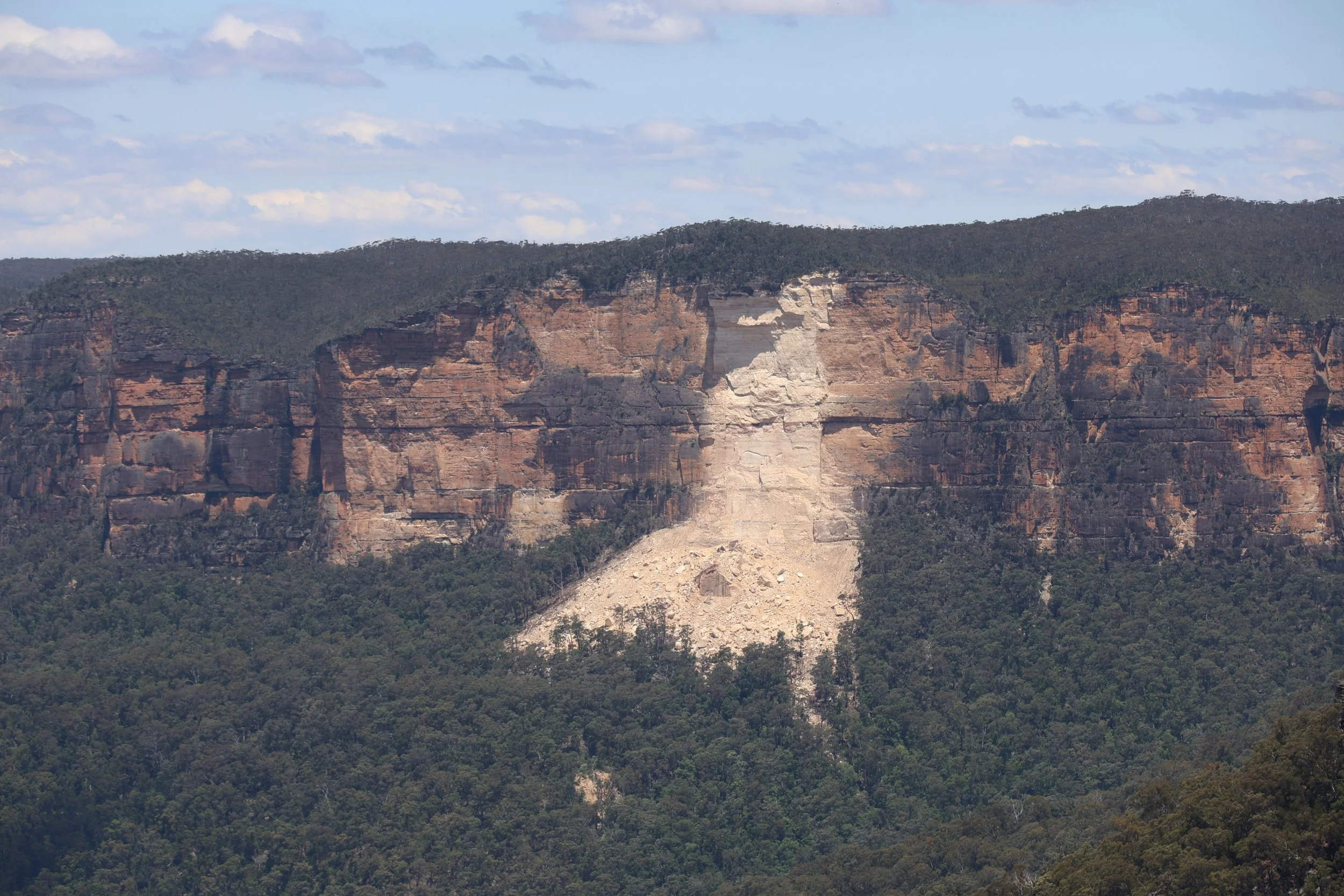
2025 Rockslide in the Grose Valley - the shape of a duck?
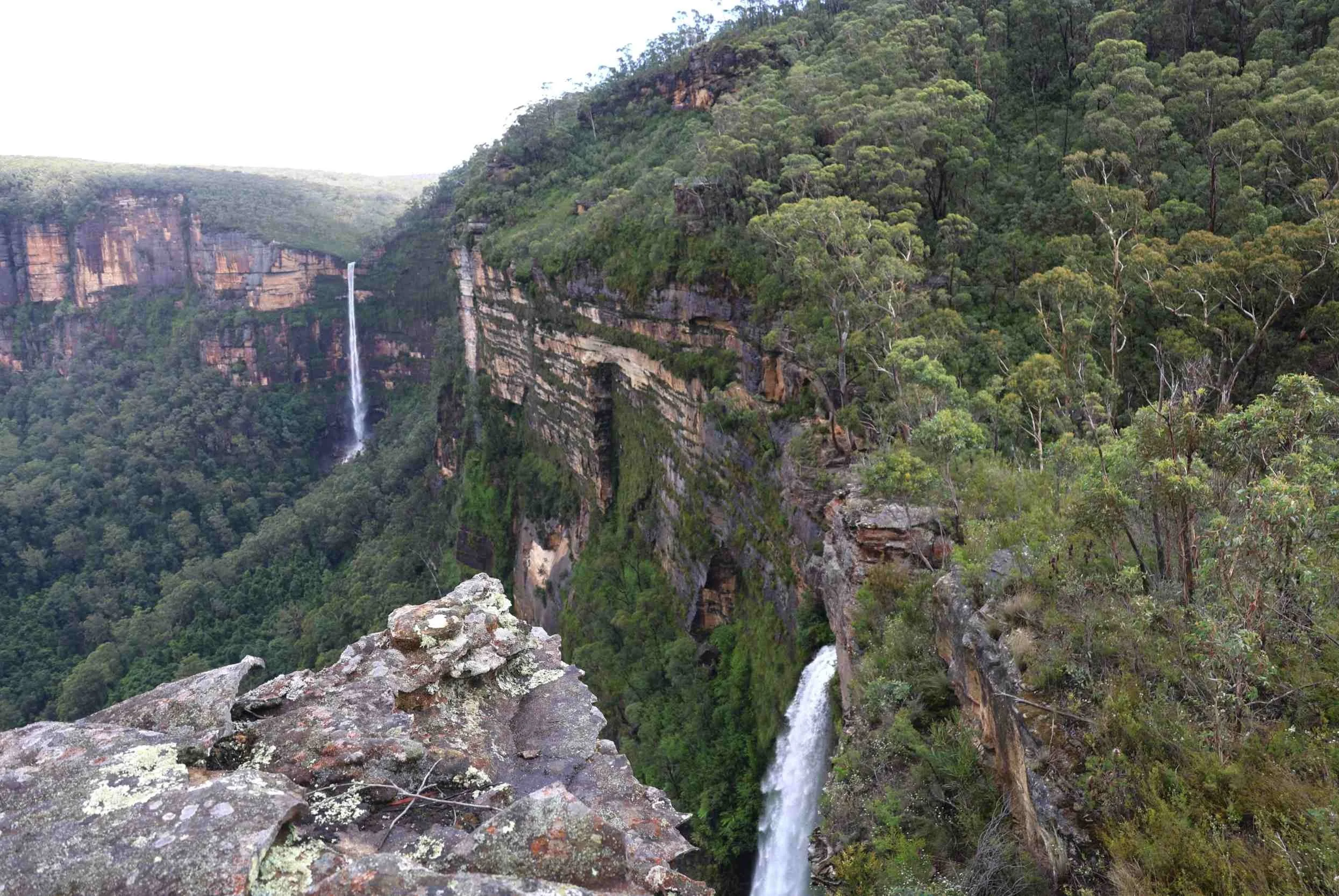
Bridal Veil and Horseshoe Falls in the Grose Valley are supercharged by days of rain in the Blue Mountains