
Zig Zag Railway Blue Mountains | Heritage Steam Train Near Lithgow
The name explains the engineering. A zig zag track uses reversible ramps to climb a steep gradient — the train travels further to gain height, switching direction at each point rather than attempting a direct ascent. It was a practical solution to a difficult problem, built in the mid-19th century when the alternative was not building the railway at all.
The Zig Zag Railway opened in 1869 and operated until 1910. The restored heritage line near Clarence now runs on a section of the original track, hauled by steam locomotives maintained and operated entirely by volunteers.
The journey
The trip takes around 90 minutes return from Clarence. The route passes through sandstone cuttings, crosses viaducts built on difficult terrain, and runs through tunnels that still feel like the 19th century. The volunteers — driver, crew, station staff — are dressed for the era and clearly enjoy what they do. Old-fashioned paper tickets. Proper uniforms. The kind of enthusiasm that only comes from doing something for its own sake.
It is not a fast or dramatic experience. It is a quiet, unhurried trip through landscape that has barely changed since the line was built, on infrastructure that should not still exist but does.
Availability
The Zig Zag Railway operates approximately six days per month. Worth checking the schedule when planning a Blue Mountains day — it can be included as part of a private tour on operating days.
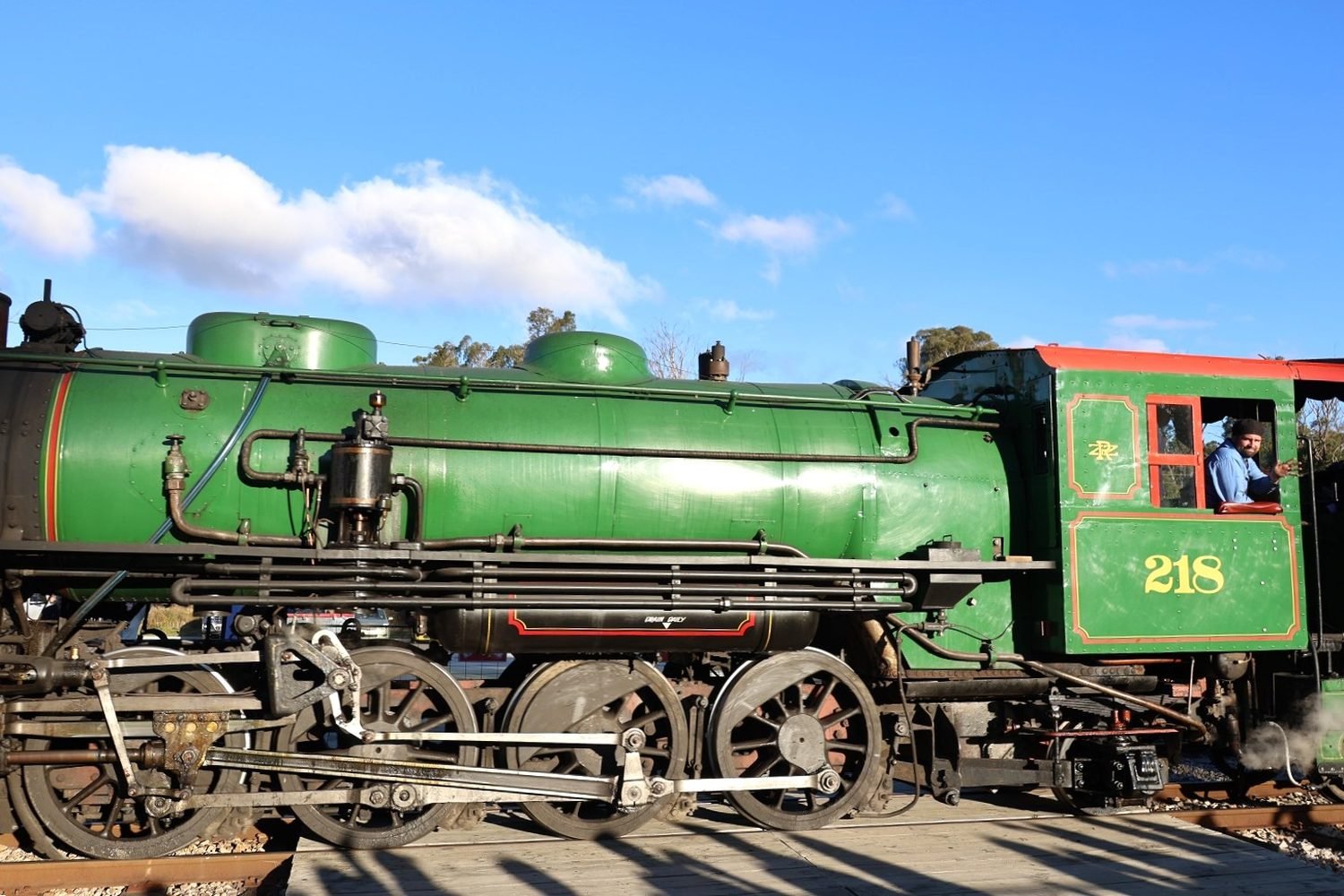
Heritage steam locomotive 218 at the Zig Zag Railway, Blue Mountains
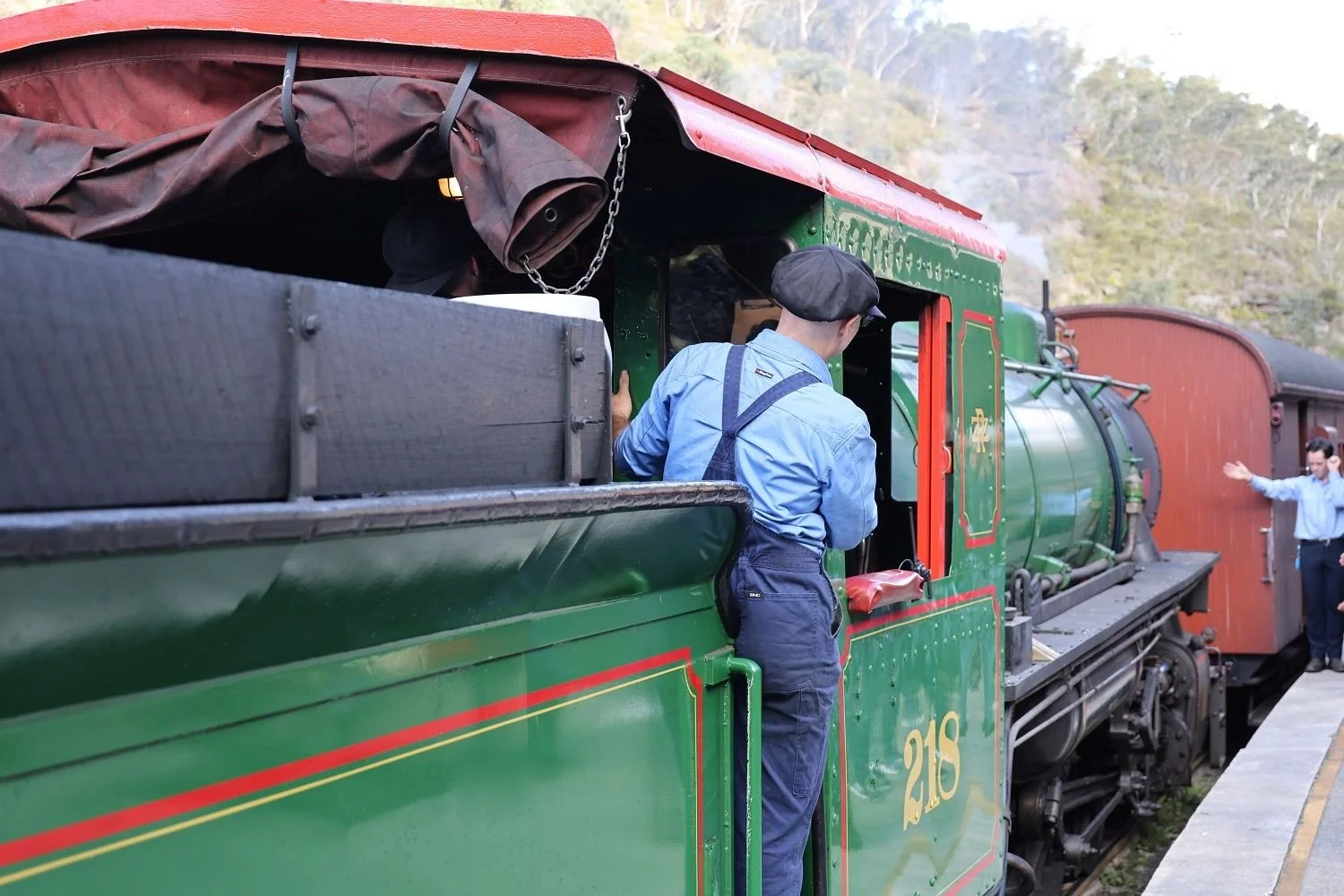
Volunteer driver in period uniform beside steam locomotive 218, Zig Zag Railway
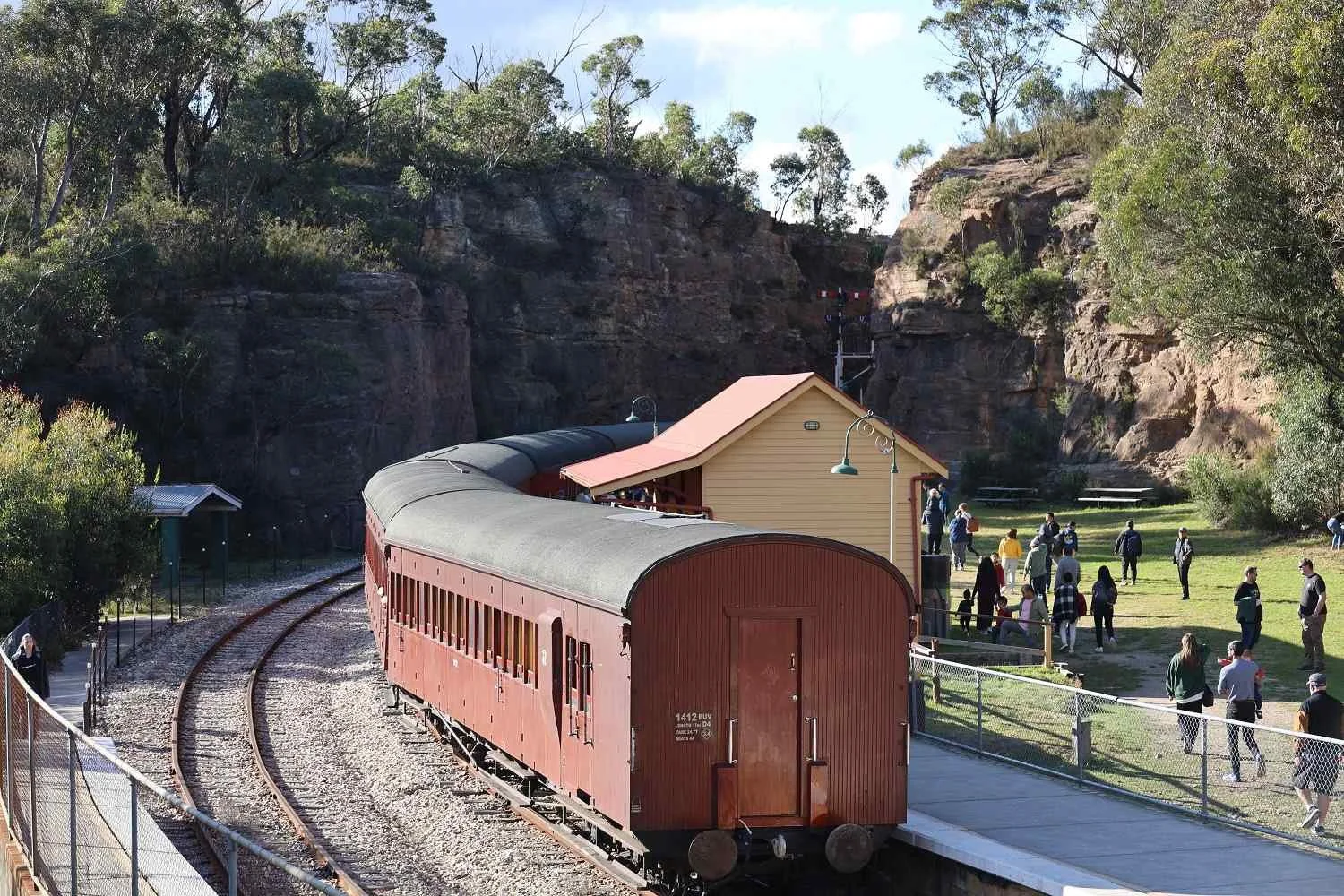
Heritage carriages at a station stop on the Zig Zag Railway, Blue Mountains
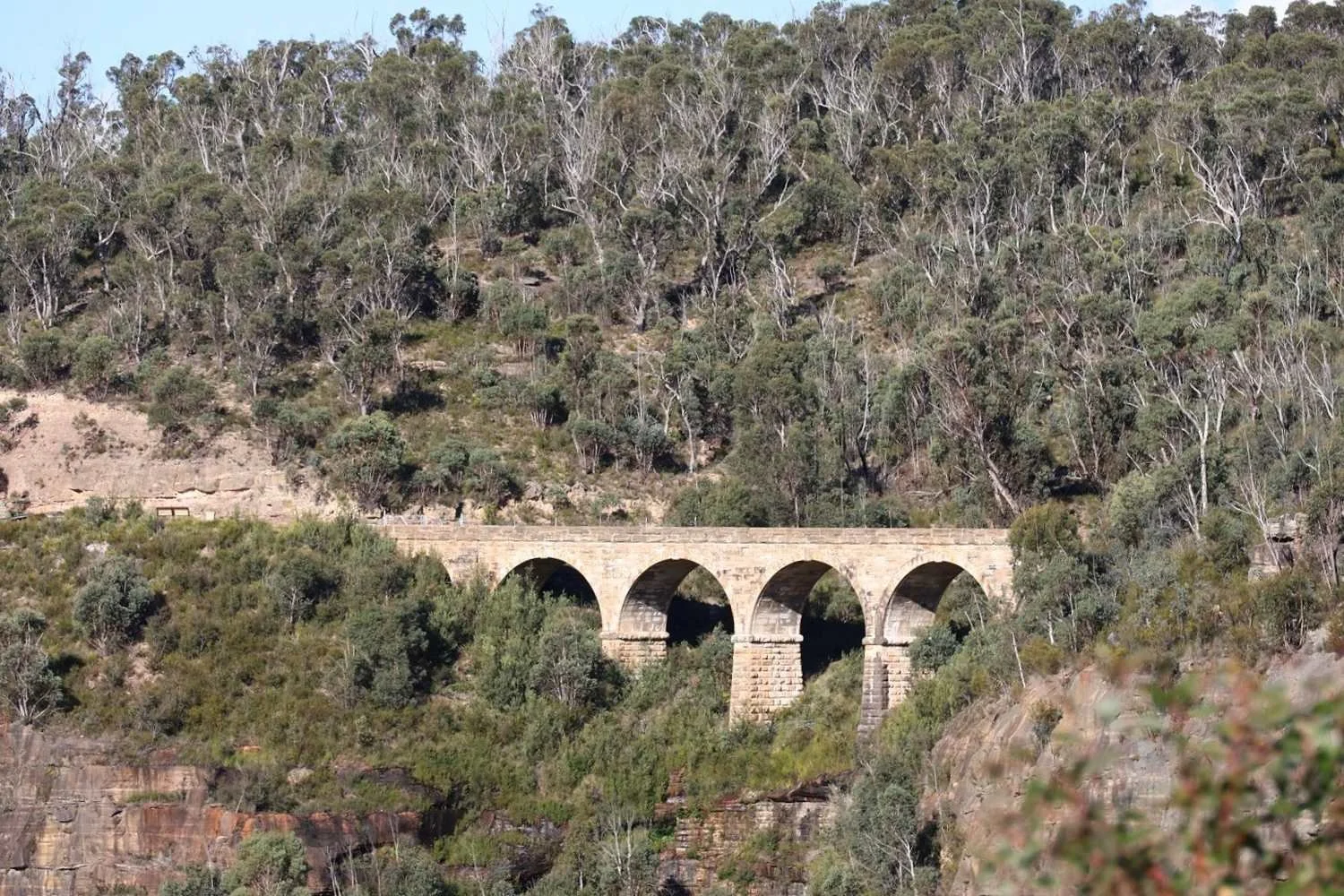
Sandstone arched viaduct on the Zig Zag Railway line, Blue Mountains