
Glen Davis — A Forgotten Town in the Capertee Valley
Glen Davis is not a place most people have heard of. A small, isolated settlement in the Capertee Valley, about three and a half hours from Sydney, with grand sandstone surrounds and a history that most Australians have forgotten entirely.
The shale oil industry
The town takes its name from George Davis, the industrialist who established shale oil operations here in the late 1930s. The timing was deliberate — with war approaching, Australia needed to reduce its dependence on imported oil, and the shale deposits in the Capertee Valley offered a potential domestic source.
At its peak, the operation employed around 2,500 men. It was never profitable. The plant closed in the 1950s and the workforce dispersed, leaving behind the buildings, the equipment and the town that had grown up around them.
What remains
The remnants of the shale oil works are visible from a lookout at the rear of the site — decaying industrial buildings and plant set against the valley's sandstone cliffs and hills. The walk to the lookout is easy and the view takes in both the industrial ruins and the landscape surrounding them. A few small ruined brick buildings and discarded industrial items sit at the lookout itself.
Driving through the town, an Ampol logo from the 1950s — the red winged horse — is painted on a white wall and remains in surprisingly good condition. In front of it, an abandoned petrol bowser. Glen Davis has not entirely let go of what it was.
Glen Davis is a stop on the two-day Blue Mountains and Capertee Valley private tour.

Go the flying red horse

discarded heavy duty cabling - not your usual tourist attraction!

shale oil plant ruins

Capertee River

Capertee Valley wonder

Pantoney’s Crown can be seen from Glen Davis Rd as you head toward Glen Davis - well worth a stop to appreciate its majesty
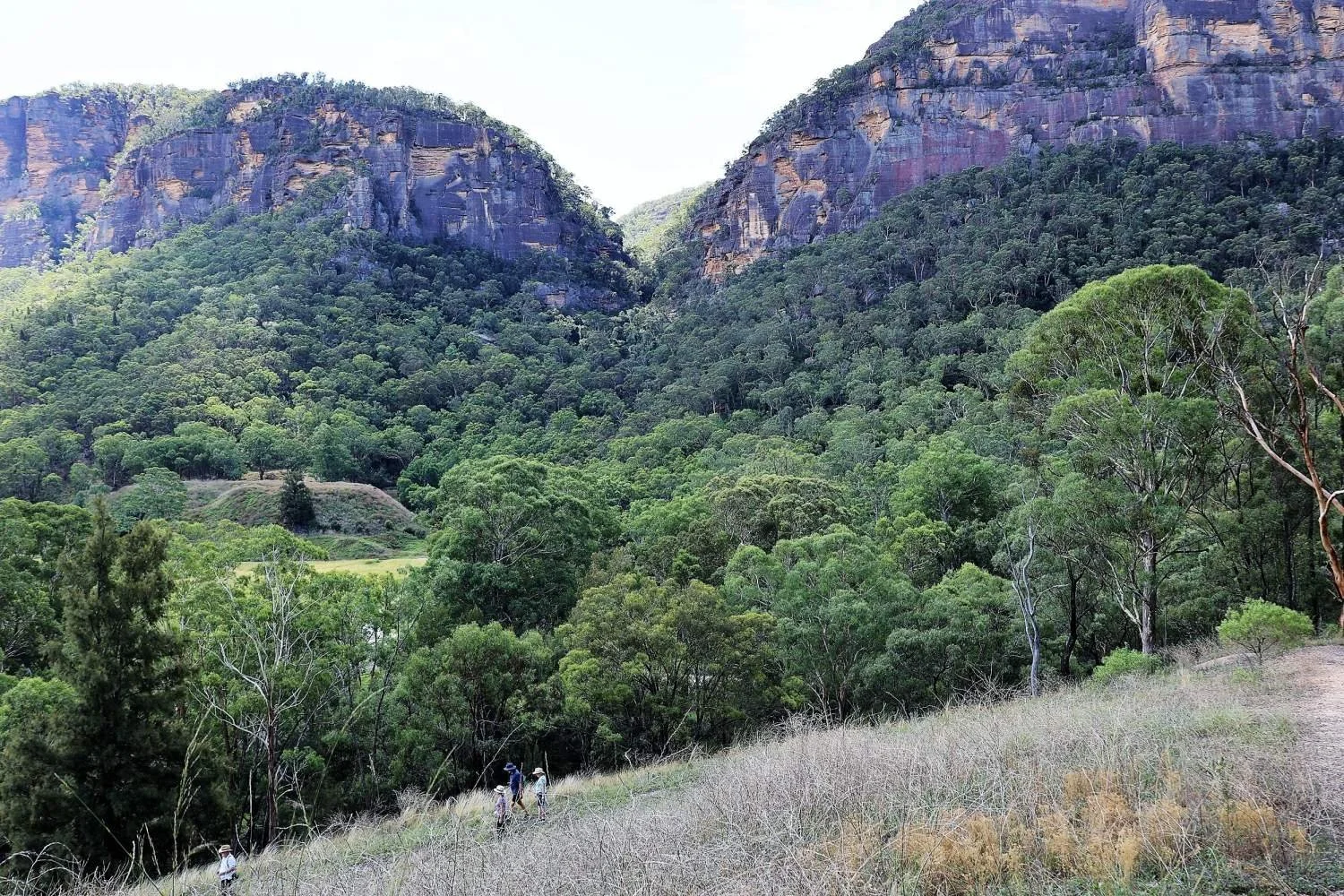
striking sandstone surrounds Glen Davis